3 Bank Scams, CBI Probes Sought: The Massive Fraud Explained
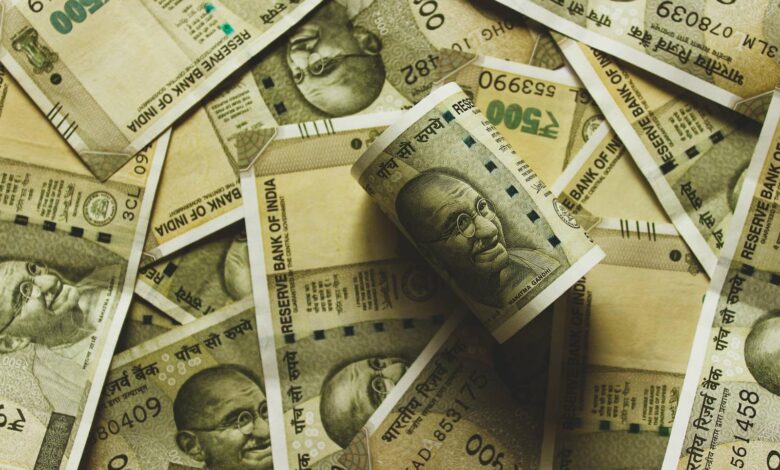
From Haryana government departments to Chandigarh’s Smart City funds and Panchkula’s civic body, a sprawling network of fake fixed deposits, shell companies and rogue bank officials haves allegedly siphoned hundreds of crores of public money. As CBI entry looms and the Haryana government de-empanels its third bank in weeks, here is a definitive guide to who lost what, where, and how.
North Desk Correspondent
Chandigarh, April 9
How It Began: IDFC First Bank and the Haryana Government Scam (₹590 crore)
The Haryana government has recommended transferring the IDFC First Bank and AU Small Finance Bank scam, involving around ₹590 crore, to the CBI. The case came to light in February 2026, when suspicious transactions in accounts linked to Haryana government departments were flagged. The funds deposited by various departments of the state government in the two private sector banks were allegedly misappropriated in collusion by accused who included some former and serving employees of the banks, officials of the state government, and private individuals.
Investigations revealed that the main accused created several shell companies and allegedly diverted government funds to multiple bank accounts. Among the firms identified during the investigation are RS Traders, Cap Co Fintech Services, SRR Planning Gurus Pvt. Ltd. and Swastik Desh Project.
Of the 12 bank accounts identified by investigators, 10 were maintained at the Chandigarh branch of IDFC First Bank, while two were held at AU Small Finance Bank. Those arrested include six bank employees, private individuals and government employees. The total now stands at 15 arrests. Names of around half a dozen IAS officers are on the radar of investigating agencies though their role is yet to be established.
The Haryana government has formally written to the Union Home Ministry recommending a CBI probe. The cases involving Kotak Mahindra Bank were not included in that recommendation. The State Vigilance and Anti-Corruption Bureau (SV&ACB) continues to investigate the case pending CBI authorisation from the Centre.
How Chandigarh’s Smart City Funds Were Looted: The MC-CSCL Scam (₹116.84 crore)
The fraud came to light by chance. The media was reporting in February 2026 about similar financial irregularities in Haryana government funds at IDFC First Bank and AU Small Finance Bank. Taking immediate cognizance, MCC officials approached IDFC First Bank, Sector 32, to encash FDRs amounting to Rs 108.73 crore.
What they discovered was devastating. On February 25, 2026, the Regional Head and Cluster Head of IDFC First Bank met senior MCC officials and formally confirmed that the April 22, 2025, bank statement and the 11 FDRs worth ₹116.84 crore were fake and fraudulent.
The FDRs had reportedly been issued by Rishab Rishi, then branch manager of IDFC First Bank’s Sector 32 branch, during March-April 2025 — the very period when Chandigarh Smart City Limited (CSCL) was being wound up and its records handed over to MCC.
The arrests have reached the highest levels of the Smart City administration. The Economic Offences Wing of Chandigarh Police arrested Nalini Malik, Chief Financial Officer of the Smart City Project. Police told the court that Rishi allegedly created shell firms in connivance with Malik and Sukhwinder Singh, Project Director of CREST. According to investigators, Malik and other involved officials received over ₹50 crore in cash from the embezzled funds, while the siphoned money was funnelled into shell companies including CAPCO Fintech, RS Traders, and Swastik Desh Project — the same entities that appear in the Haryana case.
Senior UT officials confirmed that no fraud of this scale, gravity, or complexity has ever been detected in the history of the Union Territory.
On April 8, the MC General House unanimously recommended a CBI probe into the scam. Mayor Saurabh Joshi announced this after councillors of all parties demanded that the agency investigate. A CAG special audit has been ordered to establish the exact loss, with senior MC officials making clear that ₹116.84 crore is only the initial estimate.
The Third Front: Panchkula MC and the Kotak Mahindra Bank Scam (₹150 crore)
On the lines of the IDFC First and AU Small Finance Bank frauds, the Haryana Government detected a scam in Kotak Mahindra Bank. There is a mismatch of over ₹150 crore in Municipal Corporation Panchkula’s bank records.
The fraud surfaced almost accidentally. When the IDFC First Bank fraud came to light and rattled government officials, the Panchkula MC wrote to Kotak Mahindra Bank asking that its FDRs be returned upon maturity. The bank’s reply stunned officials: five of those fixed deposits had no record in the bank’s system whatsoever.
Investigators revealed that the accused opened fraudulent bank accounts in the name of MC Panchkula in May 2020 and June 2022 using forged seals and signatures of senior officials. The fraud remained undetected for a long period as fake bank statements and forged FD advice notes were generated.
Five arrests have been made. The latest, Swati Tomar, had ₹30-35 crore allegedly transferred into her personal bank account. She is the fifth arrest; Rajat Dahra, who allegedly received ₹70 crore, was an earlier accused. Former Senior Accounts Officer Vikas Kaushik allegedly conspired with Kotak’s then branch Deputy Vice President Pushpender Singh, who surrendered on Wednesday before the ACB headquarters in Panchkula. He is alleged to be the mastermind in the case.
Kotak Mahindra Bank has placed ₹127 crore with MC Panchkula while the investigation continues.
The Enforcement Directorate has registered an Enforcement Case Information Report (ECIR) against Kotak Mahindra Bank in connection with the fraud, initiating a money-laundering investigation under PMLA. The ED received information that a racket of giving loans to private parties from government fixed deposits had been running at the bank for a long time.
The Haryana Government on April 8 de-empanelled Kotak Mahindra Bank from all government business with immediate effect, directing all departments to transfer balances and close accounts at the earliest. IDFC First Bank and AU Small Finance Bank had been de-empanelled earlier following the ₹590 crore scam.
The Common Thread
A senior officer in the Haryana vigilance establishment said both the IDFC fraud and the Kotak Mahindra FDR scam point to a systemic failure in how government funds are parked, monitored, and reconciled in private bank branches. “The common thread is the same: forged documents, shadow accounts, and officials who never bothered to verify,” the officer said.
The same shell firms — RS Traders, CAPCO Fintech, Swastik Desh Project — surface across both the Haryana government scam and the Chandigarh Smart City case, pointing investigators toward the possibility of a coordinated criminal network operating across jurisdictions.
With the CBI yet to formally take over the Haryana case and the Chandigarh MC having just voted for a CBI probe, the full dimension of what is fast becoming the region’s largest public fund fraud is still to be established.