Balbir Singh Seechewal : Meet the 'poorest' Rajya Sabha MP
North Desk Correspondent
Chandigarh – March 23
In the same week that the Association for Democratic Reforms (ADR) revealed Rajinder Gupta of AAP to be India’s second richest Rajya Sabha MP — worth ₹5,053 crore — the same report quietly listed another AAP MP from the same state of Punjab at the very bottom of the wealth table.
Sant Balbir Singh Seechewal. Total declared assets: ₹3,79,972. No immovable property. Zero.
Two MPs. Same party. Same state. One has more money than Jaya Bachchan, Kapil Sibal, and Kamal Haasan combined. The other has less than what a mid-level government clerk might have saved up by retirement.
In most political contexts, the man at the bottom of a wealth list would be an embarrassment — a footnote. In Seechewal’s case, it is entirely the point.
Also Read: The 10th Pass Ludhiana Businessman Who Is India’s Second Richest Rajya Sabha MP
The holy man who waded into a dying river
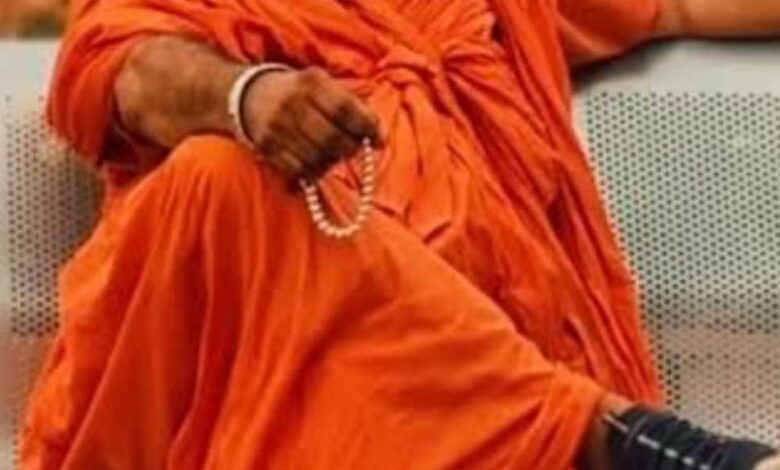
Balbir Singh Seechewal was born in 1962 in a Sikh agricultural family in Seechewal village in Jalandhar district. He is a Nirmala Sikh — a sect known for scholarship and austerity — and has spent most of his adult life in saffron robes, which is also how most of Punjab first came to know him: waist-deep in filth, pulling weeds out of a dying river with his bare hands.
The Kali Bein — a 160-kilometre river considered sacred by Punjabis — had, over decades, been reduced to a drain into which six towns and more than 40 villages emptied their waste. Parts of the river had dried up entirely, leaving neighbouring farmlands parched.
In 2000, Seechewal decided he had seen enough.
Drawing on the Sikh tradition of kar sewa — voluntary service — he and his followers taught locals why they should clean the Kali Bein, enlisting volunteers to do the physical work and raising funds for equipment. At the height of his movement, people from more than two dozen villages were pitching in. Volunteers cleared the entire riverbed of water hyacinth and silt, and built riverbanks and roads alongside the river.
Time magazine wrote in 2008 that the Kali Bein was thriving, with families heading there for picnics and the devout bathing during religious festivals.
Seechewal became the only Indian — and the only Asian — to win Time magazine’s Hero of the Environment award, in 2008.
The Seechewal Model
The river was just the beginning. The Seechewal model is a low-cost, indigenously designed underground system of sewerage and pipelines wherein wastewater from villages and settlements is treated through a four-well system and repurposed for irrigation. It has been replicated across hundreds of villages in Punjab and the central government approached him to study its application for the Ganga clean-up.
Beyond the rivers, he has set up schools, technical centres, and degree colleges — providing advanced education at low cost to girls and slum dwellers, alongside moral and religious values.
He was awarded the Padma Shri in 2017. AAP sent him to the Rajya Sabha in 2022, recognising what successive Punjab governments had failed to adequately support for two decades.
As recently as 2025, Seechewal and his volunteers were working on the Buddha Darya river in Punjab, with efforts leading to visible improvements in water quality and the return of aquatic life and birds to several stretches. He also helped facilitate the safe return of 27 Indian nationals stranded abroad, many victims of human trafficking in Arab countries, and helped repatriate the mortal remains of 15 Indians so their families could perform last rites.
What the ADR numbers mean
The ADR report, based on affidavits submitted to the Election Commission, lists Seechewal’s total movable assets at ₹3,79,972 — roughly the price of a modest second-hand car in Ludhiana. He has declared no immovable property whatsoever.
For a man who has spent 25 years building sewage systems, cleaning rivers, running schools, and mobilising entire districts — entirely through voluntary effort and community contribution — this is not surprising. It is, in its own way, a kind of credential.
The AAP that contains multitudes
Together, Rajinder Gupta and Sant Balbir Singh Seechewal illustrate something that the ADR numbers alone cannot quite capture about the Aam Aadmi Party’s Rajya Sabha bench from Punjab.
One man built a USD 2 billion textile empire and was awarded the Padma Shri for industry. The other cleaned a 160-kilometre sacred river with his bare hands and was awarded the Padma Shri for service. One has declared ₹5,053 crore. The other has declared ₹3.8 lakh.
AAP sent both of them to Parliament. Whether that reflects the party’s breadth — or its contradictions — is a question worth sitting with.



One Comment