Good Friday 2026: Date, Meaning, History and Why It Is Called 'Good' Friday
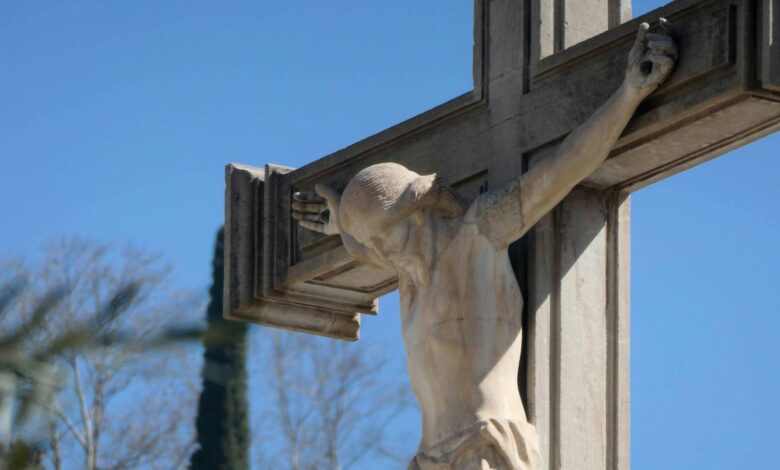
Good Friday 2026: Why Is It Called ‘Good’ Friday? A Complete Explainer
North Desk Bureau
Chandigarh, April 3
Good Friday falls on April 3 this year. But why is a day marking a brutal execution called ‘good’? Here is everything you need to know.
Q. When is Good Friday in 2026?
Good Friday 2026 is observed on April 3. It falls on the Friday before Easter Sunday and marks the crucifixion and death of Jesus Christ at Calvary.
Q. Why does the date of Good Friday change every year?
The date moves every year because it is tied to Easter, and Easter itself follows the lunar cycle. Easter is calculated based on the full moon after the spring equinox, and Good Friday comes two days before that. In 2026, Palm Sunday was on March 29, Good Friday is on April 3, and Easter Sunday follows on April 5 — together forming what is called the Paschal Triduum, a three-day vigil of Christ’s passion, death, and resurrection.
Q. What does Good Friday commemorate?
Good Friday is remembered as the day that Jesus, believed by Christians to be the Son of God, was arrested, beaten and then executed by crucifixion — being nailed to and hung on a wooden cross — outside Jerusalem. Jesus was executed by the governing religious leaders of the day, despite being innocent.
The primary events were the trial of Jesus before Roman authorities, his painful death by crucifixion, and his burial in a stone tomb provided by Joseph of Arimathea.
From noon until 3 pm, darkness covered the land, just as the Bible describes.
Q. Why is it called ‘Good’ Friday — isn’t it a day of sorrow?
This is the question most people ask, and the answer lies in the evolution of the English language.
The word “good” in Good Friday derives from an archaic English usage meaning “holy” or “observed as a religious occasion” — the same sense in which “Good Book” refers to the Bible.
In 13th-century England, scribes first penned the term in old manuscripts, swapping out earlier labels like “Long Friday” — named for its all-day fasts that left believers weary yet devoted.
Three competing theories explain the name:
Theory 1 — “Good” as Holy: This is the most widely accepted explanation among etymologists and theologians. The meaning of the day is not that the suffering was pleasant — it is that the day is sanctified, set apart, and spiritually significant.
Theory 2 — “Good” as a corruption of “God’s Friday”: Some linguists propose that “Good Friday” evolved from “God’s Friday,” similar to how “goodbye” evolved from “God be with ye.” This theory has moderate scholarly support but lacks definitive etymological documentation.
Theory 3 — “Good” because of what followed: Beyond linguistics, Christians call this day “good” because they believe that although Jesus died, he later rose again. It was in the death of Jesus that God demonstrated his immense love for humanity.
Q. What is the spiritual significance of the day for Christians?
For Christians, Good Friday sits at the very heart of the message of Jesus: a message of sacrificial love, forgiveness and hope.
The day serves as a time for penance and mourning. By focusing on the death of Jesus Christ, believers prepare their spirits for the celebration of life on Easter Sunday.
For believers, Good Friday is not just about the event itself — it is about what it represents: sacrifice, forgiveness, redemption. There is also that sense of waiting. Because Easter comes after. So this day sits in between, heavy but meaningful.
Q. How is Good Friday observed?
On Good Friday, special church services are conducted and fasting is observed. There are also church processions or silent prayers. Good Friday is also called Holy Friday, Great Friday or Black Friday in different countries.
It is the only day in the Roman Rite on which the Eucharist is not celebrated. Communion is distributed from the reserved sacrament consecrated on Maundy Thursday.
In 2026, Good Friday unites diverse cultures: Filipinos join street processions, while Europeans hold sombre liturgies. In India, fasting and prayer mirror universal themes of community and reflection.
Q. Is Good Friday a public holiday?
Good Friday is both a religious observance and a legally recognised public holiday in more than 20 countries. It is a gazetted holiday in India.
In the United States, it is not a federal holiday, meaning post offices and most federal buildings stay open. However, it is a legal holiday in 12 states including Connecticut, Delaware, Florida, Hawaii, Indiana, Kentucky, Louisiana, New Jersey, North Carolina, North Dakota, Tennessee, and Texas.
The New York Stock Exchange and Nasdaq close for the entire day.
Q. What is open and closed in India on Good Friday, April 3?
Good Friday is a gazetted public holiday across most of India. Here’s what that means for tomorrow:
🔴 CLOSED
- Stock Markets: BSE and NSE — including equity, derivatives, and Securities Lending and Borrowing (SLB) segments — will remain fully suspended. Since the holiday falls on a Friday, markets reopen only on Monday, April 6, giving investors a three-day long weekend.
- Commodity Markets: MCX (Multi Commodity Exchange) and NCDEX will also remain closed for the entire day on April 3.
- US Markets: Major global markets including the New York Stock Exchange and Nasdaq will also be closed on April 3, making it a synchronised global market holiday rather than an India-specific closure.
- Banks: Banks across most Indian states will remain closed on April 3..
Q. What is the Holy Week timeline for 2026?
| Day | Date | Event |
| Palm Sunday | March 29 | Jesus enters Jerusalem |
| Maundy Thursday | April 2 | The Last Supper |
| Good Friday | April 3 | Crucifixion and death of Jesus |
| Holy Saturday | April 4 | Jesus in the tomb |
| Easter Sunday | April 5 | Resurrection of Jesus |
Q. What comes next — Easter Sunday?
Good Friday is not the end of the story. Its goodness only makes sense in the light of Easter Sunday, when Christians celebrate the belief that Jesus rose from the dead, offering new life to all who believe. Easter Sunday this year falls on April 5.