Pre-Marital Relationship Not a Character Flaw, Can’t Cost You Govt Job: Supreme Court of India
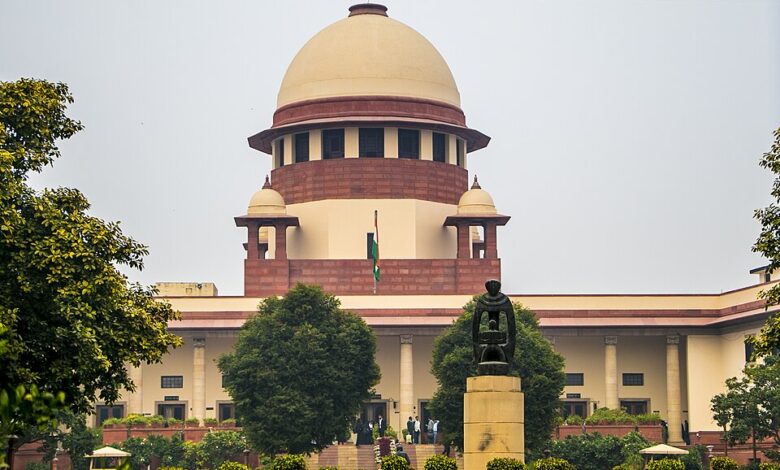
SC on pre-marital relation: In a ruling that goes beyond one man’s eleven-year fight for a constable’s job, the Supreme Court has drawn a clear line: what two consenting adults do in a relationship is not their employer’s business
North Desk Correspondent
New Delhi, June 9
A physical relationship between two consenting unmarried adults is not a character flaw. The Supreme Court of India has said something that may seem obvious to many but has rarely been stated so plainly by the country’s highest court.
It said it cannot be used to judge a person’s suitability for a government job. And a relationship that doesn’t end in marriage is not, by itself, evidence that anyone was cheated.
The ruling came in a case that took eleven years to resolve — a case that began with an honest disclosure on a job application form and ended with a police recruitment board being told by the Supreme Court that its reasoning was “completely perverse.”
The relationship, the FIR, the lost job
SC on pre-marital relation:: Gajula Thirupathi and the woman who would later file a case against him grew up in the same village in Telangana’s Peddapalli district. They were neighbours. For about four years they were in a relationship, during which Thirupathi had spoken of marriage. The marriage kept getting delayed. When his parents reportedly asked her to stop pressing the matter, and when Thirupathi eventually married someone else, she went to the police.
The FIR charged him under Sections 417, 420 and 506 of the Indian Penal Code — cheating, fraud, criminal intimidation. His parents were named too, for allegedly threatening her. Critically, there was no charge under Section 376. No allegation of rape or forced physical relationship. What was alleged, at its core, was a promise of marriage that was not kept.
After investigation a chargesheet was filed. But the case never went to trial. In 2015, both parties appeared before a Lok Adalat and settled the matter. She chose not to pursue it. Under Section 320(8) of the Criminal Procedure Code, that settlement amounted to acquittal.
Thirupathi walked out a free man, at least in the eyes of the law.
But not in the eyes of his employer.
The man who got punished for honesty
SC on pre-marital relation: Around the same time, Thirupathi had applied to become a police constable with the Telangana State Level Police Recruitment Board. In the attestation form, where candidates are required to disclose past criminal cases, he disclosed everything. He hid nothing.
He was provisionally selected. Then the verification process began.
The Board took the view that the case involved moral turpitude — a category of offences that disqualifies candidates under recruitment rules. That the case had been settled, that the victim had chosen to walk away, that no trial had established any guilt — none of it was considered sufficient to overlook the chargesheet.
In their counter affidavit to the High Court, the Board made a statement that the Supreme Court would later call “completely perverse.” They wrote that if Thirupathi was innocent he would not have compromised. Since he compromised, he was guilty.
By that logic every Lok Adalat settlement in India is an admission of guilt. It is a logic that affects hundreds of thousands of people every year.
His provisional selection was cancelled. He went to the High Court. A single judge restored his appointment. The Division Bench reversed that. He went to the Supreme Court.
Eleven years after he first filled out that application form, the Supreme Court gave him his answer.
What the Court actually said — and why it matters
SC on pre-marital relation: The judgment delivered by Justice Manoj Misra recently is being read carefully by employment lawyers across the country — and for good reason.
On the question of pre-marital physical relationships the Court was unambiguous. It said that physical relationship between two consenting unmarried adults cannot and should not by itself be a ground to draw an adverse impression about the character of the person in that relationship. It went further — there is no law, the Court noted, which prohibits two consenting unmarried adults from having a relationship of their choice.
SC on pre-marital relation: On relationships that span several years the Court said there would be a presumption that such a relationship is based on valid consent. Meaning the longer the relationship the harder it becomes to argue that one party was deceived into it.
On the specific question of a relationship not ending in marriage the Court said plainly — not every relationship culminates in marriage. Merely because it did not is no ground to believe that one party cheated the other.
And on the question of what can be used against a candidate in recruitment the Court drew a clear line. To form an adverse opinion about someone’s character there must be actual evidence that a crime was committed and actual evidence linking that person to it. A police report based on statements recorded during investigation — statements never tested in a courtroom — is not sufficient on its own.
The Court also addressed the nature of the offence directly. Whether a person was deceived into a relationship, it noted, can only be established by the person who claims to have been deceived. If that person chooses not to step into a witness box — as the victim in this case chose — there is simply no basis to conclude that deception occurred. And when the victim herself chose to compound the case, the Court said, there was no occasion for the recruitment board to read between the lines and draw adverse inferences about the character of the accused.
Why North India should pay attention
SC on pre-marital relation: “False promise to marry” cases are among the most commonly filed FIRs across Haryana and Punjab. They are filed for a range of reasons — genuine grievance, family pressure, social stigma, occasionally coercion. Courts across north India handle thousands of them every year.
What rarely gets examined is their downstream consequence. A large proportion of those accused are young men from lower-middle-class backgrounds applying for government jobs — constable, clerk, railway, defence. A chargesheet, even one that never reaches trial, even one that ends in a Lok Adalat settlement, can follow them for years through verification forms and screening committees that treat indictment as guilt.
The Supreme Court’s ruling doesn’t eliminate employer discretion. Moral turpitude remains a valid disqualification under recruitment rules. But the judgment sets a boundary that recruitment boards can no longer ignore — discretion must be exercised on actual material, not assumptions. A Lok Adalat settlement is not a confession. A relationship between consenting adults that didn’t work out is not a character flaw. And a chargesheet that was never tested in trial cannot by itself close the door on someone’s livelihood.
ALSO: ASHOK KHEMKA Wins: Centre Discriminated Against India’s Most Transferred IAS Officer, says HC
Follow North Desk on WhatsApp for the latest from Punjab, Haryana and Himachal Pradesh: https://whatsapp.com/channel/0029Vb7ccdxJENy2H87DBG3E
ALSO: Gurmeet Ram Rahim Singh Parole: 16th Release, 406 Days Outside Sunaria Prison