Udta Teer Ending Explained: How Pakistani Spy Bilal Turned Indian Hero
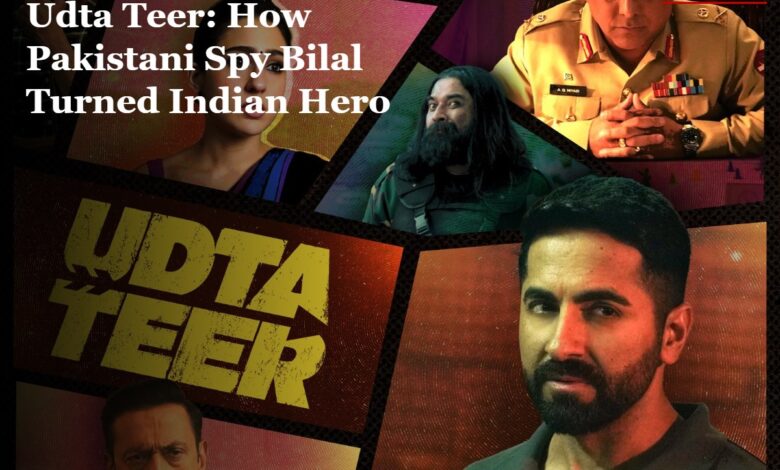
Udta Teer ending explained: Here’s how Ayushmann Khurrana’s amnesiac spy dismantles his own network in this hilarious spoof.
By North Desk Bureau
Udta Teer Ending Explained: For years, mainstream Hindi cinema has relied on a tried-and-tested formula: an elite, stoic Indian secret agent slipping across the border to dismantle hostile terror syndicates. But director Aakash Kaushik’s espionage satire Udta Teer has completely upended the genre by doing the exact opposite.
Described by both moviegoers and critics as a comedic inversion of Aditya Dhar’s gritty spy thriller, the Udta Teer narrative delivers an unhinged comedy of errors. Instead of an Indian agent in disguise, the story follows a Pakistani operative who suffers total amnesia, gets convinced he is an Indian counter-terrorism officer, and channels intense patriotic fervor to dismantle his own cross-border handlers.
Here is the complete point-by-point breakdown of the plot, the comic identity crisis, the high-stakes climax, and what the ending truly means.
Udta Teer Ending Explained:
1. The Setup: The Amnesiac Spy and the Great Lie
- The infiltration mission: Ayushmann Khurrana stars as Bilal Ahmad, an undercover operative sent by Pakistani spy chief Niyazi (Ram Kapoor) and General Mir (Gulshan Grover) to establish a sleeper cell in Delhi.
- The blast that erased everything: During a sudden explosive accident in Old Delhi, Bilal suffers severe head trauma and wakes up in a hospital with complete retrograde amnesia. He remembers his intense combat skills and instincts to serve his country—but forgets which country is his.
- The fabricated identity: Indian Counter-Terrorism Squad (CTS) officer Yamini (Sara Ali Khan) mistakes Bilal for an operative named Vikrant. Seizing on his blank slate, Yamini convinces him that his parents were martyred Indian patriots and enlists him into the squad to hunt down infiltrated cross-border assets.
2. Why It Is the Ultimate ‘Reverse Dhurandhar’
- Inverting the traditional spy blueprint: Where Dhurandhar features an Indian operative embedded in Pakistan trying to maintain cover while staying loyal to New Delhi, Udta Teer flips the mirror. Bilal is an enemy spy living in India who accidentally becomes New Delhi’s fiercest, most proactive protector.
- Terrorizing his own handlers: Whenever Bilal’s frantic Pakistani handler Ashfaq (Suhail Nayyar) tries to contact or redirect him, Bilal views Ashfaq as an anti-national terrorist threatening Indian soil and relentlessly tracks him down.
- The iconic pop-culture confrontation: In the film’s standout viral scene, an exhausted and battered Ashfaq screams at a hyper-aggressive Bilal: “Sunny Deol bana baitha hai, tu Tara Singh nahi Ashraf Ali hai!” (You’re acting like Sunny Deol, you’re not Tara Singh, you’re Ashraf Ali!).
- Spoofing hyper-nationalism: The screenplay uses Bilal’s over-the-top patriotism to satirize hyper-macho chest-thumping in contemporary action cinema, showing that nationalist zeal often relies on the narrative you are fed rather than innate biology.
3. The Climax Breakdown: Foiling Azhar Maqsood’s Plot
- The terror syndicate arrives: As Bilal inadvertently arrests key sleeper contacts, terror mastermind Azhar Maqsood (played by the late Mukul Dev in his final on-screen performance) enters the country to execute a major strike and eliminate the rogue operative.
- The chaotic Chandni Chowk chase: Bilal, Yamini, and CTS commander Burman (Rahul Bose) engage in an elaborate foot chase through the crowded alleys of Chandni Chowk.
- The memory shock: During the final showdown inside an abandoned warehouse, a physical blow restores flashes of Bilal’s original identity. He briefly realizes he was born in Rawalpindi and trained to destroy the very squad he is leading.
- The moral choice: Rather than returning to his old loyalties, Bilal realizes that Maqsood’s terror outfit represents senseless bloodshed, while Yamini and his Indian colleagues treated him with genuine humanity. Choosing conscience over conditioning, Bilal uses his insider knowledge of cross-border tradecraft to disarm the bomb and overpower Maqsood.
ALSO: Ranabaali Movie Review: Critics Ratings, Plot Verdict, Hits and Misses
4. The Ending Explained: Bilal’s Fate and Future
- The identity cover-up: In the aftermath of the foiled attack, Yamini and the CTS leadership learn the truth about Bilal’s real Pakistani origins.
- A state secret: Acknowledging that an enemy operative single-handedly saved hundreds of civilian lives and crippled the terror syndicate, Indian intelligence chooses not to imprison him. Acknowledging the embarrassment it would cause both establishments, CTS officially records him as Indian officer “Vikrant.”
- The satirical resolution: Bilal remains an active operative in India, living a double existence where he genuinely believes in peace, ending the film on a note that human empathy transcending manufactured geopolitical hatred.
ALSO: Doosra Movie Sourav Ganguly CBFC A Certificate Shock: Why Cricket Docu-Drama Got 18+ Rating
Jailer 2 Ending Explained: Climax Twists, Cameos, and Jailer 3 Setup
Follow North Desk on WhatsApp for the latest from Punjab, Haryana and Himachal Pradesh: https://whatsapp.com/channel/0029Vb7ccdxJENy2H87DBG3E