Bhagwant Mann FIR case in Supreme Court: As AAP Bleeds Rajya Sabha MPs, 5-year-old FIR Quietly Lands in SC
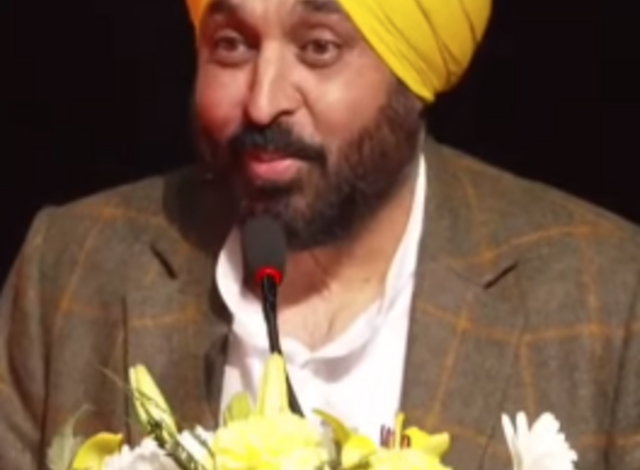
Chandigarh Administration has challenged the Punjab and Haryana HC’s quashing of a 2020 protest FIR against CM Bhagwant Mann and AAP leaders in the Supreme Court. Here’s the full political picture.
Arvind Chhabra
Chandigarh, May 4
A five-year-old protest case against Punjab Chief Minister Bhagwant Mann has quietly reached the Supreme Court — and its timing could not be more politically charged.
The Chandigarh Administration has filed a Special Leave Petition before the Supreme Court challenging a Punjab and Haryana High Court order that quashed a 2020 FIR against Bhagwant Mann, along with AAP ministers Harpal Singh Cheema, Aman Arora and other party leaders including Baljinder Kaur and Manjit Singh Bilaspur. Sources told the North Desk that the SLP was filed after a delay of over five weeks after the HC’s order, and the matter is yet to come up for hearing before the Supreme Court.
The legal move comes as AAP is navigating the most turbulent weeks in its Punjab political life — losing seven of its ten Rajya Sabha MPs to the BJP within a fortnight and finding itself locked in multiple simultaneous confrontations with the Centre and its own former leaders.
The Case: What Happened in January 2020
On January 10, 2020, a woman constable of the Chandigarh Police filed a complaint at Police Station Sector 3, alleging that around 750-800 AAP workers, led by Bhagwant Mann and other party leaders, attempted to march towards the then Chief Minister’s official residence in Chandigarh to protest against a hike in electricity tariffs. When police barricaded the road, the FIR alleged that the leaders instigated the crowd, which then pushed and shoved police personnel, pelting stones after water was sprayed on them. Several officers sustained minor injuries — abrasions, swellings and pains — all declared simple in nature by medico-legal reports.
The FIR was registered under Sections 147 (rioting), 149 (unlawful assembly), 332 (hurting public servant on duty) and 353 (assault or criminal force against a public servant). A Section 188 charge — disobedience of a public order — was added but later deleted from the chargesheet on the advice of the District Attorney. The chargesheet was filed in July 2021.
The High Court’s November 2025 Order
Bhagwant Mann and others got relief when in a detailed order pronounced in November last year, the Punjab and Haryana High Court quashed the FIR and all subsequent proceedings against the petitioners. The court found that no Section 144 prohibitory order had, in fact, been in force on January 10, 2020 — a fact the chargesheet itself acknowledged. Without a valid prohibitory order, the gathering could not be termed an unlawful assembly, which is the essential ingredient for offences under Sections 147 and 149.
The court also found that no specific overt act had been attributed to any of the named leaders — neither particular words of instigation nor gestures. The injuries suffered by police officials, the court observed, were consistent with the jostling of a crowd trying to push its way forward and not with any directed violence by the petitioners. Crucially, the court noted that the immediate trigger for the crowd’s reaction appeared to be the use of water on the protesters, as ordered by the Duty Magistrate — not any act by the accused leaders.
On the Section 188 deletion, the court held that since this charge — and the mandatory complaint procedure it required under Section 195 CrPC — had not yet reached the cognizance stage, it was not a ground to quash the FIR at this point. But that finding became moot given its broader conclusion: that none of the offences alleged disclosed a prima facie case against any of the petitioners.
Now in the Supreme Court
The Chandigarh Administration — which functions under the Ministry of Home Affairs as a Union Territory — has now challenged this order by way of an SLP before the Supreme Court. The matter has not yet been listed for hearing.
The Bigger Picture: Five Weeks That Shook AAP Punjab
The Supreme Court challenge arrives as AAP Punjab is confronting a political crisis unlike any since the party swept to power in 2022. The cascade of events over the past several weeks has systematically narrowed the party’s room for manoeuvre at the national level, even as Bhagwant Mann’s government remains firmly in control in the state.
Seven MPs, One Day: The April 24 Earthquake
On April 24, seven of AAP’s ten Rajya Sabha MPs — Raghav Chadha, Sandeep Pathak, Harbhajan Singh, Rajinder Gupta, Ashok Mittal, Vikramjit Sahney and Swati Maliwal — resigned from the party and merged with the BJP, submitting their documents to the Rajya Sabha chairman. Six of the seven represent Punjab. The BJP president received them with sweets at party headquarters. AAP’s Sanjay Singh called it a betrayal; Mann’s government called it ideological bankruptcy. With the party’s Rajya Sabha strength now reduced to three, AAP’s voice in the Upper House has been effectively silenced.
Raghav Chadha: The Security Signal
Before the mass exit became public, the fracture was already visible through the Raghav Chadha episode. AAP removed Chadha as deputy leader in the Rajya Sabha in early April, replacing him with Ashok Mittal. Days later, the Punjab government withdrew his Z+ category security cover. The Centre moved within hours — the Ministry of Home Affairs stepped in with fresh Z-category protection in Delhi and Punjab, and Y-category cover elsewhere, based on an Intelligence Bureau threat assessment. The speed of the Centre’s response underlined the political stakes on both sides.
Harbhajan Singh: ‘Gaddaar’ on the Walls, Court in the Picture
Harbhajan Singh’s exit from AAP was among the most visible. Within days of joining the BJP, the Punjab Police withdrew his security detail— without, his petition alleges, any fresh threat assessment or notice. AAP workers held protests outside his Jalandhar residence; the word “gaddaar” (traitor) was reportedly spray-painted on walls. Harbhajan moved the Punjab and Haryana High Court, which directed the Punjab government to ensure no physical harm came to him or his family while in the state. The matter is listed for May 12.
Sandeep Pathak: FIRs and a Police Team at the Door
Sandeep Pathak, AAP’s former national general secretary and one of the most powerful organisational figures in the party, switched to the BJP and found two non-bailable FIRs waiting for him — registered by the Punjab Police in different districts within days of his defection. A Punjab Police team arrived at his Delhi residence; he had already left. BJP Punjab accused the Mann government of weaponising the police, calling it “the politics of fear, panic and vendetta.” Pathak said he had received no official communication on the cases and suggested the charges were politically motivated. AAP said it had only learnt of the FIRs through the media.
Trident Raids: Industry in the Crosshairs
Rajinder Gupta, founder of the Trident Group — one of India’s largest textile conglomerates — was among the seven who crossed over to the BJP on April 24. Days later, the Punjab Pollution Control Board descended on Trident’s Dhaula unit in Barnala district with a team of over ten officials in multiple vehicles. No official statement was issued by the PPCB; company representatives were unavailable for comment. The BJP termed it a “deplorable and politically motivated act”, alleging it was orchestrated at the behest of Kejriwal and Mann to settle scores. AAP did not comment. The raid sent an unmistakable signal to Punjab’s industrial community about the consequences of political realignment.
What the Bhagwant Mann Case Means
Against this backdrop, the Chandigarh Administration’s SLP carries a weight that goes beyond the legal merits of a 2020 protest case. Chandigarh, as a Union Territory under the MHA, is effectively an arm of the Central government — and its decision to challenge a favourable HC order that had already given Mann and his ministers relief is, at minimum, a continuation of pressure by other means.
What happens in the Bhagwant Mann vs Chandigarh administration case in the SLP in the Supreme Court will be watched closely in both Chandigarh and New Delhi. For Mann, a case that appeared closed in November 2025 is now, once again, open.


One Comment