Judge Personally Watches ‘Lawrence of Punjab’, Rejects Govt’s Claim That It Glorifies Crime
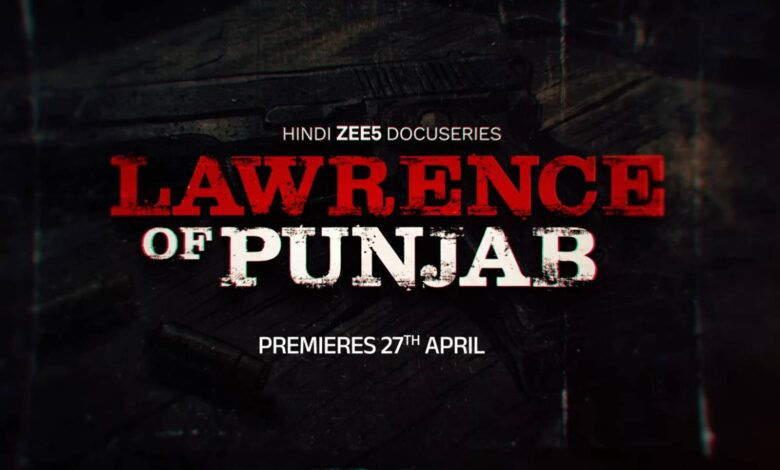
Lawrence of Punjab: The Punjab and Haryana High Court allowed release of the controversial Zee5 documentary ‘Lawrence of Punjab’ after Justice Jagmohan Bansal personally watched it and ruled that it did not glorify crime or gangsters
Arvind Chhabra
Chandigarh, May 12
The controversy around Zee5’s gangster documentary did not begin in a courtroom.
It began with a political backlash in Punjab.
The Punjab Police objected to it. Then warnings came from a central security agency. Then an advisory from the Union government asking the OTT platform not to release the documentary. And in the Punjab and Haryana High Court, Punjab Congress chief Amarinder Singh Raja Warring filed a PIL, demanding a ban.
And finally, in an unusual turn even for Punjab’s volatile intersection of crime, politics and media, a High Court judge decided to watch the documentary himself before ruling on whether the State was justified in stopping the public from seeing it.
After watching it, the court was unconvinced.
“I have watched aforesaid documentary on the petitioner’s laptop,” Justice Jagmohan Bansal recorded in his order Monday (made public on Tuesday) while setting aside the Centre’s advisory against the release of the documentary originally titled Lawrence of Punjab.
What followed was not merely a clearance order for an OTT release.
It was also a judicial rejection of the argument that any digital content dealing with Punjab’s gangster ecosystem automatically becomes a threat to public order.
How the controversy snowballed
The teaser poster for the documentary was released on April 11, followed by a trailer on April 19.
Almost immediately, the title itself became politically explosive.
Punjab Congress chief Raja Warring publicly attacked the project, arguing that a gangster could never become the identity of Punjab. Announcing his PIL against the documentary, Warring invoked the murder of Punjabi singer Sidhu Moosewala, saying he had “lost my friend Sidhu Moosewala to Lawrence Bishnoi’s gang.”
He argued that naming the documentary Lawrence of Punjab insulted “Punjabiyat” and risked glorifying criminality.
The PIL eventually reached the Punjab and Haryana High Court. But before the matter could proceed substantially, the Centre informed the court that the Ministry of Information and Broadcasting had already advised Zee5 not to release the documentary. Following that submission, the PIL was withdrawn.
Behind the scenes, however, the pressure campaign against the documentary had already widened.
Punjab Police wrote to Centre. Then a central security agency stepped in
The High Court order reveals the chain of events that led to the documentary being stalled.
Punjab Police first raised concerns that the documentary could disturb public order and glorify gangster culture.
The Union government then received additional inputs from what the order describes as a “Central Security Agency.”
The agency warned that the documentary could:
- glorify gun culture and violence,
- attract young minds towards gangster culture,
- affect ongoing criminal trials,
- and influence witnesses in sensitive cases including the Sidhu Moosewala murder investigation.
The Ministry of Information and Broadcasting subsequently issued an advisory to Zee5 asking it not to release the documentary.
The Centre later defended that advisory in court, insisting it had acted within the framework of Sections 69A and 79 of the Information Technology Act.
Punjab’s argument: this could influence youth
Punjab’s objections before the High Court were sweeping.
The State argued that the documentary could:
- glamorise gangster culture,
- encourage youth to imitate criminals,
- undermine law-and-order efforts,
- and damage Punjab’s image.
The government relied on earlier High Court orders linked to the controversial jail interviews of Lawrence Bishnoi, where the court had directed authorities to remove gangster interviews from YouTube and social media, and identify content “that tend to glorify crime and criminals.”
But Justice Bansal repeatedly distinguished those cases from the documentary before him.
The judge watches the documentary — and reaches the opposite conclusion
Lawrence of Punjab: After personally viewing the documentary, Justice Bansal concluded that the State’s central allegation — glorification of gangsters — simply did not hold up.
“It is not with respect to one particular person whereas it is with respect to multiple gangs and their members,” the court observed.
The judge noted that the documentary was not a dramatized film but “a mere documentary where material available in public domain has been compiled.”
The court also pointed out that the documentary largely consisted of commentary from retired police officers, journalists and a lawyer.
“None of them is glorifying crime or criminals,” the order states.
Then came the line that effectively dismantled the State’s case:
“More or less message of the documentary is that life of gangsters is very short and it spoils life of many persons.”
The court further observed that there was “not even a whisper” in the documentary about the controversial Bishnoi interviews that had earlier triggered judicial intervention.
HC questions government’s use of ‘public order’
The most legally significant part of the ruling may be the court’s treatment of the government’s “public order” argument.
The Centre had justified its advisory by claiming the documentary was “prejudicial to public order” and could incite cognizable offences.
But Justice Bansal observed that authorities had merely reproduced the language of Section 69A without properly establishing why the documentary actually posed such a threat.
“The respondent has borrowed words and expressions used in Section 69A,” the court noted, “however, the Competent Authority has not recorded its satisfaction to the effect that it is expedient and necessary to block impugned documentary.”
The High Court suggested that merely controversial or disturbing content cannot automatically be treated as a threat to public order.
‘A number of web series displaying violence/crime are available’
Justice Bansal also questioned the logic of singling out this particular documentary in a media landscape already saturated with gangster content.
“A number of web series displaying violence/crime are available in public domain. More than a dozen Hindi movies which are purely based upon lifestyle of gangsters are available in the market,” the court observed.
The court added, “By no stretch of imagination, it can be concluded that impugned documentary would incite youngsters to involve in criminal activities.”
The documentary survives — but the branding does not
Even while allowing the release, the court acknowledged the sensitivity surrounding the use of Punjab’s name alongside a gangster figure.
Faced with objections from the State as well as counsel representing Lawrence Bishnoi, Zee’s lawyers assured the court that the documentary title, posters and trailers would no longer contain the words:
- “Lawrence”
- “Bishnoi”
- or “Punjab”.
The High Court then quashed the advisory blocking the release.
The outcome was revealing.
The documentary survived judicial scrutiny.
But the phrase Lawrence of Punjab did not.