Punjab FM Harpal Singh Cheema exposes ₹200 crore tax evasion in dhabas and restaurants. 882 establishments under scanner; total fraud may reach ₹500 crore.
The hospitality sector — dhabas, eateries, restaurants, fast-food chains, bakeries, and sweet shops — is at the centre of a massive Punjab hospitality tax evasion crackdown
North Desk Correspondent
Chandigarh, March 30
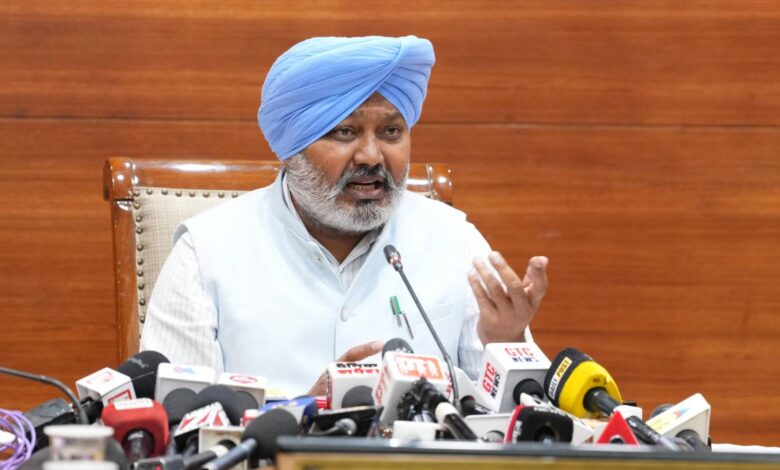
Punjab’s hospitality sector — dhabas, eateries, restaurants, fast-food chains, bakeries, and sweet shops — is at the centre of a massive tax evasion crackdown, with Finance Minister Harpal Singh Cheema revealing on Monday that a data-driven state-wide enforcement exercise has already detected ₹200 crore in suppressed turnover, and that the total fraud could swell to nearly ₹500 crore as investigations expand to cover three financial years.
Addressing a press conference at Punjab Bhawan in Chandigarh, Cheema said 882 establishments across Punjab have been identified for scrutiny in FY 2025–26 alone. Of the 239 cases examined so far, suppressed turnover of approximately ₹50 crore has been detected, translating into a GST liability of ₹2.54 crore at the applicable 5% rate. The department has already recovered ₹2.02 crore, with proceedings continuing.
What the Numbers Say
The scale of individual evasion is striking. Three taxpayers individually suppressed turnover exceeding ₹2 crore each. Six others crossed the ₹1 crore mark. A further 18 suppressed over ₹50 lakh, 26 exceeded ₹25 lakh, and 91 cases involved suppression above ₹5 lakh.
Sector-wise, dhabas account for the largest share — approximately ₹10 crore in suppressed turnover. Small eateries, coffee shops, and chai bars follow at around ₹8 crore, while pizza and fast-food outlets exceed ₹6 crore. These are segments, Cheema noted, characterised by high cash and hybrid payment volumes — making reconciliation with GST returns difficult, and evasion easier to conceal.
Which Cities Are at the Centre
Geographically, Mohali leads with the highest detected suppression at ₹8.16 crore, followed by Jalandhar at ₹6.72 crore and Ludhiana at ₹5.48 crore. Patiala recorded ₹3.83 crore in discrepancies, while Amritsar showed comparatively lower figures at ₹0.99 crore. The concentration in urban commercial centres is consistent with the density of hospitality establishments and the volume of digital transactions available for cross-referencing.
How the Fraud Was Caught
The methodology behind the crackdown is as significant as the numbers. The State Investigation and Preventive Unit (SIPU) and the Tax Intelligence Unit (TIU) identified that a large number of establishments were using online billing applications — generating digital transaction trails that didn’t match their GST filings.
The department then directed online billing platforms to furnish detailed transactional data, which field formations are now reconciling with statutory returns. Risk parameters and data analytics drove the selection of cases — a departure from the traditional raid-based model of enforcement.
Cheema also credited the ‘Bill Liyao, Inam Pao’ (Take a Bill, Win a Prize) scheme — the state government’s consumer-facing initiative to encourage customers to demand GST-compliant bills — as a significant contributor to the detection exercise.
Notably, 52 out of the 239 establishments examined showed no discrepancy, a figure the minister cited as evidence of calibrated, data-driven selection rather than blanket enforcement.
What Comes Next
The minister said the remaining cases are under active verification and that the entire exercise is expected to conclude within a month. More significantly, the department is in the process of obtaining UPI transaction data and other digital payment trails, which will enable deeper reconciliation of actual receipts with reported turnover. When data from FY 2023–24 and FY 2024–25 is also factored in, Cheema projected the total evasion figure could approach ₹500 crore.
The warning to violators was unambiguous. “Strict action shall be taken in all cases of tax evasion,” Cheema said, adding that compliant taxpayers would continue to be facilitated.
GST on restaurants
Restaurants not in hotel premises (with room tariff below ₹7,500) attract GST at 5% without input tax credit. This flat rate applies to both dine-in and takeaway at most standalone eateries and dhabas.