Vedanta Unit Penalty Order: What the Supreme Court Rs 127 Crore Penalty Ruling Means For Punjab and PSPCL
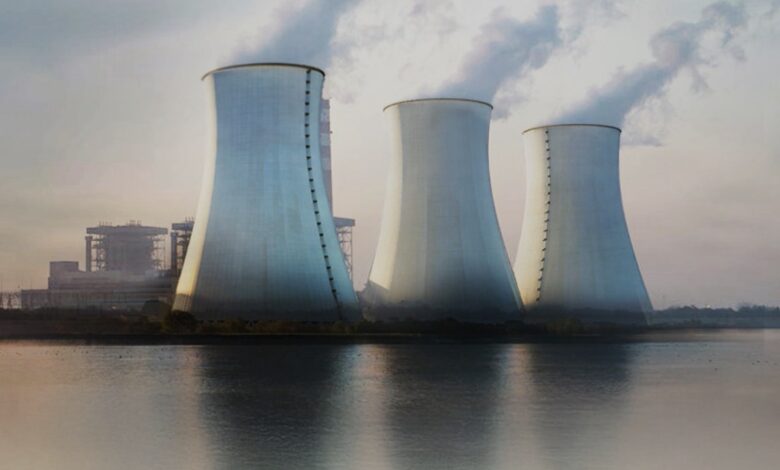
Vedanta unit penalty order: The Supreme Court has upheld a Rs 127 crore penalty on Vedanta’s Talwandi Sabo Power plant in Punjab. Here is what happened, why it matters, and what comes next.
North Desk Bureau
Chandigarh, May 22
Q. Who is Talwandi Sabo Power Limited and what does it do?
Talwandi Sabo Power Limited (TSPL) is a large thermal power plant located in Mansa district, Punjab. It operates three coal-fired generating units, each capable of producing 660 MW of electricity — a total installed capacity of 1,980 MW. TSPL is part of the Vedanta group, one of India’s largest natural resources conglomerates, and supplies power to Punjab under a long-term Power Purchase Agreement (PPA) with the Punjab State Power Corporation Limited (PSPCL) — the state utility that distributes electricity to consumers.
Q. What happened in 2017 that triggered this entire dispute?
Vedanta unit penalty order: At the heart of the dispute is a concept called Declared Capacity (DC) — the amount of power in megawatts that TSPL commits to making available each day. PSPCL pays fixed charges based on this declared figure, regardless of how much power it actually draws.
In late 2016, Punjab’s grid manager — the Punjab State Load Despatch Centre (PSLDC) — noticed a pattern: TSPL was repeatedly generating significantly less than what it had declared. On four days in January 2017 (15th, 17th, 24th, and 31st), the PSLDC formally asked TSPL to demonstrate that it could actually generate what it had declared. TSPL failed each time.
On January 17, TSPL had only one unit running. After receiving the demonstration notice, instead of ramping up, it actually revised its declared capacity downward — first to 250 MW and then to just 150 MW.
Q. What is “misdeclaration” and why does it matter financially?
In plain terms: if a generator declares it can produce X megawatts, the state utility pays it fixed capacity charges based on X — even if the utility draws less. This is by design, to ensure generators are compensated for keeping capacity ready.
But this creates an obvious temptation: a generator could declare a higher capacity than it can actually deliver, pocket the fixed charges, and hope the grid manager never calls its bluff. The Punjab State Grid Code has a specific provision that allows the PSLDC to ask any generator to demonstrate its declared capacity at any time. Failure to do so invites an automatic penalty.
The original penalty levied was Rs 162.74 crore. Of this, Rs 74.27 crore was directly deducted from TSPL’s pending bills by PSPCL — under protest, pending the final court outcome.
Q. How did a 2017 penalty end up before the Supreme Court?
Vedanta unit penalty order: The dispute travelled through multiple forums over nearly eight years. TSPL first approached the Punjab and Haryana High Court, which referred the matter to a Commercial and Metering Committee, then to the State Grid Code Review Committee. Dissatisfied, TSPL again went to the High Court, which then referred it to the Punjab State Electricity Regulatory Commission (PSERC).
PSERC upheld the penalty on the four January 2017 dates. TSPL then appealed to the Appellate Tribunal for Electricity (APTEL) which reversed PSERC’s order and deleted the penalty entirely. PSPCL and PSLDC then appealed to the Supreme Court.
Q. Vedanta unit penalty order—What did the SC decide?
In its Vedanta unit penalty order, the Supreme Court has set aside the APTEL order and restored the PSERC penalty. TSPL loses; PSPCL wins.
The key legal question was whether TSPL needed to have deliberately cheated — with intent to make illegal profit — for the penalty to apply. TSPL argued that only deliberate “gaming” (with proven mala fide intent) could attract penalties. The Supreme Court disagreed sharply.
The court drew a clear line: “gaming” — intentional fraud to make undue gain — requires proof of guilty intent. But “failure to demonstrate declared capacity” under Regulation 11.3.13 is a separate, strict liability provision. No intent needs to be proved. If you declare a capacity and cannot show it when asked, you pay the penalty. Full stop.
The court also ruled that demonstration must happen within four time-blocks of 15 minutes each — effectively within one hour of receiving the PSLDC’s notice. TSPL had failed to meet this standard on all four days.
Q. What does this mean for Vedanta and TSPL now?
Vedanta has disclosed the ruling to the BSE and NSE as a material development. In its stock exchange filing, the company states that approximately Rs 127 crore along with applicable Late Payment Surcharge is now payable to PSPCL. This is the net liability after accounting for the Rs 74.27 crore already deducted from earlier bills.
The Supreme Court has also directed that any surcharge TSPL paid on its bills during the period when the APTEL had set aside the penalty must now be refunded to PSPCL with interest — since TSPL had the benefit of those amounts in the intervening period.
For a company of Vedanta’s size, Rs 127 crore is manageable. But the reputational and precedent implications of having a strict liability penalty upheld by the Supreme Court are significant.
Q. Does this affect Punjab’s electricity consumers?
Indirectly, yes — in a positive direction. PSPCL’s counsel argued before the Supreme Court that the penalty ultimately benefits consumers, since PSPCL’s income feeds into annual tariff determination by PSERC. A penalty recovered from a generator reduces the cost burden that would otherwise be passed on through electricity tariffs.
Trident’s Rajinder Gupta Security Withdrawn After BJP Switch
₹2000 note legal or Illegal in India? What It Means in 2026?
ALSO: PPF Investment: How To Build 50 Lakhs In 18 Years, But These Mistakes Can Cost You Lakhs




One Comment