Tribune Flyover Row: Chandigarh’s Own Planners Said No. The Flyover Came Anyway.
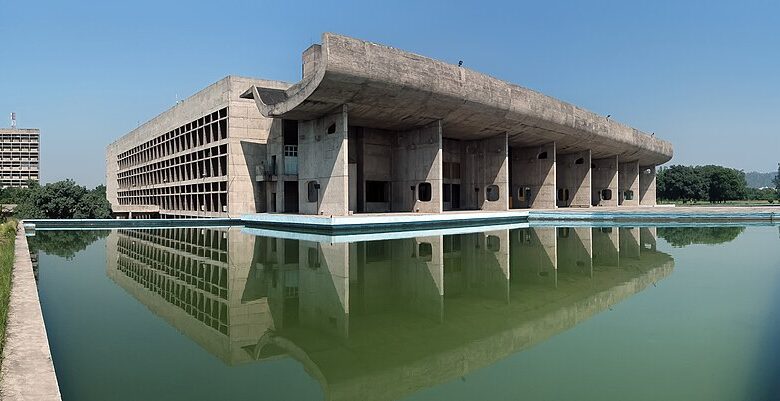
Tribune Flyover Row: The Urban Planning Department never approved the Tribune Chowk flyover. It said so in writing. It asked for official records to be corrected. Nobody listened — until the High Court did.
North Desk Correspondent
Chandigarh, June 2
Someone in Chandigarh’s administration sanctioned a flyover at Tribune Chowk. The department whose job it is to sanction such things says it never did.
That is not an allegation. It is what the records show.
The Department of Urban Planning, Chandigarh Administration — the statutory authority responsible for the city’s Master Plan — not only was never consulted before the Tribune Chowk flyover project was cleared, it subsequently wrote formally to the Engineering Department pointing out that the Chandigarh Master Plan 2031 does not permit construction of bridges or flyovers anywhere in the city. Heritage considerations, the letter said. Visual cityscape. Inconvenience to pedestrians and non-motorised vehicles.
More significantly, Urban Planning denied ever having given its concurrence to the project. And it asked for the minutes of official meetings — specifically those dated 14 May 2019 and 25 April 2020 — to be corrected, because those minutes had recorded a concurrence that the department says it never conveyed.
Someone had put something in the official record that wasn’t there.
The Tribune flyover row: Despite this, the project moved forward. Notices Inviting Tenders were floated for the construction of a flyover, rotary and underpass at Tribune Chowk on NH 05 on Dakshin Marg. Trees were surveyed and marked — 472 to be axed, 43 to be relocated. The Engineering Department proceeded as though the Urban Planning objection did not exist.
The question that Chandigarh’s administration has not answered publicly is a simple one: who authorised this project, and under what authority, after the city’s own planning department said it was illegal under the city’s own Master Plan?
Tribune Flyover Row: What the Records Reveal
Tribune Flyover Row: The contours of this bureaucratic fault line have now been laid out in detail in a judgment pronounced by the Punjab and Haryana High Court on May 29, 2026 — a ruling that has since drawn attention primarily for its outcome: the flyover is dead, an underpass is permitted instead.
But buried within the judgment is a chronological reconstruction of how this project was conceived, challenged, cleared and re-cleared over seven years — and how at every stage, the Urban Planning Department’s objections were simply absorbed and ignored.
The Tribune flyover row:: The judgment records that the Chief Architect, Department of Urban Planning, Chandigarh Administration, wrote to the Chief Engineer-cum-Special Secretary (Engineering), UT Chandigarh, stating that CMP-2031 does not approve construction of bridges or flyovers in the entire city of Chandigarh. The letter cited heritage considerations and the impact on the visual city space. It noted that the department had not been approached for any formal concurrence, and therefore none had been conveyed.
The judgment then records, in language that deserves to be read carefully: “In sum and substance, the Urban Planning Department of U.T. Administration was not even consulted by Engineering Department before deciding to construct Flyover.”
Not even consulted. In a heritage city with a statutory Master Plan that explicitly prohibits flyovers. On a project that would have felled nearly 500 trees.
Seven Years, Multiple Courts
The Tribune flyover row is not new. It has wound through the courts since 2019.
In November that year, a petition flagged that 472 trees were to be axed and 43 relocated for the proposed flyover. A coordinate bench of the High Court immediately stayed the cutting of trees. Days later, in late November 2019, the present petitioners — led by Jagwant Singh Bath — filed a separate petition challenging the Notice Inviting Tenders for the flyover’s construction.
That petition was withdrawn in December 2019 after the court directed the UT Administration to hear the petitioners’ objections through a committee. The petitioners duly submitted representations — in December 2019 and again in February 2020. They attended a meeting presided over by the Chief Engineer-cum-Special Secretary. Their objections were rejected on the sole ground of “dire need of de-congestion” at Tribune Chowk.
The Tribune flyover row: It was around this time that the Urban Planning Department made its position clear in writing — and asked for the meeting minutes to be corrected.
None of it made a difference. The project continued.
The tree-cutting stay, which had been in place since November 2019, was finally vacated by a coordinate bench in April 2024. By October 2024, the High Court had directed the UT Administration to proceed with flyover construction “expeditiously.” The project appeared, at that point, to have finally cleared every obstacle.
It was in this context — with construction seemingly imminent — that the present PIL came up for final hearing. Arguments concluded on May 13, 2026. During the closure of arguments, the petitioners sought a stay on tree-cutting. The court granted it on May 15, restraining the felling or lopping of any mango or other tree near Tribune Chowk. The full judgment followed on May 29.
What the Master Plan Actually Says
The High Court’s division bench — Chief Justice Sheel Nagu and Justice Sanjiv Berry — went into considerable detail on what Chandigarh Master Plan 2031 actually provides, because the UT Administration’s defence rested partly on the claim that Dakshin Marg, where Tribune Chowk sits, was not part of the Heritage Sector.
The court rejected that argument. Using the original 1951 aerial diagram of Chandigarh contained in Chapter 3 of CMP-2031 itself, it established that Dakshin Marg forms the south-west boundary of Sectors 29, 30, 20, 21, 22, 23, 24 and 25 — making it an integral part of Phase I, the Heritage Sector comprising Sectors 1 to 30. Any developmental activity on Dakshin Marg, the court held, is therefore bound by CMP-2031.
And CMP-2031, at page 307, is unambiguous: “Over bridges/flyovers are not recommended to be constructed in entire city of Chandigarh due to heritage considerations, since they impact the visual city scape, and cause inconvenience to the pedestrians.”
The court further held that CMP-2031 is not merely advisory. It was notified on April 23, 2015 under the Capital of Punjab (Development and Regulation) Act, 1952 and the Punjab New Capital (Periphery) Control Act, 1952. Its contents are mandatory in nature. It can only be changed by following the same procedure used to frame it — public notification, objections, a Board of Inquiry.
No such procedure was followed. No amendment was sought. The Engineering Department simply proceeded.
The Ruling
The court allowed the petition and issued the following directions:
By a writ of prohibition, the Chandigarh Administration is restrained from proceeding with flyover construction at Tribune Chowk, in violation of CMP-2031, which prohibits over bridges and flyovers within Chandigarh.
The Chandigarh Administration is, however, at liberty to construct an underpass at Tribune Chowk, which CMP-2031 permits for traffic decongestion.
The UT Administration is restrained from cutting any mango tree or any other tree in and around Tribune Chowk.
The court further directed the UT Administration to maintain the green, unique and heritage status of Chandigarh town, including Phase I comprising Sectors 1 to 30 and Dakshin Marg. It also directed, by a writ of mandamus, that the administration ensure and encourage the original ambience and character of the city by minimising personal motorised vehicular traffic and promoting public transportation.
The Question That Remains
The court has answered what happened and why it was wrong. It has not — and could not — answer who within the administration drove this project forward over seven years, past the objections of its own Urban Planning Department, past formally disputed meeting minutes, past a statutory Master Plan that said no.
RELATED: IPL 2026 Prize Money: Winner RCB Gets ₹20 Crore — Full Prize Money Breakdown
Follow North Desk on WhatsApp for the latest from Punjab, Haryana and Himachal Pradesh: https://whatsapp.com/channel/0029Vb7ccdxJENy2H87DBG3E