Mukh Mantri Mawan Dheeyan Satkar Yojana Explained: Who Gets ₹1,000, Who Gets ₹1,500, Who Gets Nothing

Punjab Women to Get Rs 1000: The Punjab government’s women cash scheme has been officially notified. The money is real, the rules are clear, and there are very few reasons you’d be excluded. Here’s everything you need to know — in plain language
UPDATED On June 2, 2026: Nearly 52 lakh women in Punjab will receive monthly financial assistance of Rs 1,000 while Dalit women will get Rs 1,500, from July 1 under Mukh Mantri Mawan Dhiyan Satkar Yojana.
Stating this on Tuesday, Punjab CM Bhagwant Mann said that cards for 35 lakh beneficiaries have already been issued.
The CM said the funds for this had been budgeted and that this scheme was a long term scheme and not a temporary thing as was being misinformed by some parties.
North Desk Bureau
Chandigarh, April 5
The Punjab Government Gazette published an extraordinary notification on April 2, 2026. Its headline is deceptively simple: every woman in Punjab gets money every month. The scheme is called the Mukh Mantri Mawan Dheeyan Satkar Yojana — and it launches on April 13, 2026, Baisakhi.
The number the government is most proud of: an estimated 97 out of every 100 women in Punjab will be eligible. Which means only 3 won’t. Let’s find out who falls where.
First, the money. How much are we talking?
Two slabs. That’s it.
If you belong to a Scheduled Caste category, you get ₹1,500 per month. Every other woman gets ₹1,000 per month.
The money comes straight into your Aadhaar-linked bank account via Direct Benefit Transfer. No agent. No commission. And no, you don’t have to share it with anyone — the government has explicitly said there is no restriction on how many women from one family can claim it. If three women in your house are eligible, all three get separate payments.
One more thing worth flagging: if you’re already drawing a social security pension, you still get this on top of it. The scheme does not replace existing pensions — it adds to them.
Punjab Women to Get Rs 1000: Are you in? The eligibility test
Three things. That’s all the government is asking for at the eligibility stage.
One: You must be a woman, 18 years or older.
Two: You must be a registered voter in Punjab — meaning your name is on the Punjab electoral roll.
Three: Your Aadhaar card must reflect a Punjab address. Not an out-of-state address. Punjab residency, specifically.
If you tick all three, you are almost certainly in.
The documents you’ll need
The gazette spells out four documents:
Aadhaar Card reflecting Punjab residency — this is non-negotiable. Aadhaar authentication is mandatory under the scheme, per Section 7 of the Aadhaar Act, 2016. Voter ID issued by the Election Commission of India for Punjab. Bank Account Passbook — the account must be Aadhaar-linked for the DBT to work. Caste Certificate — only if you’re claiming the ₹1,500 SC slab. Otherwise, not required.
Registration is free. You go to your nearest Anganwadi Centre or Sewa Kendra. No fees, no charges — anyone who asks you for money for registration is running a scam.
Now the 3 out of 100: who doesn’t qualify?
The exclusion list is tight and deliberate. It targets only those with government income or significant financial resources.
Government employees and pensioners. This covers anyone who is a permanent or retired employee of the Punjab government, the Central government, or any other state or UT government. Also excluded are employees and pension-drawers from any Public Sector Undertaking, Statutory Board, Corporation, Tribunal, or Cooperative Institution set up under a state or central government.
Income tax payers. If you paid income tax — even ₹1 — in the last financial year, you’re out. This is a clean, verifiable cut-off.
Serving or former ministers, MPs, and MLAs. And their spouses.
That’s the entire exclusion list. Not a farmer. Not a daily wage worker. Not a housewife. Not a woman running a small business. Not someone just because her husband earns well. The scheme targets only women who are themselves beneficiaries of state resources or significant formal income.
How will the scheme actually work on the ground?
The government is setting up a High Level Implementation Committee chaired by the Chief Secretary. This committee controls everything — the exact disbursement schedule, the registration process form design, and whether to add more registration centres.
For last-mile delivery, the government plans to deploy women mobilisers — a network of women who will go door to door in rural and underserved areas, helping beneficiaries open bank accounts, seed Aadhaar, and complete registration paperwork. There will also be facilitators specifically assigned to assist with registration. Both mobilisers and facilitators will receive a financial incentive structure — the details of which will be notified separately.
The financial assistance will be disbursed on a schedule set by the committee “from time to time.” The gazette does not specify a fixed date — that’s the committee’s call.
What if you become ineligible later — or die?
The scheme has clear rules on both counts.
If you are found ineligible at any stage, the payments stop immediately.
If a beneficiary dies, payments stop — but any money already paid before the death does not need to be returned. The government assumes the family used it for last rites. However, the department will take steps to ensure no further disbursements are made.
The scale of this scheme — in numbers
The state has allocated ₹9,300 crore for this scheme in the 2026-27 budget. The scheme is expected to become one of the largest women-centric social welfare initiatives undertaken by the Punjab government.
‘Further burden state exchequer’
What do the economists say? Talking to North Desk, noted Punjab economist Professor Ranjit Singh Ghuman raised several concerns. He said it will put extra burden on the state exchequer and the state, already reeling under massive debt, would have to raise extra loans.
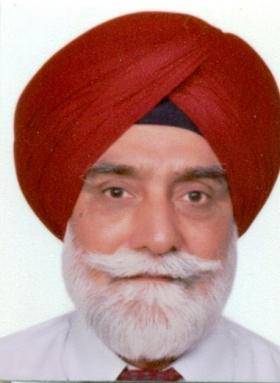
This move, he added, will not increase investment GDP and will do nothing to improve the state infrastructure which will only deteriorate. “This reeks of competitive populism and race will only hot up among the political parties. The government should check the viability of such schemes because one, it is not sustainable, and two, such schemes once introduced cannot be withdrawn,” he said.
The government, he added, should instead create an atmosphere which attracts industry and leads to employment for the youth. “The youth needs employment and not dependence which is what such schemes tend to create,” Prof Ghuman said.
ALSO READ: Bikram Majithia Row: Who Is Jobanpreet, and Why Bikram Majithia Was Named in FIR
Follow North Desk on WhatsApp for the latest from Punjab, Haryana and Himachal Pradesh: https://whatsapp.com/channel/0029Vb7ccdxJENy2H87DBG3E