PB Fintech Share Price Crash: Bernstein Keeps 'Outperform' Even After Slashing Target By Half
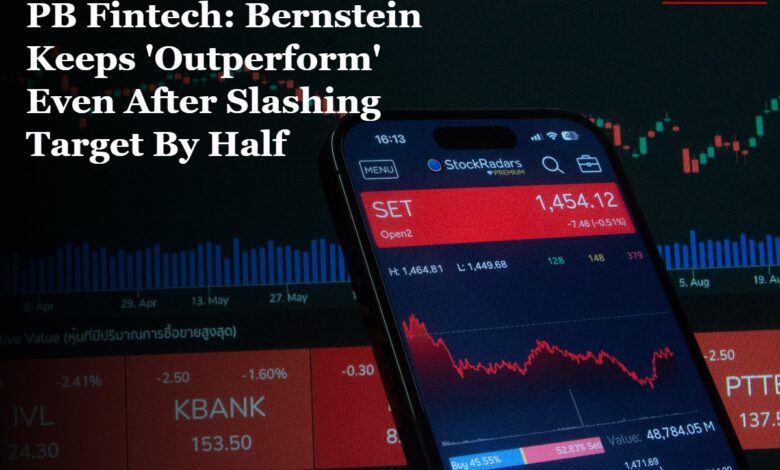
PB Fintech stock fell 48% after IRDAI’s commission-cap proposal. Bernstein cut its target 53% to zero upside but kept ‘Outperform’ — here’s the full brokerage split.
By North Desk Bureau
On September 23, 2026, the Insurance Regulatory and Development Authority of India (IRDAI) released a consultation paper titled “Recalibrating Economics of Insurance Distribution.” The paper proposes a five-year glide path to cap company-level Expenses of Management, mandatory cost audits and public disclosure, tighter commission structures across life, health and motor insurance, and a ban on “dark patterns” — the practice of making customers share personal details before they can see a policy’s actual price.
For mandatory third-party motor insurance, distributors could end up with little or no commission at all.
IRDAI has invited stakeholder comments until October 25, 2026, after which the framework will be considered for finalisation — so none of this is locked in yet.
The market didn’t wait for finality. PB Fintech, the parent of Policybazaar and Paisabazaar, had closed at Rs 1,886 on September 23. It fell roughly 30-36% in a single session the next day as the scale of the proposed commission caps sank in, and the slide continued through the following week.
By the end of September, the stock had dropped nearly 48% over six sessions, landing close to its original Rs 980 IPO price — effectively erasing years of post-listing gains in under a fortnight. Market value lost has been pegged at around Rs 37,000 crore. The sell-off wasn’t confined to PB Fintech; other insurance-distribution-linked stocks fell in sympathy.
PB Fintech: Where the brokerages landed, and didn’t agree
PB Fintech: What followed was a scramble among global and domestic brokerages to re-price the stock, and their conclusions diverged sharply — not just on where the target should land, but on what rating that target should carry.
HSBC cut PB Fintech target by 45%, from Rs 2,100 to Rs 1,150, and downgraded the stock from Buy to Hold. That’s a coherent move: lower conviction, lower rating.
BofA Securities kept PB Fintech Neutral rating but trimmed its target by 28.4%, from Rs 1,970 to Rs 1,410 — a smaller cut, consistent rating.
Jefferies initially cut PB Fintech target by nearly 25%, from Rs 2,050 to Rs 1,540, while holding on to its Buy rating.
Macquarie went the other way, retaining an Outperform rating for PB Fintech with a target of Rs 1,950 — implying as much as 67% upside over the stock’s then-prevailing price. The brokerage called PB Fintech “bruised, not broken,” arguing the life insurance segment could hold up even if general insurance absorbs the hit.
Bernstein is the outlier worth dwelling on. Days after reaffirming its Rs 2,310 target and Outperform rating — a call that implied 91% upside — Bernstein published a report titled “PB Fin: Max pain — Business model changes needed,” cutting its target by 53% to Rs 1,085. At that level, the new target implied essentially zero upside from where the stock was trading. Bernstein kept the Outperform rating anyway.
The report explained the mechanics behind the number: Bernstein modelled a “max pain” scenario assuming no regulatory rollback and no benefit from any mitigation PB Fintech might attempt, under which the company’s FY30 profit estimate falls to around Rs 20,000 crore from a prior Rs 32,000 crore — a 38% cut.
The brokerage noted PB Fintech itself had indicated non-life NPV (net present value of future commissions) could fall to 33-40% of its original level if the proposed commission cuts in health and motor insurance go through as drafted. Bernstein’s report called the next 18 months “do or die” for the company’s ability to adapt its business model to lower commission rates.
The gap
PB Fintech: What makes the Bernstein call notable isn’t the size of the cut — plenty of brokerages made similarly severe cuts. It’s that a target implying zero upside is, by most conventional definitions, a Hold, not an Outperform.
HSBC’s downgrade shows the alternative is available and other brokerages took it. Why Bernstein didn’t is not explained in the material available publicly; the report frames the rating as reflecting confidence over a longer horizon even as its own near-term “max pain” numbers are stark.
Brokerage rating-target mismatches aren’t unique to this episode — ratings often lag price-target revisions because they go through separate internal sign-off, and some houses treat ratings as multi-year calls that don’t move on near-term regulatory noise. Whether that’s what happened here, or whether the rating simply hasn’t caught up with the model yet, is something only Bernstein can answer.
For now, the proposal remains a draft, open for comment until October 25. Whatever IRDAI finalises — stricter, softer, or unchanged from the September 23 paper — will likely decide whether Bernstein’s target needs revising again, or its rating does.
ALSO: Gold Could More Than Double, But Only If…
ALSO: Gold Price Record Highs Predicted Despite India’s Pullback
Follow North Desk on WhatsApp for the latest from Punjab, Haryana and Himachal Pradesh: https://whatsapp.com/channel/0029Vb7ccdxJENy2H87DBG3E