Asha Bhosle dies at 92 — the singer who recorded 228 Punjabi songs and sang Gurbani
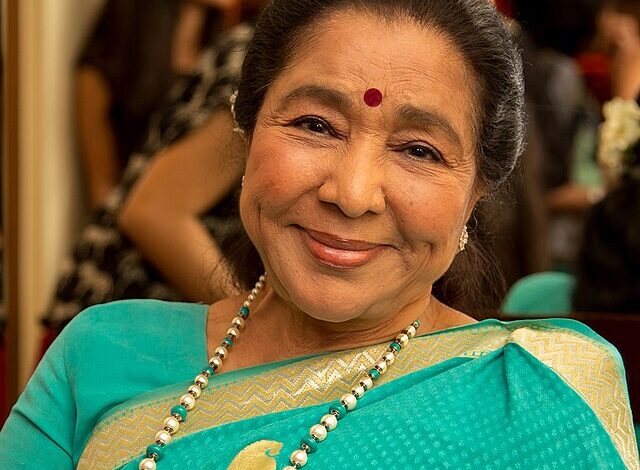
She made her name in Bollywood. But she recorded 228 Punjabi songs, sang Gurbani in the Ragi Rababi tradition, and gave voice to over a hundred Punjabi films. Punjab had claimed her long ago.
North Desk Bureau
Chandigarh, April 13
She was born in Maharashtra, made her name in Mumbai, and became famous across the world. But Punjab knew her first — and perhaps knew her best.
Asha Bhosle, who died in Mumbai on Sunday aged 92, will be remembered by most as the voice behind Bollywood’s boldest women. The cabaret dancer. The vamp. The rebel who refused the roles her more celebrated elder sister Lata Mangeshkar left behind. That story is true, and it is remarkable. But it is not the whole story — not for this part of the world.
Long before “Dum Maro Dum” or “Piya Tu Ab To Aaja” established her as Hindi cinema’s most daring voice, Asha Bhosle was doing something quieter and more lasting: she was singing Punjab’s own stories back to it.
The 228 songs nobody talks about
Her first Punjabi film song came in 1949, when she was barely sixteen. The film was Lachhi. The music director was Hansraj Behl. She was young, not yet famous, and still finding her footing in an industry that had not quite decided what to make of her. Punjabi cinema decided quickly. Offers poured in.
Through the 1950s and 60s, she recorded 228 songs across more than a hundred Punjabi films — a body of work that most national obituaries today will not even mention. Posti, Mutiyar, Vasakhi, Dharti Veeran Di, Shonkan Mele Di, Nanak Nam Jahaz Hai. These were not side projects. They were the films that working-class Punjabi audiences actually watched, in the single-screen cinemas of Ludhiana and Amritsar and Jalandhar, on evenings when life needed a little music and the screen provided it.
Songs like “Ik paase tahli,” “Main jatti aan Punjab di,” “Daachi waleya morh muhaar,” “Tun peengh te main parchhavan” — they became part of the air. You did not hear them so much as absorb them. That is what it means when a song enters the culture rather than merely the charts.
The Gurbani that surprised everyone
Then there was Nanak Nam Jahaz Hai in 1969 — a devotional film that became a Golden Jubilee hit and remains, to this day, one of the most loved productions in Punjabi cinema’s history. Asha sang the Gurbani Shabads: “Mere Sahib tu main mann nimani,” “Re man aiso kar sanyasa,” “Prabh ju kahi laj hamari.”
She sang them not as a performer approaching unfamiliar material with careful technique, but with the ease of someone who understood what the words were actually asking. The Ragi Rababi tradition is not ornamentation — it is submission, surrender through song. A Maharashtrian woman who had eloped at sixteen and spent years singing in B-grade films brought that quality to it. She went on to sing Gurbani in Nanak Dukhiya Sab Sansar, Dukh Bhanjan Tera Naam, Man Jeete Jag Jeet, Mittar Pyare Noon.
In Punjab, this was noted. It was not taken for granted.
What she built in the shadow of her sister
The Lata-Asha story has been told many times, usually in terms of rivalry. It is more interesting understood as contrast. Lata Mangeshkar was the voice of Indian womanhood as the establishment wished it to be — pure, elevated, untouchable. Asha Bhosle was the voice of Indian womanhood as it actually was — complicated, playful, capable of desire and mischief and grief in the same breath.
Where Lata sang the goddess, Asha sang the woman. And it took decades for the industry to recognise that the woman was the harder part to get right.
By the time RD Burman became her musical partner and eventually her husband, the combination was transformative. Pancham’s compositions gave her the framework; her voice gave them their life. The songs they made together in the 1970s — “Chura liya hai tumne,” “Yeh mera dil,” “Piya tu ab to aaja” — remain the gold standard of Hindi film music from that era.
Later came the Ghazals of Umrao Jaan, which silenced anyone who had still categorised her as merely a cabaret voice. Then the pop collaborations — with Boy George in the 1990s, a Grammy nomination that introduced her to audiences who had never seen a Hindi film in their lives. And then, just weeks before her death at 92, a track with Gorillaz for their new album — one final recording that crossed every boundary her career had spent eight decades dissolving.
What Baisakhi takes with it this year
She died on April 12. Her last rites are being performed today, April 13 — Baisakhi. The Khalsa’s birth anniversary. The day Punjab marks its own beginning, every year without exception.
That timing is either coincidence or something that cannot quite be explained. Either way, there is something appropriate about it. Asha Bhosle was not Punjabi by birth. But she gave this land so much of her voice — its devotional music, its cinema, its everyday soundtrack — that Punjab had, in some sense, already claimed her long ago.
The Guinness Book of World Records called her the most recorded artist in music history. Twelve thousand songs. Twenty languages. Eight decades. Two Grammy nominations, a Dadasaheb Phalke Award, a Padma Vibhushan.
None of those numbers capture what it meant to grow up in Punjab and hear her voice coming from the next room.