Why gold and silver prices are falling during wedding season: 4 Key Reasons Behind the Slide
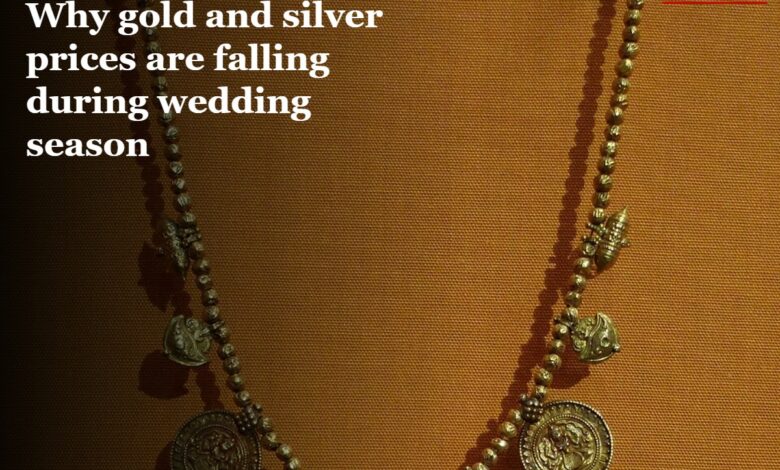
Why gold and silver prices are falling during wedding season in India: 24K gold slips near ₹1.32–1.36 lakh and silver tumbles toward ₹1.65–1.85 lakh amid Fed rate bets and a firmer rupee.
By North Desk Bureau
For Indian households, the annual calendar usually follows a predictable script: as Dhanteras, Diwali, and the peak November–December wedding season arrive, surging jewellery demand pushes gold and silver prices upward. This November, however, the bullion market has flipped that script entirely.
Despite brisk festive and wedding-related footfalls across jewellery markets in North India and nationwide, domestic 24-carat gold prices slid further on Wednesday (November 18) to hover around ₹1,32,300–₹1,36,040 per 10 grams (with 22-carat gold near ₹1,21,275–₹1,24,700 per 10 grams), marking a 14-month low in international spot trade near $3,797 an ounce. Silver has seen an even steeper correction, falling to roughly ₹1,65,400–₹1,85,000 per kilogram as global spot silver slipped toward $46 an ounce.
For families preparing for winter weddings—many of whom had deferred purchases during this year’s record price rallies—the pullback comes as unexpected relief. Here is why precious metals are falling despite strong Indian seasonal buying, and what buyers should keep in mind.
1. Global Rate-Hike Bets and a Surging US Dollar Override Local Demand
Why gold and silver prices are falling: While India is one of the world’s largest physical consumers of gold, domestic bullion prices are anchored to international benchmarks priced in US dollars. Over the past month, global macro forces have overpowered Indian wedding demand:
December Fed Rate-Hike Expectations: Stronger-than-expected US inflation readings have pushed market expectations of a US Federal Reserve interest-rate hike in December to nearly 90%, making non-yielding assets like gold and silver less attractive than interest-bearing US Treasury bonds.
Dollar Strength: As the US dollar index has firmed up, dollar-denominated bullion has become more expensive for global buyers, triggering sustained selling in gold futures and exchange-traded products.
2. A Stronger Rupee Has Amplified the Drop in India
Why gold and silver prices are falling: According to the World Gold Council’s (WGC) India Gold Market Update, released on November 17, domestic gold prices have fallen even faster than international rates in recent weeks because of currency movement:
Between late October and mid-November, international gold slipped around 1% to $3,870/oz, while Indian domestic prices dropped 5.3% over the same window.
A key driver behind that sharper local fall is the 1.7% appreciation of the Indian rupee since the end of October, which has lowered the landed import cost of bullion for domestic banks and refiners.
3. Old-Gold Recycling and Ample Domestic Supply
Why gold and silver prices are falling: Even as festive and bridal buying picked up after October’s price dip, domestic bullion dealers have continued trading at a modest discount to official import parity (narrowing from an average discount of $66/oz in September to about $5/oz in mid-November).
Industry feedback cited by the World Gold Council points to two supply-side cushions keeping local premiums in check:
Heavy Old-Gold Recycling: Elevated price levels earlier in the year prompted households to exchange old jewellery for new designs rather than paying entirely in fresh cash, reducing jewellers’ need to import fresh bullion.
Adequate Market Inventory: With steady stocks already available across major hubs, physical demand has absorbed dips smoothly without triggering a supply squeeze.
4. Why Silver Is Falling Twice as Fast as Gold
Why gold and silver prices are falling: Buyers tracking silver coins, utensils, and bridal silverware have noticed much sharper daily swings than in gold. Unlike gold—which is cushioned by steady central bank purchases (321 tonnes globally in Q3 2026 alone)—silver relies heavily on industrial consumption and speculative investor flows.
Outflows from global silver exchange-traded products (down 55 million ounces so far in 2026) and higher global recycling volumes—projected to hit a 14-year high of around 210 million ounces—have left silver far more vulnerable to sharp sell-offs whenever US interest-rate expectations harden.
Why gold and silver prices are falling: What Wedding Buyers Should Keep in Mind
Why gold and silver prices are falling: Market analysts note that while short-term volatility ahead of December’s US Federal Reserve meeting could keep prices choppy, Indian wedding-season buying typically provides a floor against runaway crashes. For families with fixed wedding dates over the next two months, staggered buying—locking in rates in two or three tranches rather than waiting for an elusive bottom—and verifying BIS Hallmark (HUID) codes along with transparent making-charge breakups remains the safest approach.
ALSO: Gold Rings, Cash Transfers, Free Power: What Indian States Are Giving Their Citizens
Follow North Desk on WhatsApp for the latest from Punjab, Haryana and Himachal Pradesh: https://whatsapp.com/channel/0029Vb7ccdxJENy2H87DBG3E