CBI Judge Sudhir Parmar Discharge: ED Fights Back, Calls It ‘Mini Trial’, Says Evidence Wrongly Discarded
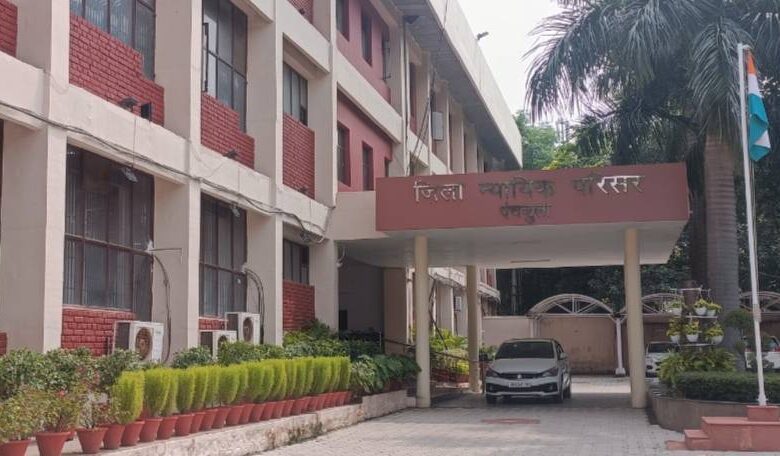
Ex CBI Judge Sudhir Parmar Discharge: The Enforcement Directorate has challenged the discharge and co-accused at Punjab & Haryana High Court, arguing the trial court conducted a “mini trial” and that the committal order itself was illegal.
Arvind Chhabra
Chandigarh, May 22
The Enforcement Directorate has approached the Punjab and Haryana High Court challenging the discharge of former CBI and PMLA Special Judge Sudhir Parmar and four co-accused by the Special Judge CBI, Haryana at Panchkula, in a bribery case that shook the judiciary of the region.
The petition, filed recently, challenges two orders — the committal order of February passed by the Additional Sessions Judge, Panchkula, and the discharge order of April 2026 passed by Special Judge CBI Rajeev Goyal.
The five accused who were discharged are: Sudhir Parmar (the then Special Judge, CBI-PMLA, Panchkula), Ajay Parmar (his nephew and Deputy Manager Legal at M3M Group), Roop Bansal (promoter of M3M Group), Anil Bhalla (owner of Vatika Group), and Lalit Goyal (Managing Director of IREO Group).
The Background
The Anti-Corruption Bureau, Panchkula, had registered an FIR in April 2023 against Sudhir Parmar and others, alleging that he had accepted bribes from the owners of M3M and IREO groups — both of whom had cases pending before him — in exchange for favourable orders. The FIR alleged demands of Rs 5-7 crore, WhatsApp chats showing bribe negotiations, and audio recordings of conversations between Parmar and the accused. The ACB investigation was followed by the ED registering an enforcement case under the PMLA.
North Desk had earlier reported on the discharge order passed by the Special Judge CBI in which the court found that the electronic evidence — the WhatsApp chats and audio recordings that formed the spine of the prosecution case — could not be relied upon.
The First Challenge: Committal Order Was Illegal
The Enforcement Directorate’s petition attacks the very foundation of the proceedings before the Special CBI Court. It argues that the committal of the case to the PMLA Special Court — which preceded the discharge — was itself unlawful.
Section 44(1)(c) of the Prevention of Money Laundering Act specifies that the court trying the scheduled offence (here, the corruption case under the PC Act) can commit the case to the PMLA Special Court only “on an application by the authority authorised to file a complaint under this Act” — meaning the ED and only the ED.
In this case, the application for committal was filed not by the ED but by accused Roop Bansal. The petition states: “The application for committal of the predicate offence case was moved by an accused ie Accused No. 3 Roop Bansal and not by an authority authorised to file a complaint under the PMLA.”
The ASJ, Panchkula, had acknowledged the ED’s objection on this precise point — the Public Prosecutor had argued that only the ED could trigger Section 44(1)(c) — but overruled it, holding that since the ED had not moved the application, the mandatory provision could not be ignored merely because it was an accused who had done so. The ED calls this reasoning “legally incorrect.”
The petition argues: “Because the court cannot invoke a mandatory provision in the absence of the condition for its invocation.” It also flags that the ED was never served a copy of the committal application, was not made a party, and was not given a hearing before the order was passed — a violation of natural justice.
The Second Challenge: A “Mini Trial” at Discharge Stage
The ED’s another attack is on the former CBI Judge Sudhir Parmar Discharge order itself. It argues that the Special CBI Court, when deciding whether to frame charges, conducted what amounts to a full trial — evaluating the credibility of witnesses, assessing the reliability of electronic evidence, applying a standard of proof appropriate for conviction rather than for charge-framing.
The law on discharge is settled, it says: at the stage of framing charges, the court must only ask whether the material on record, taken at face value, discloses a prima facie case giving rise to grave suspicion. It cannot weigh evidence or decide credibility. “The law does not permit a mini trial at this stage,” the petition states, citing a Supreme Court judgment.
The trial court’s order on CBI Judge Sudhir Parmar Discharge had discarded the audio recordings on the ground that the original source device had not been produced and no certificate under Section 65B of the Evidence Act could therefore be given. The ED challenges this reasoning, citing a Supreme Court’s which holds that the requirement of a 65B certificate applies only to persons who are in control of the device — not to investigating agencies who received recordings from a third-party source.
On the “friendly loan” finding — the trial court had accepted that Rs 1.3 crore transferred in multiple tranches by Rohit Singh Tomar to Sudhir Parmar’s relatives was a friendly loan, despite acknowledging that there was no documentation, no interest, no collateral and no repayment — the ED’s petition states this characterisation is “a perverse inference that no reasonable Court could draw at the stage of framing of charge.”
The petition further argues that the trial court wrongly dismissed the CFSL voice analysis report. The Central Forensic Science Laboratory had opined in four of the twelve audio recordings that the voice was “probably” that of Sudhir Parmar, and in one recording that the voice was “probably” that of Roop Bansal. The trial court had cited a Supreme Court caution about relying solely on voice evidence for conviction. The ED’s petition points out: “Nilesh Paradkar cautioned against basing conviction solely on voice evidence. It did not say voice evidence cannot even create suspicion for framing of charges.”
The petition against the CBI Judge Sudhir Parmar Discharge also flags what it calls a critical piece of physical evidence the trial court glossed over: the recovery from Sudhir Parmar’s official residence at Panchkula of a brief note and a short rejoinder relating to Lalit Goyal’s case — kept in isolation in the almirah of his bedroom, not found in any court file. “The incriminating nature of this recovery lies not in the contents of the documents but in their location — in the bedroom of the judge,” the petition states.
On witness Sombir Singh — who had deposed that he was present at Sudhir Parmar’s Gurugram residence when Roop Bansal visited and heard Parmar ask him to arrange Rs 50 lakh each for three persons — the trial court had found the witness untruthful without examining him. The petition calls this “a classic case of a mini trial.”
The Legal Relief Sought
The ED has sought setting aside of both the committal order dated 3 February 2026 and the order of CBI Judge Sudhir Parmar Discharge dated 20 April 2026, and has separately prayed for a direction to the PMLA Special Court at Panchkula not to proceed with the main PMLA case during the pendency of the petition.
The Discharge Order: What the Trial Court Had Said
The former CBI Judge Sudhir Parmar Discharge order was passed by Special Judge CBI Rajeev Goyal in April 2026. The court had held that the WhatsApp chats alleged in the FIR could not be located in the data forensically retrieved from the seized mobile phones of Sudhir Parmar and Ajay Parmar — a fact the ED itself acknowledged in its final report. On the audio recordings, the court found that since the source was anonymous and the original device never identified, the recordings could not be translated into admissible evidence even at the trial stage.
The trial court had also found no evidence of any specific favour granted by Sudhir Parmar to Lalit Goyal in court proceedings — his bail application had been dismissed; only a travel permission had been allowed, which was never challenged. On the salary hike of Ajay Parmar at M3M, the court held that the increase had not coincided with Sudhir Parmar’s posting as CBI Judge but came substantially later.
The ED’s petition against order of CBI Judge Sudhir Parmar Discharge systematically disputes each of these findings, arguing they are beyond the scope of the discharge jurisdiction and belong to the domain of the trial.
Haryana Rape Cases Pile Up As Govt Sends Prosecutors To Roadways




3 Comments