Ex CBI Judge Sudhir Parmar : Raids, Arrest, Bribe Allegations and Discharge Explained
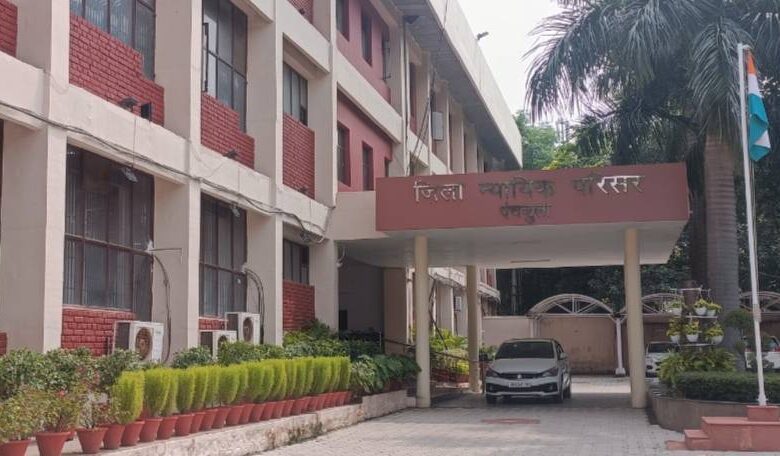
Haryana’s ex CBI Special Judge Sudhir Parmar was the man who decided fate of powerful accused. Then the tables turned. Here is the full story of his fall and discharge.
Arvind Chhabra
Chandigarh, April 28
Who is Former Haryana Special CBI Judge Sudhir Parmar Who Was Raided, Arrested and Then Discharged?
For over two decades, CBI judge Sudhir Parmar was a man who decided fates. As Special Judge, CBI and PMLA, Haryana, sitting at Panchkula, he presided over some of the most serious financial crime cases in the region — cases involving the Enforcement Directorate, the Central Bureau of Investigation, and powerful real estate groups accused of cheating thousands of home buyers.
Then, in April 2023, the system he was part of turned its gaze on him.
What followed was three years of raids, arrests, a departmental suspension, bribe allegations involving crores of rupees, and finally, on April 20, 2026, a discharge order from the very kind of court he once ran.
Here is the full story.
WHO IS SUDHIR PARMAR?
Sudhir Parmar joined the Haryana Judicial Department in 2001 as a Judicial Magistrate. He worked his way up steadily through the system, and by 2016 was promoted to Haryana’s Superior Judicial Services.
Between 2017 and April 2021, he was posted as Additional District and Sessions Judge at Gurugram — the commercial heart of Haryana, where real estate disputes, financial fraud cases and corporate litigation land in bulk.
On November 18, 2021, he was transferred to one of the most consequential postings in Haryana’s judicial hierarchy: Special Judge, CBI, ED and NIA, Haryana, at Panchkula.
This was the court where Enforcement Directorate cases under the Prevention of Money Laundering Act (PMLA) were heard. Where accused in serious financial crimes — including real estate developers facing money laundering charges — would come to seek bail, challenge attachment orders, or contest prosecution complaints.
It was, in other words, a posting where the judge sitting on the bench had enormous power over some very powerful people.
WHAT WERE THE ALLEGATIONS?
The trouble for ex CBI Judge Sudhir Parmar began with a source — an anonymous informant who approached Haryana’s State Vigilance and Anti-Corruption Bureau (ACB) with explosive material.
According to court records, the source provided screenshots of WhatsApp chats and a set of 12 audio recordings. What they allegedly contained was damning.
In the chats, a person identified as Sudhir Parmar was allegedly seen demanding Rs 5 to 7 crore from associates of M3M Group — one of Haryana’s biggest real estate conglomerates — for helping them in ED cases. In the same chats, it was mentioned that Rs 5 crore had already been given to Parmar by the accused in the IREO Group case.
IREO’s Vice Chairman and Managing Director, Lalit Goyal, had been arrested by the Enforcement Directorate in November 2021 in a money laundering case involving diversion of home buyers’ funds. That case — COMA/01/2022 — was pending in Sudhir Parmar’s own court.
M3M’s promoter, Roop Bansal, was separately apprehending being named as an accused by ED in the same case. He too was allegedly in regular contact with Parmar.
The audio recordings allegedly captured Parmar speaking to Roop Bansal and others about ongoing ED matters, discussing how he could help protect them, and even claiming to have spoken to ED officials about non-attachment of certain properties.
One recording allegedly captured Parmar asking someone for Rs 1.5 crore — Rs 50 lakh per head — as illegal gratification for facilitating meetings with accused persons.
Another, involving a person identified as VP Gupta — described in the charge-sheet as a dismissed judge — allegedly showed the two discussing how to extract money from a retired IAS officer who was an accused in a CBI or ED case.
THE NEPHEW ANGLE
Central to the prosecution’s case was the role of Ajay Singh Parmar, Sudhir Parmar’s nephew.
According to ACB, Ajay Singh Parmar had been appointed as Deputy Manager-Legal at M3M in December 2020 — when Sudhir Parmar was still posted at Gurugram as ADJ. His starting salary was around Rs 8.75 lakh per year.
When Sudhir Parmar was transferred to Panchkula as CBI Judge in November 2021, nothing changed immediately. But from August 2022 onward, Ajay Parmar’s monthly salary jumped sharply — from around Rs 66,000 per month to Rs 1,11,413 per month. His annual income, as per Income Tax returns, rose from Rs 2.64 lakh in 2021-22 to Rs 9 lakh in 2022-23.
ACB alleged that M3M had effectively doubled the nephew’s salary as an indirect bribe to the judge — routed through a legitimate employment relationship so as to avoid direct money transfer.
The audio recordings allegedly corroborated this. In one, Parmar is heard saying his nephew’s salary had been increased from Rs 12 lakh to Rs 18 lakh. In another, he says: “Yeh toh channel hai” — this is the channel.
The prosecution also alleged that Sudhir Parmar used his nephew’s phone — and not his own — to communicate with Roop Bansal and others. Call Detail Records, it was argued, showed over 1,000 calls between former CBI judge Sudhir Parmar and Ajay Parmar over one year, but no direct calls between Sudhir Parmar and any of the accused. The audio recordings allegedly show Roop Bansal himself confirming he always contacted Parmar through Ajay’s phone.
THE MONEY TRAIL
Beyond the employment angle, ACB alleged a significant paper trail of unexplained wealth.
Between August 2022 and February 2023 — the period when ED was preparing a supplementary prosecution complaint in the IREO case — Rs 1.3 crore was transferred in multiple tranches from the account of one Rohit Singh Tomar, owner of R. Sai Transport, Gurugram, into the bank accounts of Ajay Singh Parmar, his brother Paramvir Singh Parmar, and their mother Mrs Pushpa Devi — described in records as Sudhir Parmar’s sister-in-law.
Ajay Parmar alone received Rs 40 lakh in seven RTGS transfers between August 2022 and February 2023. Mrs Pushpa Devi received Rs 54 lakh in eight separate transfers from the same account.
No loan documentation, no interest arrangement, no collateral security — nothing that would explain the transfers as a normal financial transaction.
This money, ACB alleged, was then used to purchase a residential plot in Sector 82, Gurugram from Vatika Private Limited, owned by accused Anil Bhalla, in the name of Mrs Pushpa Devi. Sale consideration shown in the conveyance deed: Rs 1,80,36,817. Actual market value as per Tehsildar’s report and property dealers: Rs 4.25 crore to Rs 4.40 crore.
Separately, a 10-kanal piece of land at village Sanpka on the Pataudi-Gurugram Road was registered in April 2022 in the name of Ajay Singh Parmar. Sale price shown: Rs 1.01 crore. Actual market value: upward of Rs 5.30 crore, according to a WhatsApp message from a middleman that showed the real transaction value and Sudhir Parmar’s 20 per cent share.
During searches at Sudhir Parmar’s Gurugram residence, ACB recovered Rs 21 lakh in cash. No satisfactory explanation was given.
Also Read: HC tells Punjab You can’t plead poverty while giving full DA to IAS
THE DOCUMENT IN THE BEDROOM
One detail in the charge-sheet stood out even amid all the financial allegations.
During the search of CBI judge Sudhir Parmar’s official residence at Panchkula on April 18, 2023 — conducted in the presence of District and Sessions Judge Subhash Mehla, specially deputed by the High Court — investigators found, in an almirah in the bedroom, a brief note and a short rejoinder filed on behalf of Lalit Goyal in a bail matter before the Punjab and Haryana High Court.
The document was not part of any court file. It was kept separately. ACB alleged it had been supplied to Parmar by Lalit Goyal’s side to guide him in deciding the case — given that the framing of charges in the PMLA case was still pending in Parmar’s own court at the time.
THE FIR, THE RAIDS, THE ARREST
The ACB’s investigation had begun after the source information was received. Since Sudhir Parmar was a judicial officer, ACB needed the Chief Justice of the Punjab and Haryana High Court to grant permission before a case could even be registered.
The permission was accorded. An FIR was registered at Police Station ACB, Panchkula under Sections 7, 8, 11 and 13 of the Prevention of Corruption Act, 1988 and Section 120-B of the IPC on April 17, 2023.
The very next day simultaneous searches were carried out at multiple locations: Sudhir Parmar’s rented residence in Gurugram, his official residence in Panchkula, the residential and office premises of one Gagandeep Singh in Gurugram, the residence of Roop Bansal, and the office of R. Sai Transport.
Sudhir Parmar was suspended on April 27, 2023.
Then, on August 10, 2023, he was arrested — not by ACB but by the Enforcement Directorate, which had registered a separate case. He remained in ED custody until November 2, 2023, when he was granted bail.
WHAT HAPPENED IN COURT?
A charge-sheet was filed before Special Judge (CBI), Haryana at Panchkula — the very court Sudhir Parmar had once presided over.
The case came up for framing of charges. Sudhir Parmar, Ajay Kumar (listed as Ajay Parmar in the FIR), Roop Bansal, Anil Bhalla and Lalit Goyal — five accused in all — were before the court.
The prosecution argued that the evidence was sufficient: voice-matched audio recordings, WhatsApp chats, bank statements, salary records, property documents, and witness statements.
The defence argued the opposite: that the entire case rested on anonymous electronic evidence whose original source had never been disclosed and whose authenticity could not be verified.
—
WHY WAS SUDHIR PARMAR DISCHARGED?
On April 20, 2026, Special Judge Rajeev Goyal discharged all five accused. The order runs to 84 pages. The core reasons:
ONE — THE WHATSAPP CHATS VANISHED
ACB had presented WhatsApp screenshots as part of the source information. But when the mobile phones of ex CBI judge Sudhir Parmar, Ajay Parmar and others were seized, sealed and sent to the Forensic Science Laboratory at Madhuban for examination, the FSL retrieved all data — including deleted data — from the devices.
The incriminating WhatsApp chats were nowhere to be found.
ACB’s own conclusion in the charge-sheet read: the chats “could not be traced/found, which reveals that the said alleged chats… have either been deleted by the accused persons or the same have got automatically deleted or overlapped due to lapse of such a long time period of more than 7-8 months.”
The court found this explanation untenable. If deleted data was successfully retrieved, why couldn’t these specific chats be found? The court ruled the WhatsApp evidence was worthless and could not be considered even for the limited purpose of framing charges.
TWO — THE AUDIO RECORDINGS: COPIES WITHOUT AN ORIGINAL
The 12 audio recordings were stored in an Olympus Digital Voice Recorder and a Verbatim CD-R. These were sent to CFSL Chandigarh for forensic examination.
The CFSL report established one critical fact: all the recordings had been fed into the Olympus DVR on a single date — January 26, 2023. They were not original recordings. They were copies, transferred onto the device on that date.
The original recording device was never produced. The original source — the anonymous informant — was never identified. ACB could not tell the court who had made the recordings, on what device, or where that device was.
The court put this question directly to the Deputy Director of Prosecution during arguments. He sought an adjournment to consult the Investigating Officer. When the case was next heard on March 24, 2026, no satisfactory answer was forthcoming.
The court ruled: without knowing who made the recordings, on what device, and with the original device never sent for forensic examination, the audio evidence could not be relied upon.
THREE — CFSL MATCHED VOICES IN ONLY 4 OF 12 RECORDINGS
Out of 12 audio files examined, CFSL could match former CBI judge Sudhir Parmar’s voice in only four — and even those matches were given on the basis of probability, not certainty. Roop Bansal’s voice was matched in just one recording. For several others, the CFSL said background noise was too high, or the spoken content was too limited, for any conclusion.
FOUR — NO FAVOURABLE ORDERS TRACED
The court examined the judicial orders passed by former CBI Judge Sudhir Parmar in Lalit Goyal’s case. His bail application had been dismissed. The only reliefs granted were permission to travel abroad — which Goyal never used — and a direction to ED not to share investigation details with the media, which ED itself had said it was not doing anyway.
The court found nothing in those orders that could be characterised as intentional favouritism.
FIVE — THE PROPERTY PURCHASES
Without the audio evidence and WhatsApp chats, the prosecution’s property trail also collapsed. The court held that undervaluation of property — if at all — was a matter for the Collector under the Stamp Act, not a corruption case. The Rs 1.3 crore transferred to Parmar’s relatives was noted as suspicious but, in the absence of proved bribe demand, could only be treated as friendly loans. The DA (disproportionate assets) angle also failed because ACB had not conducted a proper check-period-based income and expenditure analysis as required for such cases.
—
WHERE DOES IT STAND NOW?
The discharge is in a criminal case filed by ACB.
The Enforcement Directorate’s separate case — in which former CBI Judge Sudhir Parmar was arrested in August 2023 — is a distinct proceeding and was not before this court. Its status is not addressed in this order.
The departmental inquiry initiated by the Punjab and Haryana High Court against Sudhir Parmar — who remains a member of the Superior Judicial Services of Haryana — is separately ongoing.
ACB can challenge this discharge order before the High Court.
Three years after the raids that shook Haryana’s judicial establishment, Sudhir Parmar has been let off by one court. But the full reckoning — departmental and otherwise — is not yet concluded.


3 Comments