Justice Anupinder Singh Grewal Who Banned Bishnoi's Interviews Named NCLT Chief
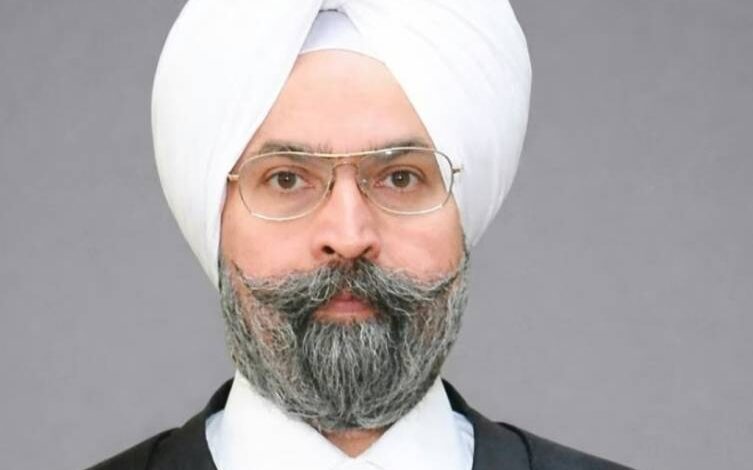
Justice Anupinder Singh Grewal, who ordered removal of Lawrence Bishnoi’s jail interviews and stayed Punjab’s land pooling policy, appointed NCLT President
Arvind Chhabra
Chandigarh, April 30
In December 2023, a division bench of the Punjab and Haryana High Court did something unusual. Without waiting for any petition, it took suo motu notice of televised interviews given by gangster Lawrence Bishnoi from what was believed to be judicial custody, called them a glorification of crime, and ordered their immediate removal from YouTube, social media platforms and search engine indexes globally.
The bench was headed by Justice Anupinder Singh Grewal.
On April 29, 2026, the Appointments Committee of the Cabinet approved his appointment as President of the National Company Law Tribunal (NCLT) — the country’s principal forum for corporate insolvency and company law disputes. He will serve for five years or until he turns 67, whichever comes earlier.
The appointment is itself notable. Ordinarily, a former Chief Justice of a High Court is appointed to head the NCLT. Justice Grewal was a senior puisne judge, not a Chief Justice, making this the first time a judge of that rank has been elevated to the NCLT presidency — an implicit acknowledgement, legal observers say, of his standing as a jurist.
The Bishnoi Order
The December 2023 order by the bench headed by Justice Anupinder Singh Grewal remains one of the most consequential judicial interventions on organised crime and digital media in recent Punjab history. The case had begun as a suo motu matter on jail phone usage after an undertrial in Sangrur Jail sent a threatening video to a victim using a smuggled mobile phone. While hearing that matter, the bench noticed that Bishnoi — then in custody, facing 71 cases in Punjab alone including convictions under the Unlawful Activities Prevention Act and for murder — had been interviewed by a news channel and the interviews had gone viral, garnering over 12 million views.
The court’s observations were pointed. The interviews, it said, glorified crime and criminals. The interviewee had justified target killings and reiterated threats to a film actor. Projecting his persona as larger than life, the bench noted, could influence witnesses in the ongoing trials. After the telecast, young persons had begun writing threatening letters to the actor targeted in the interview.
Then came the observation that went beyond routine judicial language. Punjab, the bench wrote, is a border state, and any deterioration in law and order or increase in crime could affect national security. Anti-national elements, it said, take advantage of such situations and use criminals for their designs, often with help from across the border. There is, the court said, a thin line between extortion, target killings and anti-national activities.
The court directed the DGP Punjab to immediately register two FIRs, constituted a Special Investigation Team headed by the DG of the Human Rights Commission, and ordered the blocking and de-indexing of the interview videos from all platforms including Google, Yahoo and Microsoft Bing — forthwith. It warned intermediaries that non-compliance would cost them their safe harbour protection under Section 79 of the IT Act.
It did not wait for the government to act at its leisure, as the order itself noted.
Also read: The CBI judge–raided, arrested and now discharged
The Land Pooling Intervention
The Bishnoi order was not an isolated instance. Last year, Justice Anupinder Singh Grewal’s bench stayed the Bhagwant Mann government’s Land Pooling Policy 2025, which proposed acquiring tens of thousands of acres of fertile farmland across Punjab for development without conducting Social Impact or Environmental Impact Assessments. Farmers had been protesting the policy, warning of displacement without rehabilitation for landless labourers and artisans dependent on the land.
The bench observed that the policy appeared to have been notified in haste, that no timelines or grievance mechanisms had been provided, and that the state had not demonstrated it had the budgetary resources to finance the development. It noted a telling precedent — in one connected petition, a landowner whose land had been acquired under an earlier pooling policy in 2015 had still not received his developed plot a decade later, and development work had not even begun in the relevant sectors.
Punjab subsequently withdrew the policy.
Also read: NRI alleges his land seized by land mafia in Punjab
The Appointment
Born in Ludhiana district in 1964, Justice Anupinder Singh Grewal graduated in History from St Stephen’s College Delhi before taking his law degree from Delhi University. He practised at the Punjab and Haryana High Court for over two decades, representing the State of Punjab as Additional Advocate General before being elevated as Additional Judge in September 2014. He served briefly at the Rajasthan High Court before returning to Chandigarh, where he remained until superannuation.
Justice Anupinder Singh Grewal now takes charge of an institution with a very different mandate — adjudicating corporate insolvencies, mergers and company law disputes. But the judicial temperament that shaped his High Court tenure — a willingness to act on its own motion, scepticism of institutional overreach, and attentiveness to those with less power — travels with him to the new role.