VB-G RAMG Scheme in Punjab: What It Is and Why Congress Is Crying BJP-AAP Deal
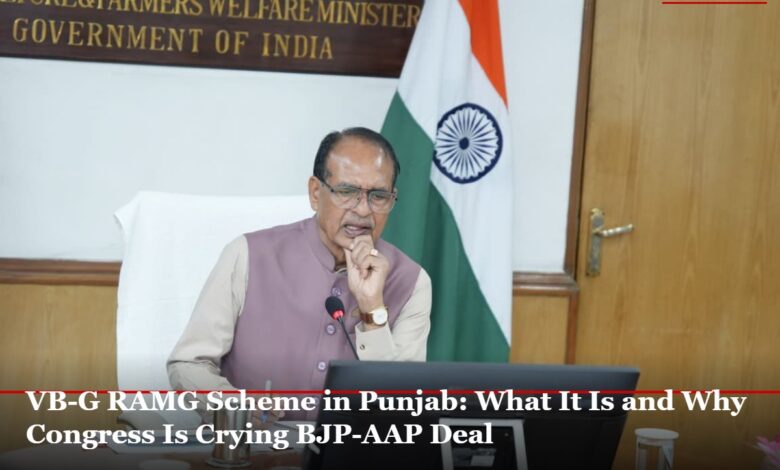
VB-G RAMG Scheme in Punjab: Punjab’s AAP government notified the VB-G RAMG scheme on June 26 — the same scheme it had called a “black law” and rejected in a special Assembly session in December. We explain what changed, what the scheme means for workers, and why Congress smells a political deal.
North Desk Correspondent
Chandigarh, June 27
Six months ago, the AAP government in Punjab convened a special session of the state Assembly and unanimously passed a resolution calling the Centre’s new rural employment scheme a threat to workers and the federal structure. On June 26, the same government quietly notified the implementation of that very scheme. What changed — and what is the Congress reading into it?
What Is VB-G RAMG ?
VB-G RAMG Scheme in Punjab: The Viksit Bharat–Guarantee for Rozgar and Ajeevika Mission (Gramin), or VB-G RAMG, is the Centre’s replacement for the two-decade-old Mahatma Gandhi National Rural Employment Guarantee Act (MGNREGA). The new legislation comes into force across the country from July 1, 2026, replacing the MGNREGA, 2005, and marks a significant overhaul of India’s rural employment architecture.
On paper, the scheme expands entitlements. It guarantees 125 days of wage employment annually to every eligible rural household willing to undertake unskilled manual work, up from the earlier 100-day guarantee under MGNREGA. Employment is to be provided within 15 days of demand.
So What’s the Controversy?
VB-G RAMG Scheme in Punjab: Critics, including the AAP government itself, until last week, argue the headline improvement masks several rollbacks.
The most significant is financial. Under the earlier MGNREGA framework, expenditure was shared between the Centre and states in a 90:10 ratio. This has now been changed to 60:40. For Punjab, AAP’s own minister Tarunpreet Singh Sond had calculated this would mean an additional annual burden of approximately ₹600 crore on the state alone.
The new scheme also does not guarantee wage employment throughout the year and imposes a mandatory 60-day ban during peak farming seasons. Critics point out this hits agricultural labourers precisely when they most need supplementary income — between crop cycles.
The shift from rights to allocation is another core objection. Activist Nikhil Dey pointed out that the new scheme shifts from a demand-driven model to a top-down, supply-driven one, making the method for determining state-wise normative allocations critically important. Under MGNREGA, a worker had a legal right to demand work. Under VB-G RAMG, allocations are capped by budget.
The scheme will also be supervised by a Central Gramin Rozgar Guarantee Council, unlike MGNREGA, which operated under the Ministry of Rural Development — a centralisation that opposition-ruled states have flagged as undermining state autonomy.
In Punjab specifically, 70 per cent of MGNREGA workers are women, making the scheme’s restrictions on working months a particularly acute concern.
What Did Punjab’s AAP Government Say Before?
VB-G RAMG Scheme in Punjab: In December 2025, AAP minister Sond called VB-G RAMG a “black law” and a “direct attack on MGNREGA labourers.”
The Punjab government then convened a special Assembly session on December 30 and passed a unanimous resolution opposing the scheme — joining Karnataka, Kerala, Telangana and, later, Jharkhand in formal legislative resistance.
Opposition to the scheme grew stronger in several states. Karnataka, Kerala, Telangana and Punjab passed resolutions in their assemblies against the proposed changes.
What Happened on June 26?
The Punjab Department of Rural Development and Panchayats issued a notification signed by Administrative Secretary Ajit Bala Ji Joshi implementing the VB-G RAMG scheme in the state — ahead of its national rollout date of July 1.
The notification made no reference to the December Assembly resolution.
READ ALSO: Who Is Jagman Samra? The Canada-Based NRI at the Centre of the Bhagwant Mann Video Row
Why Is Congress Calling It a Deal?
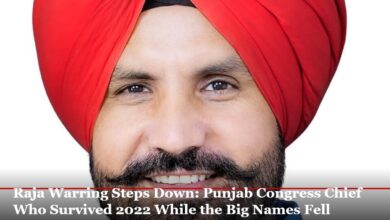
VB-G RAMG Scheme in Punjab: Punjab Congress president Amarinder Singh Raja Warring was blunt. He asked how the AAP government could notify a scheme its own Assembly had unanimously rejected. His answer: a political arrangement between AAP and the BJP.
The timing, Warring argued, is telling. The notification came in the middle of the Bhagwant Mann “Guru Dokhi” controversy — in which the Akal Takht has declared the Chief Minister guilty of disrespecting the Sikh faith and the opposition has been demanding his resignation. “Having been cornered both within and outside his party, is the Chief Minister trying to buy peace with the BJP?” Warring asked.
He also directed a pointed question at AAP national convenor Arvind Kejriwal, asking him to publicly clarify whether he approved of Mann’s decision. “Otherwise,” Warring said, “it will become established that AAP has struck an opportunistic deal with the BJP.”
What Does AAP Say?
The AAP government has not issued a formal statement explaining the reversal. North Desk sought a response from party spokespersons; none was forthcoming at the time of publication.
The Bigger Picture
Punjab is not the only state that passed a resolution and then found itself implementing the scheme anyway. Parliamentary panel chief Saptagiri Ulaka criticised the abrupt transition, warning that states may not fully participate under the new funding model. The Centre’s position has been that the transition is “seamless and worker-centric” and that all ongoing MGNREGA works will continue without interruption.
For Punjab’s roughly 20 lakh MGNREGA workers — a majority of them women and Dalit — the practical impact of the 60:40 funding shift and the seasonal work ban will become clearer only after July 1. What is already clear is that the AAP government’s public position on the scheme has made a full reversal in six months.
Follow North Desk on WhatsApp for the latest from Punjab, Haryana and Himachal Pradesh: https://whatsapp.com/channel/0029Vb7ccdxJENy2H87DBG3E
READ ALSO: Gurugram FIR Decoded: What It Says About the Bhagwant Mann Video Row
READ ALSO: Bhagwant Mann Video Row: CM Says Prosthetic Mask, Sunglasses Used to Impersonate Him
READ ALSO: Who Is Jagman Samra? The Canada-Based NRI at the Centre of the Bhagwant Mann Video Row