Vrindavan Boat Capsize: 10 Punjab Pilgrims Dead, 5 Missing — What Caused the Tragedy?
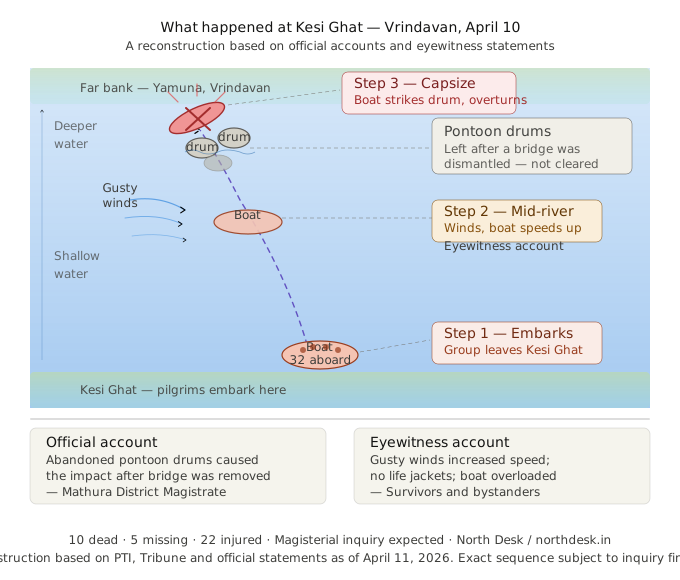
Ten pilgrims, mostly from Ludhiana’s Jagraon, died after their boat capsized in the Yamuna at Vrindavan on April 10. Here is what we know — and what remains unclear — about what caused it.
North Desk Correspondent
Chandigarh, April 11
What began as a devotional four-day trip to Mathura and Vrindavan for families from Ludhiana’s Jagraon ended in one of the worst tragedies to hit Punjab in recent months. At least 10 people are dead, five remain missing, and 22 others were injured after a boat carrying pilgrims capsized in the Yamuna River near Kesi Ghat on Friday afternoon.
Who Were The Victims
A group of about 120 pilgrims from Jagraon’s Shri Banke Bihari Club had left for a four-day trip to Vrindavan in two buses on April 9. The deceased include Kavita Behal, Charanjit and his daughter Pinky, and Madhur Kumar Behal — all residents of Jagraon — along with Rakesh Gulati, his wife Anju Gulati and Meenu Bansal from Dugri Phase-2 in Ludhiana, Ishan Kataria and Sapna Hans from Punjab, and Asha Rani of Bhiwani, Haryana.
Medical authorities at Vrindavan Joint Hospital confirmed the deceased include six men and four women. Shops and commercial establishments in Jagraon downed shutters on Friday as news spread.
The Official Account — And The Eyewitness Version
This is where the story gets complicated, and where there are two narratives running in parallel.
What officials said: The accident occurred near Kesi Ghat when the boat moved into deeper waters and hit a floating pontoon. Authorities noted that a pontoon bridge had recently been dismantled in the area due to rising water levels, leaving some pontoon drums in the river, one of which the boat is believed to have collided with.
What eyewitnesses said: Eyewitnesses told media that the boat began to sway violently due to gusty winds, its speed increased and it then collided with a pontoon bridge, causing it to overturn.
The difference matters. The official version places the blame on abandoned infrastructure — drums left in the water after a bridge was dismantled. The eyewitness version adds a second factor: weather and speed.
What the video shows: A purported video circulating widely captures the group clapping on the river moments before disaster struck. The visuals have also raised serious safety concerns, as none of the 30-odd passengers on board the motorised boat appeared to be wearing life jackets, with some survivors alleging the boat was crammed with people well beyond its capacity.
That last detail — overloading without life jackets — is potentially the most significant. If confirmed, it shifts accountability from weather and abandoned pontoons toward the boat operator and the local authorities responsible for ghat safety enforcement.
The Response
Chief Minister Bhagwant Mann spoke to his UP counterpart Yogi Adityanath and assured all necessary assistance. The Ludhiana administration set up helplines: 01612403100 (DC Office) and 01624-223226 (SDM Jagraon office), and dispatched a team of senior officials to coordinate with UP authorities.
Prime Minister Narendra Modi announced an ex-gratia of Rs 2 lakh for the kin of the deceased and Rs 50,000 for the injured.
NDRF teams retrieved the capsized boat after a four-hour continuous effort. Search operations involving SDRF, Army, fire services, civil defence and local divers continue for the five still missing.
The Questions That Remain
Three days before Baisakhi, with thousands of pilgrims from Punjab travelling to Mathura-Vrindavan every year at this time, the tragedy raises questions that go beyond this one incident:
Who certified this boat as fit for passenger operation, and how many it was permitted to carry? Were life jackets mandatory at Kesi Ghat, and if so, why were none visible? Who was responsible for clearing the Yamuna of the abandoned pontoon drums after the bridge was dismantled — and why was that not done? Was the boat operating with the awareness that an active weather advisory had been in place for North India all week?
A magisterial inquiry is expected. The answers, when they come, will determine whether this was a freak accident — or a preventable one.