CBSE Class 12 Result: How to Check and Pass Percentage Data
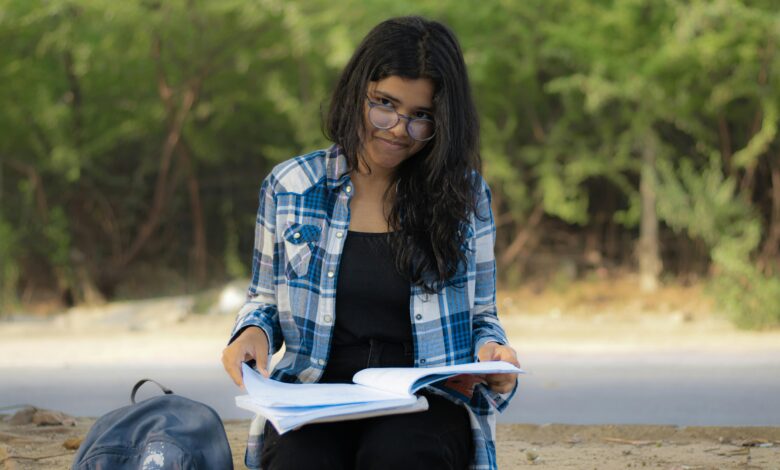
CBSE Class 12 Result 2026: Over 18 lakh students await. Full explainer: where to check, JEE and NEET eligibility rules, year-wise pass percentage, and what the numbers mean
North Desk Bureau
Chandigarh, May 8
Priya Sharma has barely slept. The 18-year-old from Sector 27, Chandigarh, finished her Class 12 CBSE board exams nearly a month ago. She has a JEE Main rank that could get her into an NIT. But none of it matters yet — not until the board result drops and she can confirm she has the 75 per cent aggregate in Physics, Chemistry and Mathematics that makes her rank usable.
“The JEE result is out, the ISC result is out, my friends in other boards already know where they stand,” she said. “I refresh the CBSE website three times before breakfast. Every day someone forwards a WhatsApp that says results are coming tomorrow. It is exhausting.”
Karan Bhatia, a Class 12 student from Mohali who appeared for JEE coaching alongside his boards this year, is in a similar limbo. “I need to know my Physics marks. I am very worried as some colleges ask for a minimum aggregate in PCM from the board exam. Without this result, I cannot even begin filling forms properly.”
Their wait is about to end. The Central Board of Secondary Education (CBSE) is expected to declare the Class 12 Result 2026 soon— most likely between May 11 and May 17. Over 18.59 lakh students across India, including 10.27 lakh boys and 8.31 lakh girls, are watching the clock.
Why Is There So Much Anxiety This Year?
The stakes around the CBSE Class 12 result have always been high. But in 2026, several pressures are converging simultaneously.
The JEE factor. JEE Main Session 2 results are already out. Thousands of students have their All India Rank in hand — but that rank is only half the equation. For admission to NITs, IIITs and IITs through JoSAA counselling, candidates must secure a minimum of 75 per cent aggregate marks in Class 12 (65 per cent for SC/ST candidates). A student can have an outstanding JEE percentile and still be ineligible for seat allocation if the board score does not meet this threshold.
This 75 per cent rule applies across five subjects, not just PCM — and it has no flexibility in the NIT-plus system. Students who have cleared JEE and are now waiting for their board marks to confirm eligibility are in a particularly tense position.
The NEET dimension. For medical aspirants, CBSE boards feed into NEET-UG eligibility. Candidates must have secured a minimum of 50 per cent in Physics, Chemistry and Biology taken together in Class 12 (45 per cent for reserved categories) to be eligible. Students who appeared in NEET-UG 2026 and are now waiting for their Class 12 score to confirm subject-level eligibility are running the same anxious calculation.
The head-start problem. The ISC (Indian School Certificate) result for Class 12 — conducted by CISCE, the rival board — was declared on April 30, 2026 with a 99.13 per cent pass percentage. Roughly 1.03 lakh ISC students already have their marksheets and have begun approaching college admission offices, filling forms and, in some cases, booking seats in private professional colleges that open on a first-come basis.
CBSE students, numbering more than 18 times that figure, are still waiting. In the private medical and engineering college ecosystem — where some institutions run rolling admissions — being first through the door matters.
The simple relief of knowing. For the bulk of the 18.59 lakh students who are not chasing engineering or medicine, the result still represents a full stop on an exhausting chapter. The boards are done. The waiting is not.
CBSE Class 12 Results: A Decade of Numbers
The CBSE Class 12 examination is one of the largest standardised assessments on earth. The numbers from the last decade tell a story that is more nuanced than the annual headline of pass percentages would suggest.
2015: Pass percentage — 82 per cent. The era of competitive board marks was firmly underway, with students and schools under mounting pressure from engineering and medical entrance benchmarks.
2016: Pass percentage — 83.05 per cent. Marginal uptick; steady increase in the number of students appearing, reflecting the board’s growing affiliate school network.
2017: Pass percentage — 82.02 per cent. A slight dip, attributed in part to stricter evaluation processes that year.
2018: Pass percentage — 83.01 per cent. Students appeared: approximately 11.86 lakh. Gradual, steady climb.
2019: Pass percentage — 83.40 per cent. Students appeared: approximately 12.05 lakh.
2020: Pass percentage — 88.78 per cent. Students appeared: approximately 12.06 lakh. The pandemic struck during evaluation season; remaining papers were cancelled and scores were computed on the basis of papers already written, which pushed the pass percentage sharply upward.
2021: Pass percentage — 99.37 per cent. The board exams were scrapped entirely due to the second wave of Covid-19. Results were computed using an alternative assessment formula — internal marks, pre-board scores and previous class performance. The near-total pass rate of this year was an exceptional pandemic-era outcome, not a reflection of examination performance.
2022: Pass percentage — 92.71 per cent. Students appeared: approximately 14.44 lakh. The board returned to examination mode but used a two-term format, splitting the year into Term 1 (MCQ-based, conducted in November-December 2021) and Term 2 (subjective, conducted in April-May 2022). Results came in July 2022. The pass percentage, while lower than 2021’s peak, remained significantly elevated from the pre-pandemic baseline.
2023: Pass percentage — 87.33 per cent. Students appeared: approximately 16.96 lakh. This was the first fully normal examination year post-pandemic — single-term, standard format, full syllabus. The pass percentage fell by more than five percentage points from 2022, prompting significant debate about pandemic-era learning loss. Girls outperformed boys by 9.32 percentage points this year.
2024: Pass percentage — 87.98 per cent. Slight recovery from 2023’s dip. The gradual return to pre-pandemic norms continued.
2025: Pass percentage — 88.39 per cent. Students registered: 17.04 lakh; appeared: 16.92 lakh; passed: 14.96 lakh. Girls again outperformed boys — 91.64 per cent versus 85.70 per cent. The Trivandrum region recorded the highest regional pass percentage at 99.91 per cent; Prayagraj was at the bottom. This was the third consecutive year of incremental recovery, though still below the 2022 high of 92.71 per cent.
2026: Students appeared: 18.59 lakh — 10.27 lakh boys, 8.31 lakh girls — across 7,574 centres in India and 26 countries. Exams ran from February 17 to April 10. A significant development this year: CBSE introduced On-Screen Marking (OSM) for Class 12 papers, digitising the evaluation process for the first time. The result is expected mid-May; the pass percentage will be announced along with the result.
The Trend Behind the Numbers
CBSE Class 12 result: The data across a decade tells a clear story: CBSE’s Class 12 pass percentage was on a slow, steady upward climb through the mid-to-late 2010s — hovering between 82 and 84 per cent. The pandemic disrupted this baseline dramatically, first pushing it up artificially (2020, 2021) and then producing a sharp correction when normal exams resumed (2023).
The board has been in recovery mode since then. Each year from 2023 to 2025 has shown a modest improvement. Educationists and school principals generally attribute the gap between current and pre-pandemic levels to writing skills atrophied during online learning, gaps in conceptual understanding built during remote schooling years, and the cumulative deficit that hits students who spent critical middle-school years in disrupted classrooms.
In that sense, this year’s result will be watched as an indicator of whether the full recovery from the pandemic-era educational disruption is finally complete.
Q&A: Everything You Need to Know
Q: Has the CBSE Class 12 Result 2026 been declared? Not yet as of May 8, 2026. The result is expected between May 11 and 17. CBSE does not announce a date in advance; the declaration simply goes live on official portals.
Q: Where can I check my CBSE Class 12 result ? The result will be available on the following official platforms:
- cbse.gov.in
- results.cbse.nic.in
- cbseresults.nic.in
- DigiLocker (digilocker.gov.in or the DigiLocker app)
- UMANG app
Q: What login details will I need to check CBSE Class 12 result ? Roll number, school number, admit card ID and date of birth. Keep your admit card accessible.
Q: DigiLocker seems complicated. How does it work for CBSE Class 12 results? Visit cbse.digilocker.gov.in or open the DigiLocker app. Use the mobile number registered with CBSE to receive an OTP. Enter the 6-digit security PIN provided by your school. Once inside, go to “Issued Documents” to locate your scorecard PDF. The digital marksheet is valid for college admissions — you do not need to wait for the physical copy from your school.
Q: The official website will crash on result day. What do I do? This happens every year. In order of reliability: try DigiLocker first (it handles traffic better than the main CBSE portals), then UMANG, then results.cbse.nic.in. If all else fails, CBSE also offers an SMS service — check the number announced by CBSE at the time of result declaration.
Q: What is the minimum passing mark in CBSE Class 12 result ? Students must secure at least 33 per cent in both theory and practical components of each subject to pass. Failing to meet this in either component — theory or practical separately — can result in a compartment or fail status.
Q: I have cleared JEE Main. Do my board marks in CBSE Class 12 result matter? Yes, critically. To be eligible for seat allocation through JoSAA counselling at NITs, IIITs, IITs and GFTIs, you must have scored a minimum of 75 per cent aggregate in Class 12. For SC/ST candidates, the threshold is 65 per cent. This is calculated across five subjects. A good JEE rank alone will not secure you a seat if this board eligibility criterion is not met.
Q: What about NEET-UG eligibility? For NEET-UG, candidates must have secured at least 50 per cent marks in Physics, Chemistry and Biology taken together in Class 12 (45 per cent for OBC/SC/ST). Students whose NEET percentile qualifies them but who are close to these subject-level minimums should check individual subject scores carefully when the result drops.
Q: CUET for central universities — do my Class 12 marks matter there? For central universities including Delhi University, JNU and BHU, admission is now primarily through CUET-UG scores. Class 12 marks are no longer the cutoff for most courses. However, candidates must have passed Class 12 — the score itself matters less than the pass status.
Q: Girls consistently outperform boys in CBSE Class 12 results. By how much? In 2025, the gap was 5.9 percentage points — girls at 91.64 per cent, boys at 85.70 per cent. In 2023, the gap was as high as 9.32 percentage points. The gender gap in pass percentage has been a consistent feature of CBSE results for years.
Q: Which regions perform best? Southern centres — Trivandrum, Chennai, Bengaluru — consistently record the highest regional pass percentages, often above 95 per cent. Trivandrum topped in 2025 at 99.91 per cent. North Indian centres, including Chandigarh and Delhi, tend to cluster in the middle range nationally.
Q: What if I fail in one subject? You can appear for the CBSE Compartment Examination, dates for which are typically announced within a couple of weeks of the main result. Passing compartment means you clear Class 12 — but admission timelines to most professional colleges will be affected since you will need to wait for the compartment result.
Q: What if I think my paper was evaluated incorrectly? CBSE offers a Verification of Marks process, which opens within a week of the result. You can apply for a photocopy of your evaluated answer sheet and subsequently file for re-evaluation if you have a legitimate case. The window is typically ten to fifteen days — do not delay.
Q: The ISC result is already out. Have those students taken all the college seats? Not yet — most professional college admissions open formally after all major board results are declared. However, some private institutions run rolling processes. CBSE students are advised to be ready to move quickly once the result is out. Keep academic certificates from Classes 10 and 11 ready, along with your admit card and ID proof.
North Desk will update this story with the pass percentage, key highlights and regional performance data the moment CBSE declares the result. Bookmark this page.
Also read: Chandigarh Crime: The Most Dangerous City in India for Senior Citizens, says NCRB data