Why Delhi Police Imposed Restrictions Ahead of CJP's Jantar Mantar Protest: The Rationale, the Letter and the Questions
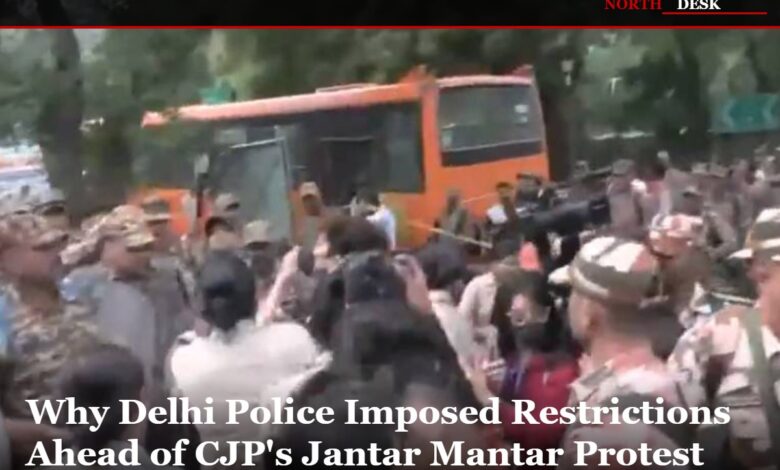
Delhi Police restrictions explained: why permission was denied for the CJP Jantar Mantar protest, what police say, what CJP says and the open questions.
By North Desk Bureau
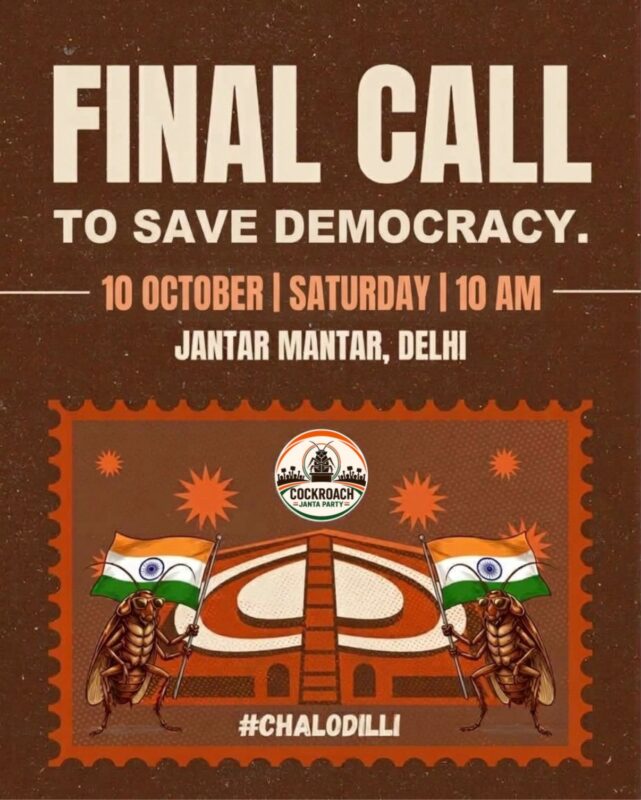
Delhi Police Restrictions: Delhi Police have issued a three-page explainer on why central Delhi is under heavy restrictions Saturday (Oct 10, 2026) for the Cockroach Janta Party (CJP) protest at Jantar Mantar. The protest has been called by CJP, AISA, SFI, AISF and other groups over alleged irregularities in the Special Intensive Revision (SIR) of electoral rolls, with a demand for the resignation of Chief Election Commissioner Gyanesh Kumar. Below is what police say, what the record shows, what the organisers say and what remains unanswered.
Delhi Police Restrictions: What Police say: the rationale
- Police say people have a right to protest, but Delhi also houses important establishments and constitutional bodies, and residents must be able to go about their day safely.
- They point to the July protests at Jantar Mantar. Permission was taken for a one-day protest, but it continued for a month.
- Police claim more than 200 personnel were injured, and that more than 2,000 persons “having criminal antecedents” joined those protests and contributed to the violence. They say innocent students were also hurt when the situation went out of control.
- They say “the same group” now wants to gather at the same place again, so permission cannot be given without addressing how safety will be ensured.
- They allege that women constables of Delhi Police were molested and assaulted by those protesting at Jantar Mantar in the past week. This is a police allegation and is not independently verified here.
- They say Jantar Mantar is a small area that can accommodate only about 1,000 people at a time, and that Delhi, “capital of the fastest growing economy”, cannot be brought to a halt every time there is a protest.
- They say seeking permission “is not anti-democratic”. Its purpose, they say, is to let authorities arrange traffic diversions, emergency access and safe crowd movement.
- On the legal side, police say CJP is proceeding without permission. They cite the Supreme Court as having said a protest held without permission is unlawful and that participants can face prosecution. The specific order is not named in the statement.
- Police describe the restrictions as temporary, meant to regulate the flow of people, prevent overcrowding and keep protesters, residents and shopkeepers safe.
The permission letter
- Delhi Police Restrictions: The Deputy Commissioner of Police, New Delhi district, wrote to CJP co-convenor Saurav Das and joint secretary Balkrishna denying permission “in the larger public interest”.
- The letter says granting permission could lead to serious law-and-order issues and inconvenience to residents and citizens.
- Police noted that CJP’s communication was merely an intimation, not a duly submitted application.
- The letter says guidelines require applications for Jantar Mantar programmes at least 10 days before the proposed date.
- It also cites earlier instances of alleged violation of protest conditions, including demonstrations running beyond stipulated time limits.
What has been put in place on the ground
- Delhi Police Restrictions: About 25,000 police and paramilitary personnel deployed across the capital, with Rapid Action Force units near Jantar Mantar and Parliament Street.
- Entry and exit restrictions at least 45 metro stations.
- Traffic diversions in force from 6 am around Jantar Mantar and Parliament Street.
- Mobile internet suspended in and around the protest zone.
- Northern Railway cancelled or regulated trains to New Delhi and Hazrat Nizamuddin. Its count of cancelled trains rose from 38 to over 250 through Friday, including local trains to Ghaziabad, Panipat and Sonipat, with the Railway Board citing “traffic congestion”.
- App-based taxis and other transport expected to face curbs near the protest area.
- Surveillance stepped up at Delhi’s borders, railway stations and bus terminals. Vehicle checks were seen at the Chilla border.
- Prohibitory orders imposed. Police have warned that violators could face detention or legal action.
The body-camera detail
- Thousands of Delhi Police personnel deployed for today’s security are wearing body cameras on their uniforms, ANI reported. The cameras work even in the dark.
- A police personnel told ANI: “These body cams are to protect us and others. In situations of manhandling, allegations are levelled against Delhi Police. So, these body cams will prove whether we did anything to anyone or not. This will record everything.”
- This ties to the police’s own concern in the explainer about allegations and the alleged assault on women constables.
What CJP and organisers say
- Delhi Police Restrictions: CJP says authorities are using “shock and awe” tactics so people do not participate, and announced that “Jantar Mantar 2.0 has begun”.
- Founder Abhijeet Dipke, speaking to media, asked why railway services and metro operations were halted, why internet was cut and roads blocked, and whether the CEC was “so dear” to the government. He alleged forces were brought from J&K and Naxal-affected areas. These are his claims.
- Dipke said protest is a fundamental right under Article 19 and that, if detained or arrested, he was ready for it.
- Co-convenor Saurav Das alleged on X that Delhi Police leaked his phone number while circulating the earlier undertaking form and the latest permission-rejection letter, and that he received 300+ calls within an hour. Police have not responded in the material reviewed.
- Delhi Police, on X on Oct 9, said the right to protest must be protected, but so must the right of a city to function safely.
The road to Oct 10
- July 2026: the CJP-led Jantar Mantar protests, which North Desk has covered in the context of the NEET-UG paper-leak agitation. Police say a one-day permission stretched to a month.
- Aug 3, 2026: the Punjab Assembly moved a condemnation resolution against the Centre over the paper-leak issue and the Jantar Mantar police action against protesting youths.
- Recent days: INDIA bloc marches in Delhi linked to the Election Commission controversy. Opposition MPs, including Rahul Gandhi and Priyanka Gandhi Vadra, were detained after being stopped.
- Friday, Oct 9: a 10-member INDIA bloc delegation met President Droupadi Murmu and submitted a memorandum on alleged electoral irregularities.
- Earlier precedents of Jantar Mantar curbs: in 2020, after the Hathras protest, police said gatherings of up to 100 were permissible there with prior permission and booked protesters for violating prohibitory orders. In May 2023, Section 144 was imposed at Jantar Mantar during the wrestlers’ protest.
ALSO: Rs 1 Lakh Monthly Bribe: Chandigarh Inspector In CBI Net
Reporting Live Story Explained: What Happens in Parineeti Chopra’s Netflix Thriller
Follow North Desk on WhatsApp for the latest from Punjab, Haryana and Himachal Pradesh: https://whatsapp.com/channel/0029Vb7ccdxJENy2H87DBG3E