Heat Deaths India: Amritsar Is India’s Heat Death Capital. 78 People Died — More Than Any Other City in the Country.
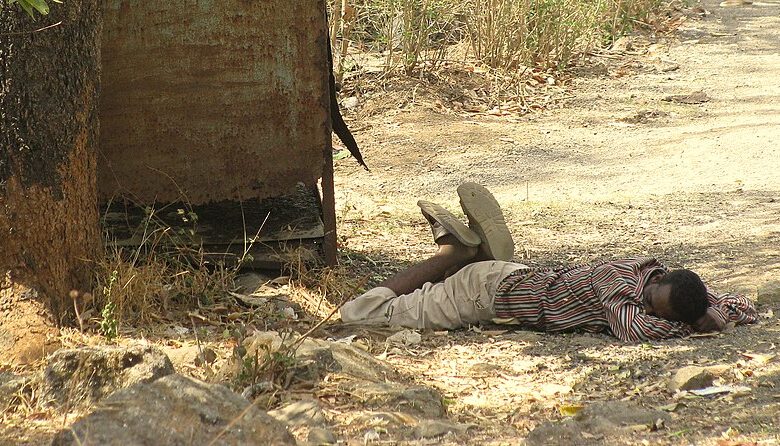
Heat deaths India: Across Punjab and Haryana, temperatures are again breaching 46 degrees. National data shows this region is among the deadliest in India when it comes to heat — and the numbers are getting worse.
North Desk Bureau
Chandigarh, May 21
The man selling lassi outside Amritsar’s old city didn’t know he was working in India’s most heat-deadly city. He probably didn’t need to know — the heat was obvious enough. What he didn’t know was that in 2024, more people died of heatstroke and sun exposure in Amritsar than in any other major city in India. Seventy-eight of them. One city. One year.
This is not folklore or media alarm. It is in the government’s own data.
The National Crime Records Bureau’s latest report compiling data of 2024 — released this year — tracks deaths across 53 major cities. Under the category of “Heat/Sun Stroke,” Amritsar sits at the top. No other city comes close. Patna, with 40 deaths, is second. Faridabad in Haryana recorded 34.
Heat deaths India: Punjab as a state recorded 183 heat and sunstroke deaths in 2024. Haryana recorded 131. Together, these two states — currently under active heatwave and severe heatwave warnings from the India Meteorological Department — account for over 300 deaths from heat in a single year. That number rose sharply from the year before. Across India, heat and sunstroke deaths jumped 127.9 percent in 2024 compared to 2023 — from 804 deaths to 1,832.
BATHINDA AT 46.6. ROHTAK AT 46.9.
Heat deaths India: As of this week, the IMD has issued heatwave warnings across Punjab and Haryana that will last until at least May 26. The highest temperature recorded in Punjab in the past 24 hours was 46.6 degrees Celsius at Bathinda — already 5.5 degrees above normal for this time of year. Night temperatures too are running nearly 3 degrees above normal, meaning the body gets no real recovery time after a brutal day.
In Haryana, Rohtak hit 46.9 degrees — nearly 7 degrees above normal for daytime. When both day and night stay hot, the body’s ability to regulate temperature is slowly overwhelmed.
The IMD has specifically flagged a severe heatwave risk in districts including Ferozepur, Fazilka, Faridkot, Muktsar, Moga, Bathinda, Ludhiana, Barnala, Mansa, Sangrur and Patiala in Punjab. Most of Haryana is under similar warnings. No significant drop in maximum temperatures is expected over the next seven days. The forecast is: more of the same.
HOW HEAT ACTUALLY KILLS
Heat deaths India: Most people think of heatstroke as something that happens to the very old or the very unfit. It isn’t. It is a physiological cascade that can kill a healthy adult in hours — and it begins much sooner than most people realise.
The human body works hard to maintain its core temperature at around 37 degrees Celsius. When external heat rises — especially when humidity is also high — the primary cooling mechanism is sweating. Sweat evaporates off the skin, carrying heat away with it. But in the flat, humid plains of Punjab and Haryana in May and June, there is often little wind and high moisture in the air. Sweat cannot evaporate. The cooling mechanism fails.
As core body temperature climbs past 38 degrees, the person begins to feel the early signs: dizziness, nausea, weakness, a headache that won’t let go. This is heat exhaustion — unpleasant, but survivable with rest, shade and water.
If nothing changes — if the person keeps working, keeps walking, keeps standing in the sun — the temperature keeps rising. Past 40 degrees, the body starts to panic. Blood is redirected away from the limbs and gut toward the skin in a desperate attempt to lose heat. The heart races. Confusion sets in.
At higher degrees, the organs begin to fail. The brain, the kidneys, the liver — all are exquisitely sensitive to heat. Blood thickens. Cells start dying. This is heatstroke, and at this stage, without immediate medical intervention, it is often fatal. People who are found collapsed in the sun, or who arrive at a hospital already unconscious, frequently do not survive.
What makes it particularly cruel is how quickly it escalates in the field. A construction worker, a farmer, a street vendor — none of them are monitoring their core temperature. They push through the dizziness because they cannot afford not to. By the time the collapse comes, it is often too late.
WHY AMRITSAR. WHY PUNJAB.
Heat deaths India: Not every hot city loses as many people to heat as Amritsar does. So why here?
Geography is part of the answer. The Punjab plains are landlocked, flat, and surrounded by land that also heats up rapidly. There is no coastal breeze, no nearby water body large enough to moderate temperature. The heat builds and stays.
The city itself makes things worse. Dense old city quarters, narrow lanes, dark stone and concrete surfaces that absorb heat through the day and radiate it back through the night — Amritsar’s built environment is almost perfectly designed to trap warmth. Green cover is limited in the older parts of the city. Shade is scarce.
And then there is the question of who is out in it. The people who die of heatstroke are overwhelmingly those who cannot go indoors. Labourers. Vendors. Pilgrims on foot. Construction workers. Daily wage earners who lose money the moment they stop.
Heat deaths India: Zero deaths in HP
The contrast with Himachal Pradesh — right next door, reachable from Amritsar in a few hours — is stark. In 2024, Himachal Pradesh recorded zero deaths from heat and sunstroke. The same heatwave, the same summer, but the hills change everything. Shimla and Dharamshala offer a refuge that Amritsar simply does not have — and for most people working in the plains, that refuge is not accessible.
THE NUMBER MAY BE LARGER THAN WE KNOW
Heat deaths India: The 78 deaths figure for Amritsar, and the 183 for Punjab, come from police records compiled by the NCRB. They are, almost certainly, an undercount.
Heatstroke is notoriously difficult to certify without a proper forensic assessment. When an elderly person collapses at home on a 46-degree day and is brought to a government hospital already dead, the cause is often recorded as cardiac arrest or sudden death. When a labourer is found unconscious by the roadside and does not survive, the paperwork may not reflect heat as the cause. Emergency physicians in north India’s hospitals are well aware of the gap between what they see during heatwave months and what eventually appears in official statistics.
The real toll from heat in Punjab and Haryana each year may be significantly higher than what the data shows. The 1,832 national deaths figure should be read as a floor, not a ceiling.
WHAT YOU CAN DO: THE BASICS THAT SAVE LIVES
Heat deaths India:
Do this
Drink water before you feel thirsty. By the time thirst arrives, you are already mildly dehydrated. Aim for at least 3 to 4 litres on hot days, more if working outdoors.
Stay indoors between 11 am and 4 pm if at all possible. This is when ground-level heat combining air temperature with reflected heat from roads and buildings is at its worst.
Wear light-coloured, loose, breathable cotton. Light colours reflect heat rather than absorbing it.
Use a wet cloth on the back of the neck and wrists. These are areas where large blood vessels run close to the skin and cooling them helps bring core temperature down faster.
Check on elderly relatives, neighbours and those who live alone. Older adults lose the ability to regulate body temperature efficiently and may not realise how ill they are becoming.
If you see someone collapsed or behaving confused in the heat, move them to shade immediately, pour water over them, and call for help.
Do not do this
Don’t drink alcohol or strong tea and coffee in peak heat. These dehydrate the body.
Don’t assume you are safe just because you “don’t feel that hot.” Heatstroke can develop fast, and the early signs are easy to dismiss.
Don’t give very cold water or apply ice to someone suffering heatstroke — the shock can cause blood vessels to constrict. Use cool, not ice-cold, water.
Don’t leave children or elderly people inside parked vehicles, even briefly. Temperatures inside cars can reach lethal levels within minutes.
Don’t wait too long to seek medical help if someone is confused, not sweating despite the heat, or has stopped responding normally. These are emergency signs.
FACT CHECK ON PUNJAB CRIME: Punjab is Safer. But the Minister Told You Only Half the Story




One Comment