PSPCL Appeals Punjab DA Order, Warns Forced Payment May Push Up Power Bills
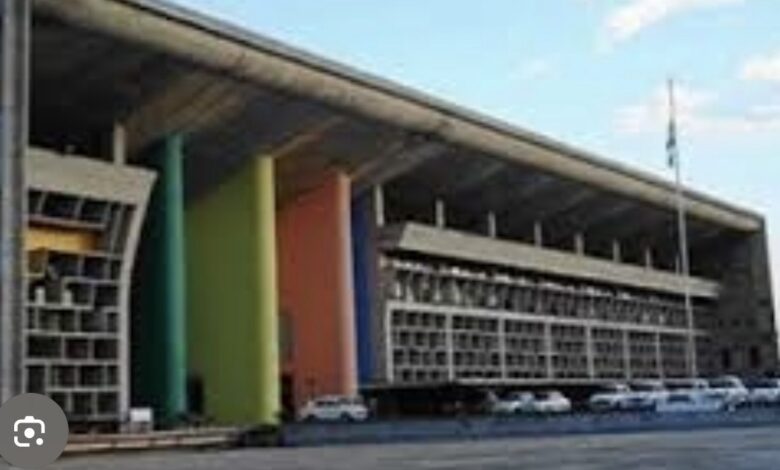
Punjab’s power utility, whose own employees won the Dearness Allowance judgment last month, has now gone to a higher court to get that very order stayed.
North Desk Correspondent
Chandigarh, May 5
The Punjab and Haryana High Court gave its Punjab DA order last month, directing that all pending Dearness Allowance be paid to government employees and pensioners by June 30. One of the biggest employers in Punjab moved to get it suspended.
Punjab State Power Corporation Limited (PSPCL) has filed an appeal before a Division Bench of the same High Court, asking that the April 8 judgment be set aside entirely and, in the meantime, stayed. The appeal was filed on April 29, barely three weeks after the original order.
The twist is not lost on anyone familiar with the case. PSPCL’s own retired and serving employees were among those who went to court seeking DA. They won. Now their employer is in a higher court trying to undo that win — on behalf of itself.
The Division Bench has taken up the matter on Monday and adjourned it. A further hearing is awaited.
First, a quick recap
The Punjab DA order, delivered by a Single Judge, had held that the Government of Punjab could not deny DA to its employees and pensioners while paying it in full to IAS, IPS and IFS officers from the same Consolidated Fund. It directed that all pending DA and Dearness Relief installments — from 46% to 58% — be paid by June 30, 2026, at the same rates applicable to All India Service officers. It also struck down a government plan that would have made younger pensioners wait up to four years for their arrears.
What PSPCL has actually paid so far
Before getting to PSPCL’s grounds for the appeal, one important fact: PSPCL is not claiming it will never pay DA. It has, in fact, been releasing DA installments on its own, through Board-level decisions — at 31% from November 2021, 34% from October 2022, 38% from December 2023, and 42% from November 2024.
The dispute is specifically about the remaining installments — from 46% to 58% — which the April 8 order has now directed must be paid by June 30. PSPCL’s case is that it cannot be legally compelled to pay these at Central Government rates, automatically and immediately, without its Board making an independent financial assessment.
PSPCL’s grounds, in plain language
PSPCL has laid out nine grounds in its appeal to challenge the Punjab DA order. They fall into three broad arguments.
We were not in court — so the order cannot bind us
PSPCL’s first and most basic point is procedural. It says it was never made a party to the lead writ petition — the case filed by retired PSPCL employees — and was therefore never heard. No notice was issued to it. No reply was filed by it. No stand was taken by it.
Despite this, PSPCL says the Punjab DA order attributed a position to “respondent-Corporations” — that they follow Punjab government instructions on DA — and treated this as justification to examine and rule on the state’s DA policy. PSPCL says this attributed position was never actually its own stated position in that petition, and that it had no opportunity to contest it.
Its argument is simple: a judgment cannot create binding obligations worth thousands of crores on a party that was never heard. Doing so, it contends, violates the most basic principle of natural justice — that no one should be condemned without being given a hearing.
We are not the government — different rules apply to us
PSPCL’s second broad argument is about its legal identity. It says it is a company under the Companies Act, established under the Electricity Act 2003. It is not a government department. Its employees are not civil servants. They do not hold civil posts under the State of Punjab.
Because of this, PSPCL argues, the Punjab Civil Services (Revised Pay) Rules 2021 — the statutory rules under which the DA entitlement of state government employees flows — simply do not apply to PSPCL or its employees. PSPCL has its own separate pay regulations, framed through a corporate instrument called the Punjab State Power Corporation Limited (Revised Pay) Regulations 2021. Under these regulations, DA is recognised as a component of pay — but its rate is left to independent Board-level determination, based on PSPCL’s financial position and the electricity regulator’s approval.
PSPCL also takes issue with the comparison the Single Judge drew between its employees and IAS and IPS officers. IAS and IPS officers receive DA under the All India Services (Dearness Allowance) Rules 1972 — a Central Government framework under a completely different legal universe. Comparing a PSPCL employee’s DA entitlement with that of an IAS officer, PSPCL argues, is legally inapt because the two are governed by entirely different statutory frameworks funded from entirely different sources.
Forcing us to pay will hurt electricity consumers
This is PSPCL’s most pointed — and most publicly relevant — argument against the Punjab DA order.
PSPCL’s revenues come entirely from electricity tariffs set by the Punjab State Electricity Regulatory Commission. Every rupee it spends must fit within an Annual Revenue Requirement approved by the regulator. Any expenditure beyond that approved figure is, in PSPCL’s own words, “unbudgeted expenditure that is not recoverable through electricity tariffs” — and would directly add to its accumulated losses.
PSPCL argues that the April 8 order directs payment of thousands of crores in DA arrears within two months, without any corresponding direction to the state government to provide budgetary support, and without any direction to the regulator to allow tariff recovery. It describes this as “financially catastrophic.”
The sting is in the final step of this argument: PSPCL says that ultimately, the burden of any unplanned DA payment “will be passed on to millions of electricity consumers in Punjab through future tariff revisions.” In other words — pay DA now, raise power bills later.
PSPCL also argues that the court’s direction encroaches on the tariff-setting jurisdiction of the electricity regulator, which is a statutory body with its own powers and processes.
Punjab DA Order: What PSPCL is asking for
PSPCL has asked the Division Bench to set aside the April 8 judgment in its entirety and dismiss the original writ petitions. As an interim measure, it has asked for the operation of the April 8 judgment to be stayed pending the appeal’s outcome.
If a stay is granted, the June 30 deadline for payment — both of pension arrears and of the pending DA installments from 46% to 58% — would be suspended until the Division Bench finally decides the appeal.
The matter is now before the Division Bench. The next hearings will determine whether employees and pensioners get to keep their June 30 deadline, or whether the fight moves into a longer legal battle.
Also read: Punjab High Court Rejects its ‘No Money’ Plea, Orders Full DA Payment by June 30




2 Comments