Neem Karoli Baba Larry Brilliant story: The Guru Behind Google.org’s Founder
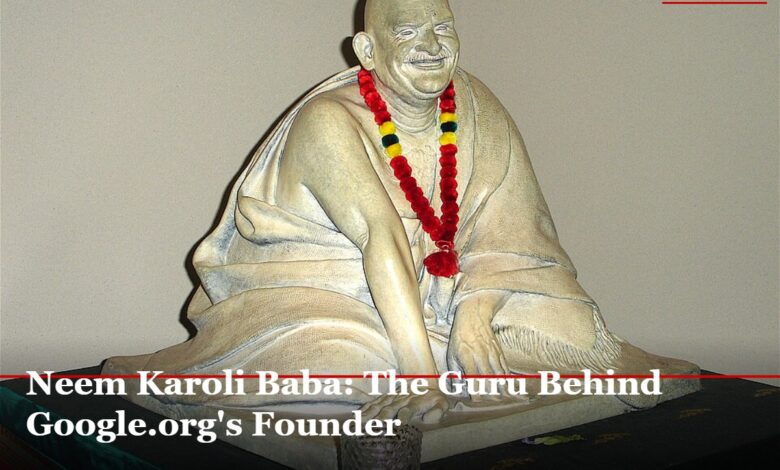
Neem Karoli Baba Larry Brilliant story: Neem Karoli Baba told a young doctor to fight smallpox. Larry Brilliant did — and later became the founding executive director of Google.org.
North Desk Correspondent
Chandigarh, September 6
Hanuman Ansh has introduced a new generation to Neem Karoli Baba’s miracle stories. North Desk’s earlier pieces traced how the guru’s legacy reached Steve Jobs and, through him, Mark Zuckerberg. But arguably the most consequential American life Neem Karoli Baba touched belongs to neither of them — it belongs to a young doctor named Larry Brilliant, whose story runs through a smallpox ward in Bangladesh, the earliest days of the internet, and eventually the boardroom of Google itself.
Neem Karoli Baba Larry Brilliant story: A doctor on the hippie trail
Neem Karoli Baba Larry Brilliant story: In the early 1970s, Larry Brilliant was a young American physician who had followed the well-worn hippie trail out of London, over the Khyber Pass, and into India — travelling with his wife Girija, the counterculture figure Wavy Gravy, and the Hog Farm commune. He ended up at a Himalayan ashram, uncertain at first whether he’d wandered into something legitimate or something closer to a cult.
What he found instead was Neem Karoli Baba — a guru who, by Brilliant’s own later account, didn’t let him sit still. “Every time I sat and meditated, my guru would throw apples at me,” Brilliant has said. “I had to get up and get moving. I had no choice.” The point, as Brilliant understood it, was that Neem Karoli Baba had no interest in a devotee content to meditate under a tree. He wanted Brilliant doing the work he was “meant to do.”
READ ALSO: Hanuman Ansh Miracles: 5 Scenes Behind the ₹100 Crore Sleeper Hit
‘God’s gift to humanity’
Neem Karoli Baba Larry Brilliant story: That work turned out to be one of the most significant public health missions of the 20th century. Neem Karoli Baba instructed Brilliant to leave the ashram and go to Delhi to join the effort to eradicate smallpox — then still devastating India and one of the last countries where the disease remained endemic. The guru is said to have told him that ending smallpox would be “God’s gift to humanity.”
Brilliant went. He joined the World Health Organization’s smallpox eradication program at a pivotal moment: in 1967, when the WHO launched its global push, 43 countries still had active smallpox outbreaks. By 1972, when Brilliant joined, that number had fallen to five. In October 1975, Brilliant was part of the WHO team sent to Bangladesh that identified the world’s last confirmed case of Variola major — the deadly strain of the virus — in a three-year-old girl named Rahima Banu in the village of Kuralia. Her case effectively marked the end of the deadliest form of a disease that had killed more than 500 million people in the century alone.
Brilliant went on to become a professor of epidemiology and international health planning at the University of Michigan, and has spent much of the decades since warning governments and institutions about the risk of future pandemics — warnings that, in hindsight, anticipated COVID-19 with unusual precision.
READ ALSO: Neem Karoli Baba Steve Jobs Story: How a Guru Shaped Apple and Facebook
From an early internet pioneer to Google.org
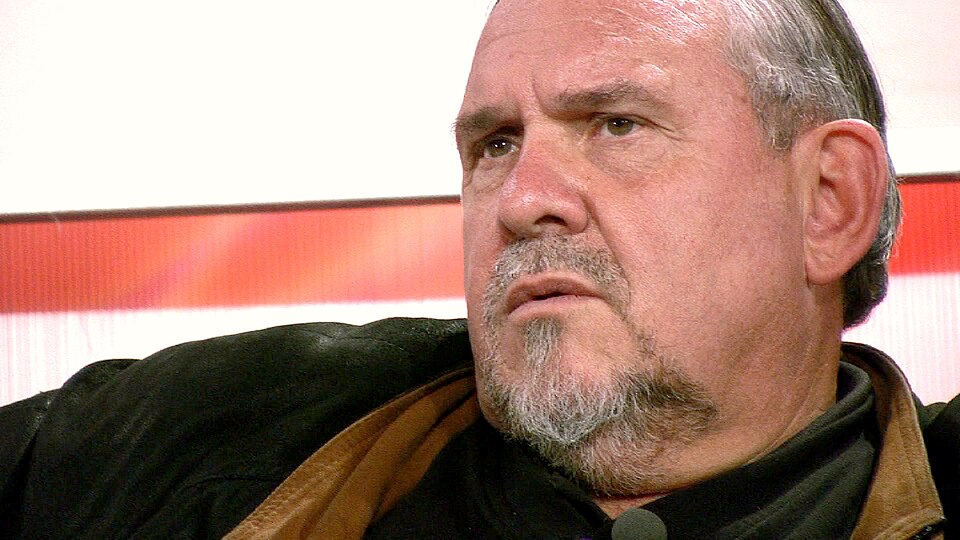
Neem Karoli Baba Larry Brilliant story: Brilliant’s path after smallpox wound through technology as much as medicine. He co-founded The Well, one of the earliest online communities in the world, alongside Stewart Brand — a project now widely regarded as a forerunner to today’s social networks and online forums.
That combination of public health credibility and early internet involvement eventually brought him to the attention of Google’s founders. Larry Page and Sergey Brin recruited Brilliant to become the founding executive director of Google.org, the company’s philanthropic arm, where he also served as a vice president of Google. Under his leadership, Google.org took on pandemic preparedness and global health as core areas of focus — a direct line back to the mission Neem Karoli Baba had set him on decades earlier.
Brilliant also co-founded the Seva Foundation, whose programs have restored sight to more than four million blind people across dozens of countries, and has advised four US presidents along with the United Nations and the G8. Time magazine named him one of the 100 most influential people in the world.
A life that crossed paths with everyone from MLK to Jobs
Neem Karoli Baba Larry Brilliant story: What makes Brilliant’s story unusual isn’t just its improbable arc from ashram to Google’s boardroom — it’s the sheer range of figures his path intersected along the way. Brilliant has spoken about a formative encounter with Martin Luther King Jr. during a period of depression in college, long before India entered the picture. His later memoir, Sometimes Brilliant, chronicles a life that brought him into contact with the Dalai Lama, Mikhail Gorbachev, the Grateful Dead, Ram Dass, and — back on the technology side — Steve Jobs and the founders of Google, Salesforce, Facebook, Microsoft and eBay, alongside Presidents Carter, Clinton, George W. Bush and Obama.
At the centre of that improbable web, by Brilliant’s own account, sits Neem Karoli Baba — the same guru whose miracle stories are now filling Indian theatres through Hanuman Ansh, and whose ashram at Kainchi Dham continues to draw pilgrims, tech billionaires and cricketers alike, more than five decades after his death.
READ ALSO: Hanuman Ansh Miracles: 5 Scenes Behind the ₹100 Crore Sleeper Hit
READ ALSO: Neem Karoli Baba Steve Jobs Story: How a Guru Shaped Apple and Facebook
ALSO: Kainchi Dham Explained: What It Is, Why It Matters, and How to Get There
Follow North Desk on WhatsApp for the latest from Punjab, Haryana and Himachal Pradesh: https://whatsapp.com/channel/0029Vb7ccdxJENy2H87DBG3E




7 Comments