Shambhu Border Sealed: Punjab Farmers Stopped En Route to Delhi's Kisan Mahapanchayat
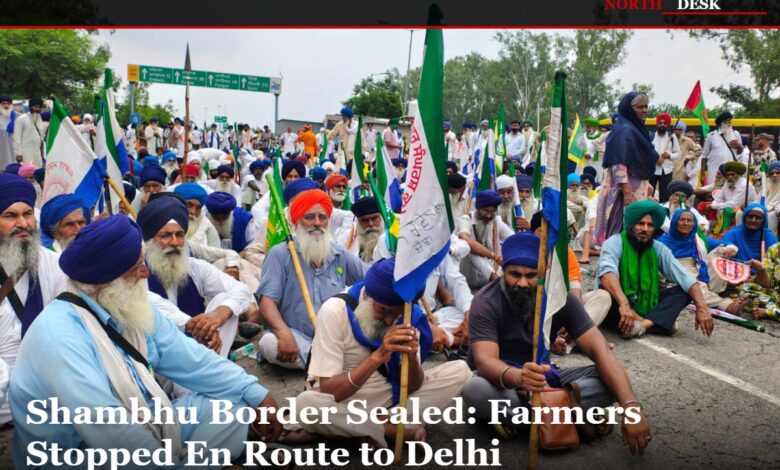
At Shambhu border farmers stopped by Haryana Police. Police seal border with barricades and cement blocks, detaining BKU leader Charuni and stopping Punjab farmers headed to Delhi’s Kisan Mahapanchayat. Haryana minister later held talks.
North Desk Correspondent
Chandigarh, July 20 (Updated July 21, evening)
Haryana Police have sealed the Shambhu border as thousands of farmers from Punjab, Haryana, Himachal Pradesh, Rajasthan, Delhi, Uttar Pradesh, Uttarakhand, Madhya Pradesh, Maharashtra and Odisha are converging on Kisan Ghat in New Delhi for a mass rally on July 21, under the banner of the Desh Bachao Morcha, demanding the Centre cancel the proposed India-US Free Trade Agreement before it is signed.
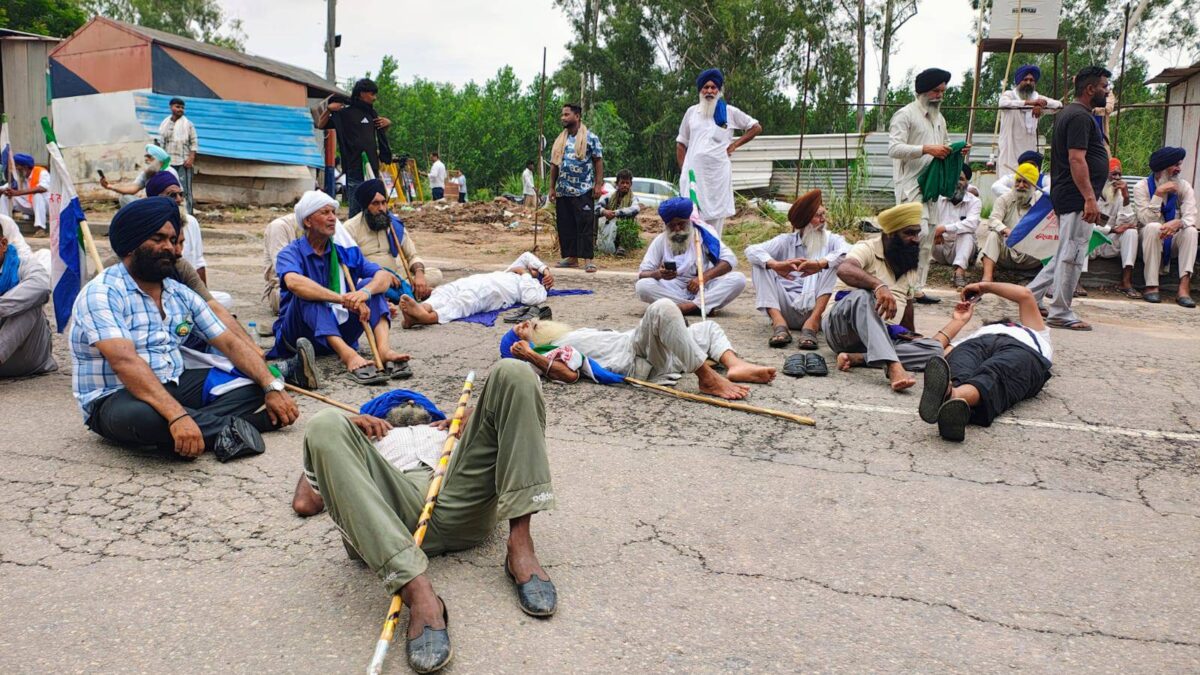
Farmers face heavy police deployment at the Shambhu border point between Punjab and Haryana, with barricades erected and cemented blocks placed at the bridge over Ghaggar river.
Shambhu border farmers stopped
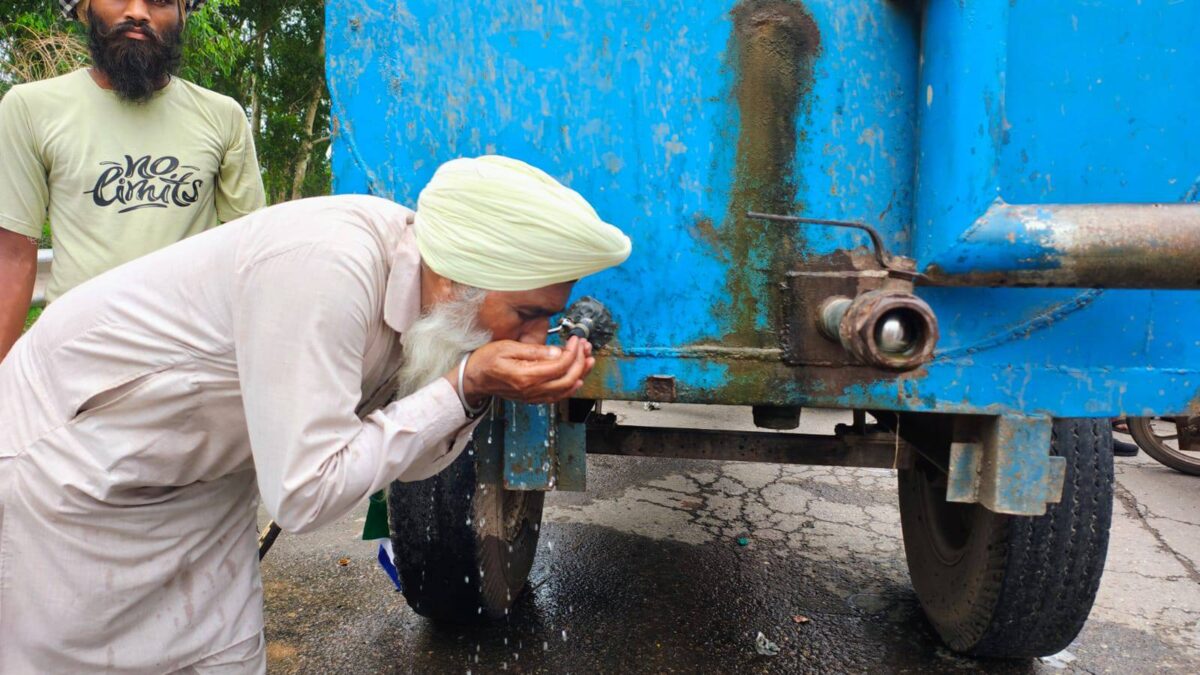
Shambhu border farmers stopped : Farmer leader from Punjab, Sarwan Singh Pandher, on Tuesday morning slammed the Haryana government for barricading the Shambhu border point to prevent them from heading towards Delhi to participate in the Kisan Mahapanchayat against the proposed India-US trade deal.
The timing is not incidental. A temporary US tariff arrangement covering Indian goods expires on July 24, and Indian and US negotiators have described the broader Bilateral Trade Agreement (BTA) as being in its final stretch — Commerce Secretary Rajesh Agarwal said this month that “the framework deal is ready,” while US Ambassador Sergio Gor has said talks are in the “last 1 percent.” The farmers’ rally lands directly inside that closing window.
The convoy from Punjab
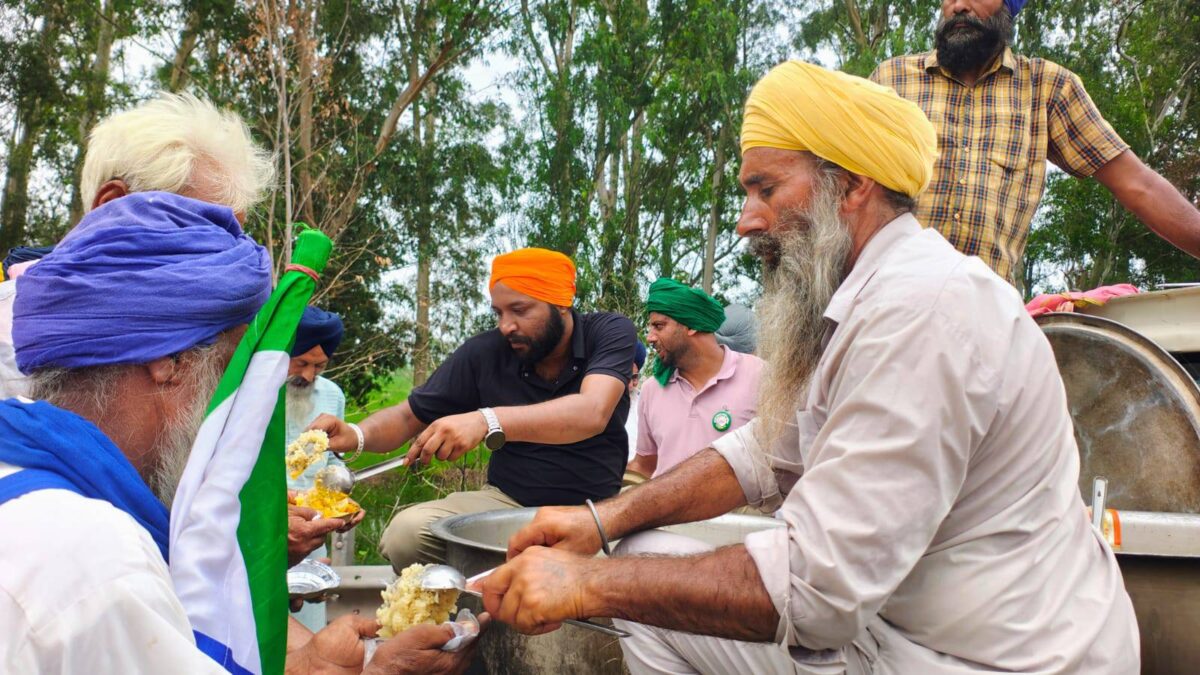
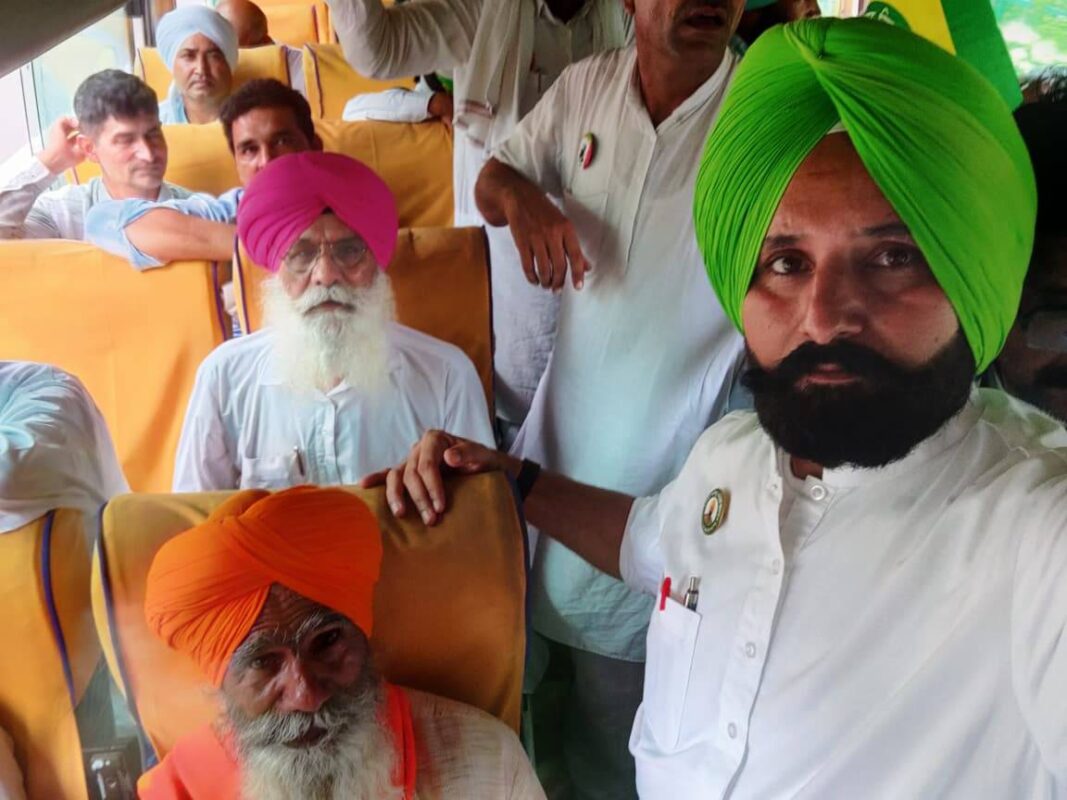
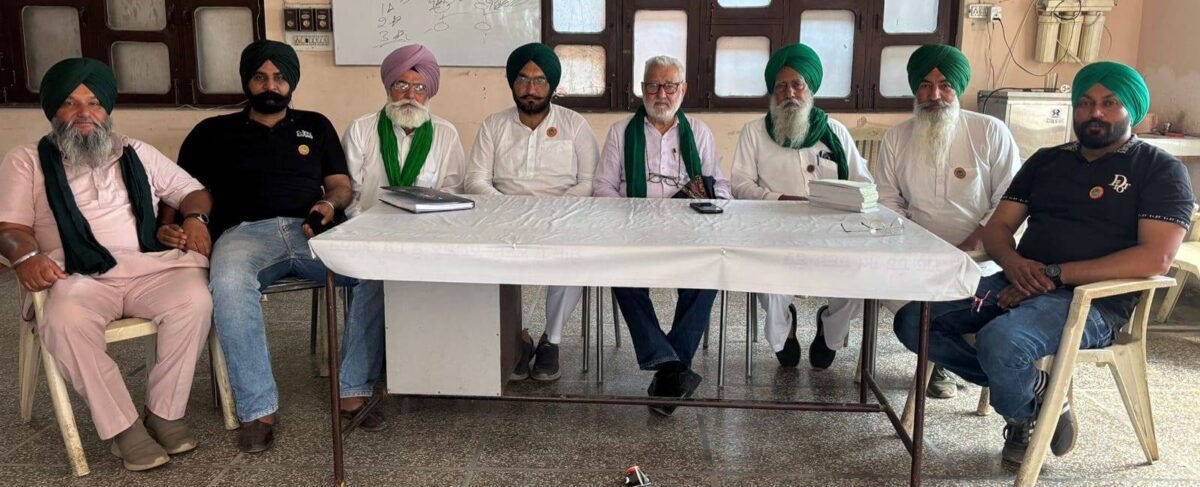
Shambhu border farmers stopped: Farmer leader Sarwan Singh Pandher said the Kisan Mazdoor Sangharsh Committee’s convoy (hundreds of buses and other vehicles from Amritsar and Gurdaspur districts) departed from Beas Bridge to join the rally. Separate convoys from the Kisan Mazdoor Morcha (Punjab chapter), Azaad Kisan Morcha, Bharatiya Kisan Union Ekta Sangharsh and other organisations are travelling from different Punjab districts, with overnight halts en route. The Kisan Mazdoor Sangharsh Committee convoy is staying overnight near Fatehgarh Sahib-Sirhind before heading to Delhi via the Shambhu border.
Leaders travelling with the Gurdaspur-Amritsar convoy include Harvinder Singh Masanian, Swinder Singh Chutala, Lakhwinder Singh Waryam Nangal, Germanjit Singh Bandala, Ranjit Singh Kaler Bala, Kanwar Dalip Saido Lehal and district president Harbhajan Singh Vairo Nangal. A separate contingent from Goindwal Sahib is led by Satnam Singh Manochahal and Harjinder Singh Shakri.
Charuni detained, highways blocked
Shambhu border farmers stopped : Police also detained Bharatiya Kisan Union (Charuni) chief Gurnam Singh Charuni and blocked other key highways to prevent the convoy from reaching the capital, forcing commuters onto village routes to cross into Haryana. Farmers said they had deliberately travelled by bus rather than tractor-trolleys this time — a method the government had earlier cited to justify restrictions — yet were still stopped.
“We are carrying the flag of our farmers’ organisation and a stick. Why is the government feeling fearful of us? We are not carrying any weapons,” a farmer at the border said.
Bharatiya Kisan Union (Shaheed Bhagat Singh) leader Tejveer Singh said the border had been sealed without any prior warning.
Talks with the Haryana government
Later on Tuesday, Haryana Agriculture Minister Shyam Singh Rana and Ambala Deputy Commissioner Ajay Singh Tomer met the stranded Punjab farmers, received a memorandum from them, and assured them their demands would be fulfilled. Farmers said they would decide their next course of action shortly.
A coalition built over weeks, not called overnight
Shambhu border farmers stopped: The July 21 rally is the culmination of a campaign that began weeks earlier. Nearly 80 farmer and farm-labour organisations from across India came together to form the Desh Bachao Morcha specifically to oppose the trade pact, setting up a six-member coordination committee. That was followed by district and subdivision-level motorcycle rallies on July 15, when memorandums addressed to the Prime Minister were submitted to local authorities, and further bike marches across Punjab and several other states in the days since.
Organisers have billed the Delhi gathering as a “Kisan Mahapanchayat” at which the next phase of the agitation will be announced — meaning July 21 is being positioned as an escalation point, not a one-off event.
The Samyukt Kisan Morcha, the umbrella body that led the 2020-21 agitation against the now-repealed farm laws, is running a related but separate track: it plans protests outside BJP leaders’ residences on July 22.
Pandher himself is a central figure from that earlier cycle of farmer mobilisation — he went on to lead the 2024 “Dilli Chalo” march from the Shambhu border demanding a legal guarantee on MSP, a stir in which 22 farmers died, including 22-year-old Shubhkaran Singh.
READ ALSO: The Cop Who Fed Khalra His Last Meals…And Whose Words Convicted His Killers
What the farmers are objecting to
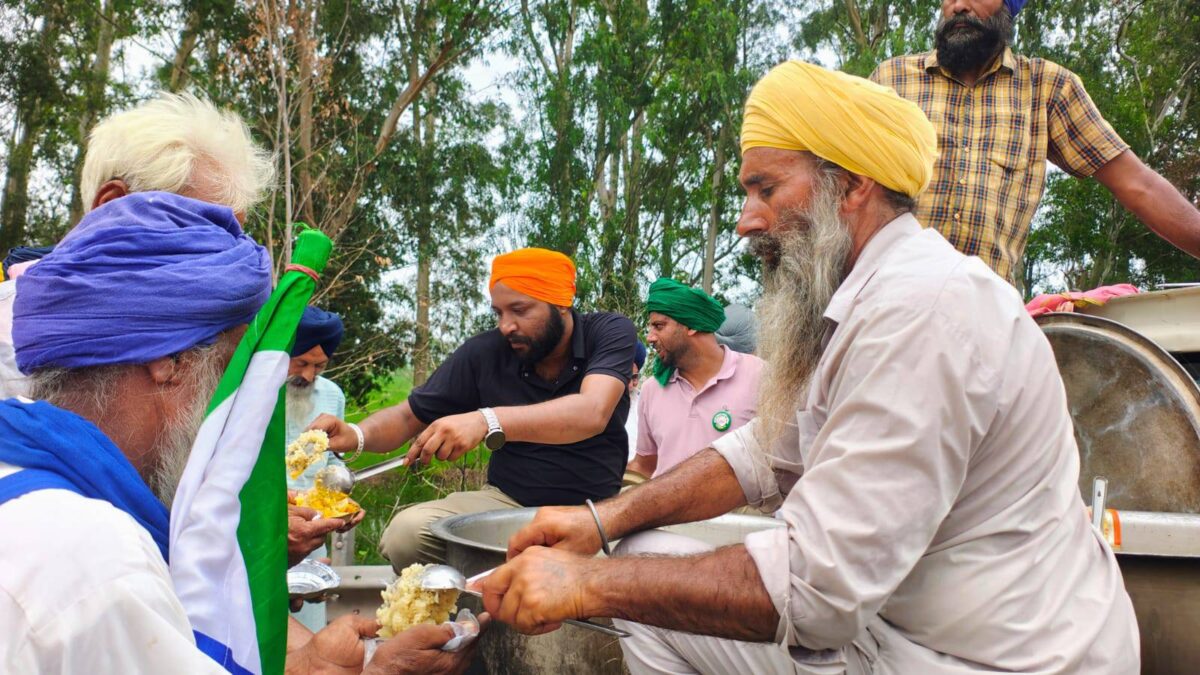
Shambhu border farmers stopped : Farmers pointed to the February 2025 India-US Joint Statement, in which both countries agreed to negotiate a “wide-ranging” Bilateral Trade Agreement, arguing this signals the pact will extend well beyond a narrow set of goods into agriculture, dairy, industry, digital trade, e-commerce, investment, government procurement, intellectual property and services. He said past US trade reports have consistently pushed for lower Indian tariffs on soybeans, corn, cotton, ethanol, apples and almonds, alongside wider access for US dairy, poultry, fruit and fisheries products.
This is not simply an assertion. A February 2026 White House joint statement outlining the framework for an Interim Agreement (a stepping stone to the full BTA) confirms India has already agreed to eliminate or reduce tariffs on a named list of US agricultural products, including dried distillers’ grains, red sorghum for animal feed, tree nuts, fresh and processed fruit, soybean oil, and wine and spirits, with the text noting “additional products” beyond that list.
India has also committed to addressing “long-standing non-tariff barriers to the trade in U.S. food and agricultural products” — a separate, broader market-access commitment. Dairy and poultry are not named in this Interim Agreement text, but the same statement says the wider BTA still under negotiation “will include additional market access commitments,” and US trade reports have repeatedly flagged dairy as a priority ask. In other words, the tariff cuts farmers are worried about are not hypothetical for several crops — they are already on record — while the dairy question specifically remains part of the unresolved final stretch of talks.
Farmer leaders argue the asymmetry is the core problem: American agriculture is heavily subsidised, while the majority of Indian farmers are small and marginal landholders. They say India’s dairy sector alone supports nearly 8 crore rural families, and that a flood of cheaper US dairy and agricultural imports could hit farmers, dairy producers, small traders and micro enterprises, with knock-on effects for the seed industry and food processing sector.
Farmers Protest India-US Trade Deal: The demand
The Desh Bachao Morcha is asking the Centre to make all documents related to the proposed agreement public, and to hold comprehensive consultations with farmers, workers, dairy producers, small traders and other stakeholders before signing anything.
READ ALSO: HC Dismisses 32 Petitions by Disabled Employees Seeking Retirement Extension to 60 Years
Follow North Desk on WhatsApp for the latest from Punjab, Haryana and Himachal Pradesh: https://whatsapp.com/channel/0029Vb7ccdxJENy2H87DBG3E