Shimla Rush: Why Is Chinese Off the Menu in HP Restaurants?
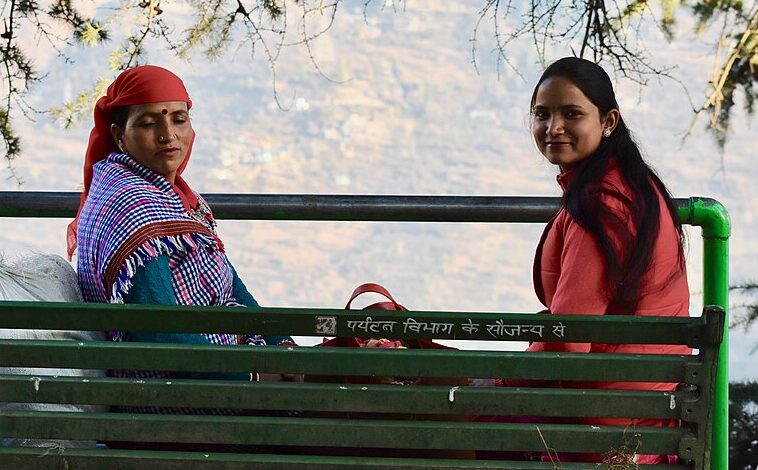
Shimla Rush: As 85,000 vehicles flood Shimla in a single weekend, HP Tourism hotels are cooking on wood and dropping Chinese and other dishes. The West Asia LPG crisis has reached the hills — and it could last years.
North Desk Correspondent
Shimla, June 12
Every summer, the plains heat drives North India’s residents toward the hills. This year, with temperatures in Chandigarh, Delhi, Ludhiana and Ambala touching brutal highs through May and June, that migration has become a stampede. After 85,000 vehicles streamed into Shimla in the last weekend of May alone, police issued an advisory asking tourists not to enter the city if they were not planning to stay there.
On Shimla rush, a police official in Shimla said tourists headed for high-altitude destinations beyond the capital were being diverted via a bypass to prevent their vehicles from entering the city at all.
Shimla rush: It has not worked. The cars keep coming. The hotels are full. The restaurants are overwhelmed.
Himachal Pradesh’s annual tourist footfall averaged around 1.63 crore visitors between 2014 and 2024. In 2025, for the first time, the state crossed three crore tourists — a nearly 72 per cent jump from the 1.81 crore who visited in 2024. This summer, with no sign of the heat relenting, those numbers are being tested again.
But while the tourists arrive expecting the full hill-station experience — the views, the cool air, the steaming plate of noodles — they are walking into kitchens quietly fighting a separate crisis entirely.
Shimla rush: The Gas Has Run Out
Shimla rush: The West Asia conflict, which effectively closed the Strait of Hormuz to commercial shipping for the first time in recorded history, has reordered energy supply chains across the world. India has been hit hard. The Gulf states — UAE, Saudi Arabia, Qatar, Kuwait, Bahrain, and Oman — collectively supplied 92 per cent of India’s LPG, valued at six billion dollars in FY25. With that supply severely disrupted, the consequences have flowed all the way downstream to the restaurants and dhabas of Himachal Pradesh.
Nationally, total commercial LPG allocation has been cut to about 70 per cent of pre-crisis levels. In the hills, where supply chains were already thinner and distributor networks smaller, that 30 per cent gap has become something far more severe on the ground.
Across India, a black market for LPG cylinders has emerged, with commercial cylinders changing hands for as much as Rs 5000 against the listed price. In Shimla and along the Chandigarh-Shimla road, restaurateurs are reporting prices well above even that. A senior government official has said the disruption to the global LPG supply chain could take three to four years to fully rectify.
For a restaurant owner trying to feed tourists this weekend, three to four years means nothing. What matters is whether the next cylinder arrives.
HP Tourism: A One-Page Menu and a Wood Fire
Shimla rush: Inside one of HP Tourism’s hotels, the change is visible the moment you ask for the menu.
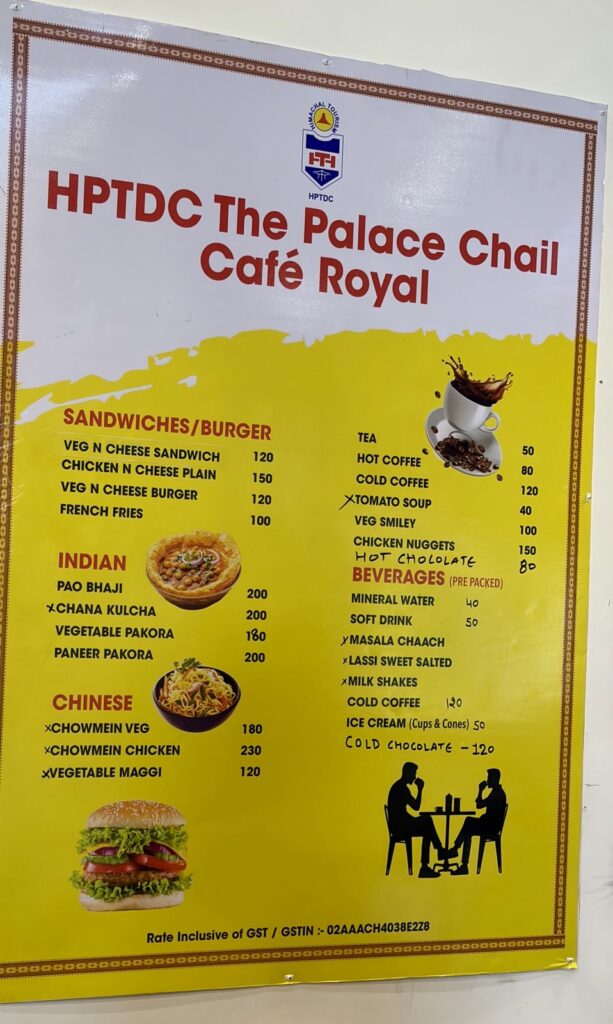
Where there was once a multi-page card covering everything rom Chinese starters to full thalis, there is now a single printed sheet. An official at the property showed it to North Desk — 29 main course dishes in total, divided as evenly as possible between vegetarian and non-vegetarian options.
The Chinese section — once the biggest draw for tourists — is gone entirely. No noodles. No chowmein. No chop suey.
“Chinese cuisine like noodles and chopsuey are the biggest draw for our guests,” the official said. “They are totally out at many places in HP Tourism restaurants.” He explained why: LPG cylinders do arrive occasionally, but the supply is sporadic and unreliable. In the gaps, the kitchen has had to fall back on wood. “We are cooking on wood,” he said matter-of-factly.
Shimla rush: The one line he held firm on: “We have not increased our rates — not so far.” In a season when everything else is being squeezed, HP Tourism is, for now, absorbing the cost rather than passing it to the tourist.
“We have tried to balance veg and non-veg so that everybody gets some variety,” the official added. “But obviously we are not able to give that kind of variety.”
A single page where a full menu used to be. That is what the West Asia crisis looks like from Shimla.
North Desk then drove down to Chail. To the Maharaja’s Palace. Even the Cafe Royale has struck chowmein and all Chinese dishes off its menu.
Paying ₹5,000 for a ₹3,700 Cylinder
Gurpreet Singh moved from Punjab to run an eatery shop on the Chandigarh-Shimla road 17 years ago. His eatery sells momos, Chinese dishes, and standard roadside fare — the kind of food that travelling families pull over for on the long climb up to the hills. He has no intention of dropping Chinese from his menu. “That is our forte,” he said. “We cannot not sell it.”
But the cost of that commitment has become punishing.
A commercial LPG cylinder that used to cost him around Rs 1,750 now costs Rs 5,000. The government-listed rate for a commercial cylinder is approximately Rs 3,700 — but at that price, Gurpreet says, it simply isn’t available. The black market rate is what the market actually runs on. He has had to raise his prices by 15 to 20 per cent across the board. “There was no option,” he said.
And he is one of the survivors. Several restaurants and dhabas on the same stretch, he says, have shut down temporarily — unable to absorb the costs or find reliable gas at any price.
The Tourists: Surprised, Philosophical, and Still Hungry
The visitors arriving in Shimla this summer are largely unaware that a global energy crisis is reshaping what they can eat. They find out when they sit down and ask for noodles.
A family from Patiala who had driven up for a long weekend found themselves turned away from their usual dhaba and waiting far longer than expected at a second one. “We were hoping for momos, for noodles — all that,” said Ramandeep Kaur, who had come with her husband and two children. “The waiter said Chinese is not available. We did not even know there was a gas problem.”
A couple from Delhi who make the trip to Shimla every June were more stoic. “The food options are less, yes,” one of them said. “But the weather is still better than 43 degrees in the city. We are not complaining.” They had found a place still serving limited Chinese — a small eatery that appeared to be rationing its gas carefully — and considered themselves lucky.
A group of friends from Chandigarh had a different experience. “We planned this trip around the food as much as the hills,” one of them said. “Half the places we wanted to go to are shut. One place was literally cooking on wood — you could smell the smoke from outside.”
For many, the condensed menu is a minor irritant on an otherwise pleasant trip. For the restaurant owners carrying the cost, it is something else entirely.
A Crisis That Could Last Years — But Tourists Won’t Wait
The structural problem is not going away quickly. Iran’s military actions and the effective blockade of the Strait of Hormuz severely disrupted India’s LPG imports from the Gulf, with a senior official suggesting the supply chain damage could take three to four years to fully repair.
The government has moved to manage the crisis at the macro level. Commercial LPG allocation has been raised to about 70 per cent of pre-crisis levels nationally, and online bookings now account for about 96 per cent of all cylinder orders. But the gap between national allocation figures and what actually reaches a dhaba on a mountain road in Himachal Pradesh can be vast.
In the meantime, Shimla’s tourism season will not pause for supply chain negotiations. The families from Delhi, Gurugram, Chandigarh and Ludhiana will keep driving up. The police will keep issuing advisories that nobody entirely heeds. And the kitchens — some on gas, some on wood, some temporarily dark — will keep trying to feed them.
The noodles can wait. The tourists cannot.
ALSO: Haryana Austerity Drive Quietly Puts the Squeeze on Media — and Much Else Besides
Follow North Desk on WhatsApp for the latest from Punjab, Haryana and Himachal Pradesh: https://whatsapp.com/channel/0029Vb7ccdxJENy2H87DBG3E
READ: Who is Shahzad Bhatti, Pakistan-Based Gangster Behind 3 Terror Attacks in Punjab & Haryana?

2 Comments