Who Is CJI Surya Kant? The Haryana Boy Who Rose From Hisar’s District Courts to India’s Highest Judicial Office
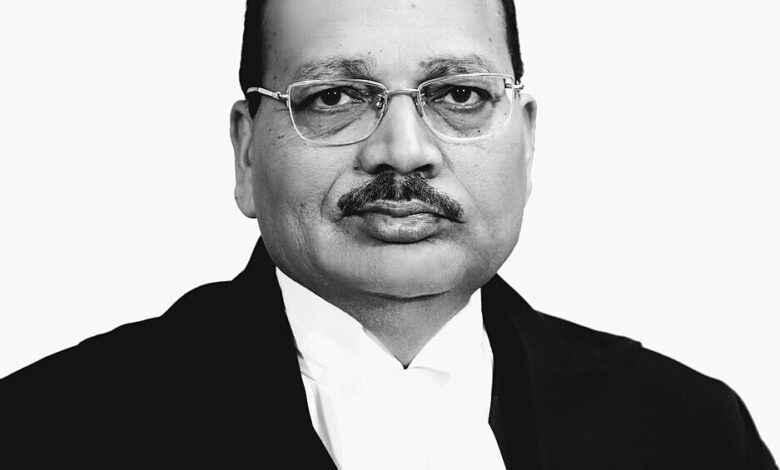
Who is CJI Surya Kant? CJI Surya Kant’s ‘cockroach’ comments have sparked a national controversy. Here is the full story of the Haryana-born judge who rose from Hisar’s district courts to become India’s 53rd Chief Justice.
North Desk Bureau
Chandigarh, May 16
He is India’s most powerful judge. This week, he is also its most controversial one.
Chief Justice of India Surya Kant sparked a fierce national debate on Friday when he compared unemployed youth to cockroaches during a Supreme Court hearing, and remarked having a CBI inquiry into the law degrees of thousands of Delhi lawyers. The remarks went viral within hours, drawing sharp reactions from legal observers, civil society, and politicians across the country.
But who exactly is Surya Kant — the 53rd Chief Justice of India?
From a Village in Hisar
Who is CJI Surya Kant? Surya Kant was born on 10 February 1962 in the village of Petwar in Haryana’s Hisar district, into a middle-class family. His father, Madan Gopal Sharma, was a Sanskrit teacher. He studied in a village school with no benches, sitting on the ground.
He graduated from Government Post Graduate College, Hisar in 1981, and earned his Bachelor’s degree in Law in 1984 from Maharishi Dayanand University, Rohtak. Decades later, in 2011, he secured First Class First in his Master’s degree in Law from Kurukshetra University — a distinction that underlines his lifelong commitment to the craft.
The Chandigarh Years
After starting his legal practice at the District Court in Hisar in 1984, Surya Kant made a pivotal decision the following year — he shifted to Chandigarh to practise at the Punjab and Haryana High Court. He specialised in Constitutional, Service and Civil matters, representing universities, boards, corporations, banks and the High Court itself.
Those two decades at the P&H High Court would define him. On 7 July 2000 he became the youngest Advocate General of Haryana, and was designated as Senior Advocate in March 2001. He was elevated as a permanent Judge of the Punjab and Haryana High Court on January 9, 2004.
During his tenure at the Punjab and Haryana High Court, he delivered the Jasvir Singh judgment, directing the State of Punjab to form a Jail Reforms Committee for creating a scheme enabling conjugal and family visits for jail inmates, keeping in mind the reformatory goals of such amenities.
Himachal Pradesh and the Road to the Supreme Court
He assumed charge as Chief Justice of the High Court of Himachal Pradesh on October 5, 2018. His appointment drew some controversy — Justice A.K. Goel, a consultee who had been elevated to the Supreme Court from the Punjab and Haryana High Court, had disagreed with the Collegium’s recommendation. Nonetheless, the appointment stood.
On 24 May 2019 he became a Judge of the Supreme Court of India. On 24 November 2025, the President of India administered the oath of office to Justice Surya Kant as the 53rd Chief Justice of India, succeeding CJI B.R. Gavai.
A Judge Who Left His Mark
His tenure as a Supreme Court judge is marked by verdicts on the abrogation of Article 370, free speech and citizenship rights. He was part of the bench that kept the colonial-era sedition law in abeyance, directing that no new FIRs be registered under it until a government review.
He was on the bench that heard the Pegasus spyware case, which appointed a panel of cyber experts to probe allegations of unlawful surveillance, famously stating that the state cannot get a “free pass under the guise of national security.”
He was part of the bench that appointed a five-member committee headed by former Supreme Court judge Justice Indu Malhotra to probe the security breach during Prime Minister Narendra Modi’s Punjab visit in 2022, saying such matters required “a judicially trained mind.” He upheld the One Rank-One Pension scheme for defence forces, calling it constitutionally valid, and directed that one-third of seats in bar associations — including the Supreme Court Bar Association — be reserved for women.
It was a bench led by Justice Kant that ordered the first-ever EVM recount that flipped a Haryana panchayat poll result, with EVMs summoned and votes recounted within the Supreme Court premises itself.
The Cockroaches Controversy
On Friday, during a Supreme Court hearing on a petition linked to Senior Advocate designation, CJI Surya Kant’s remarks from the bench ignited a firestorm. Angry at an advocate petitioning the court for senior designation, he said he was waiting for an appropriate matter to order the CBI to verify the LLB degrees of most Delhi lawyers — “thousands of them are fraudulent people who are wearing black robes,” he said. He accused the Bar Council of India of being “absolutely in collusion” with such lawyers and therefore incapable of acting against them.
Going further, he compared certain persons he described as parasites attacking the judiciary to cockroaches: “There are youngsters like cockroaches, who don’t get any employment and don’t have any place in profession. Some of them become media, some of them become social media, some of them become RTI activists, some of them become other activists, and they start attacking everyone.”
The petitioner ultimately apologised and sought permission to withdraw the plea, which the court allowed. The remarks quickly went viral, triggering sharp reactions from legal observers, activists and political commentators across the country.
As CJI, Surya Kant has identified tackling the backlog of more than five crore pending cases as one of his top two priorities. He will remain in office until February 9, 2027, when he turns 65.
Australia NRI in Punjab: Came for his Wedding, Left with a Stalker — Tormented for 4 Years



2 Comments