Why Govt Bid to Cut Haryana NCR Area Failed; And Why NCR tag is Burden for Industry
Haryana NCR Area: An NCR tag was once a matter of pride in Haryana but then it became almost a burden. Haryana spent five years pushing to reduce its NCR area by 67%. The NCRPB’s meeting last week buried that plan. Here’s what it means for GRAP restrictions, small industry and the new Central NCR concept.
Arvind Chhabra
Chandigarh, June 22
For years, Haryana’s political establishment had a quiet but urgent wish: to shed a large chunk of the state’s National Capital Region (NCR) footprint. Not because the NCR tag had lost its prestige, but because it had become a regulatory trap — one that shut down construction sites for weeks, threw workers out of jobs, strangled small industry and grounded vehicles in the name of cleaning Delhi’s air. That wish was formally buried at the 42nd meeting of the NCR Planning Board in New Delhi last week.
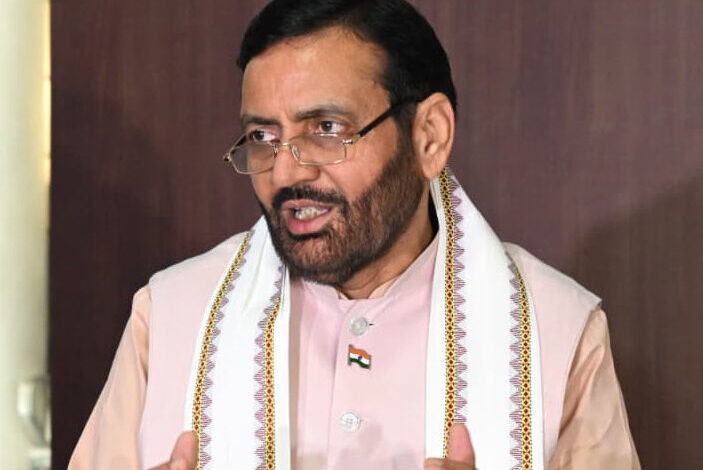
Haryana Chief Minister Nayab Singh Saini announced after the meeting that the state’s existing NCR boundaries would remain intact — all 14 districts, covering 25,327 square kilometres, stay in. The government’s statement framed it as a routine development decision. It was anything but.
Haryana NCR Area: The Escape Plan
The backstory begins in October 2021, when the NCRPB’s 41st meeting first opened the question of re-delineating NCR boundaries. It was reported that Haryana had moved a proposal to slash its NCR area by about 67 per cent — from 25,327 sq km to just 8,281.60 sq km. The state later modified the proposal, pulling that reduction back to around 58 per cent, with 10,546 sq km to be retained, according to people familiar with the deliberations.
Haryana NCR Area: The driving logic, as officials explained it, was straightforward: the original inclusion of far-flung districts such as Bhiwani, Charkhi Dadri, Mahendergarh, Jind and Karnal had done little to ease urbanisation pressure on Delhi — which was the NCR’s founding purpose. “The state government feels that restrictions applicable to NCR were difficult to implement in the hinterland included in the NCR,” a state official said.
Why the NCR Became a Burden
Haryana NCR Area: The problem was the Graded Response Action Plan (GRAP). What began as a pollution-control framework for Delhi’s doorstep gradually extended its reach across the entire NCR, including Panipat’s textile and dyeing units, Bhiwani’s small-scale manufacturers and the construction sites of Karnal and Jind.
Every winter, as Delhi’s air quality deteriorated, GRAP orders cascaded. Construction would halt — sometimes for two and a half months at a stretch. Builders raised hue and cry, but it was not just large developers who suffered.
Homeowners building their own houses, small contractors and daily wage labourers were all hit. Labour, with no work and no wages, would return to their home states. Restarting projects meant gathering that workforce again from scratch — adding costs and delay that often ran into lakhs.
Follow North Desk on WhatsApp for the latest from Punjab, Haryana and Himachal Pradesh: https://whatsapp.com/channel/0029Vb7ccdxJENy2H87DBG3E
Vehicle restriction issues
Haryana NCR Area: Vehicle restrictions added another layer of hurt. Old diesel vehicles — not just 15-year-old ones but even 10 years old or newer — faced curbs or outright bans under stricter NCR emission norms.
For a Panipat textile mill owner running a fleet of diesel delivery vehicles, or a Bhiwani trader whose truck was now prohibited, there was no easy or affordable substitute. The cost of upgrading or replacing vehicles was often prohibitive.
‘Polluting’ industry had it worse
Haryana NCR Area: Industries defined as polluting under the Ministry of Environment’s classification had it worse. Units in Panipat’s rural belt — the recycled fabric and blanket clusters that give the town its identity — started shutting down or relocating as they could not meet the additional compliance costs. These were not large corporates with the financial bandwidth to upgrade; they were small and medium units, often family-run, that had operated in the same place for decades.
It was this ground reality that pushed Haryana’s political class — across party lines — to seek relief. Then-Chief Minister Manohar Lal Khattar had written to Union Environment Minister Bhupender Yadav as far back in September 2021, requesting that pollution-control measures be implemented on a district-specific rather than state-wide NCR basis.
Khattar had said that instead of implementing all NCR provisions in Haryana’s NCR part, they should only be enforced within the 10-km radius of the national capital territory of Delhi or within the 10-km radius of cities having 10 lakh population or as per the district specified.
The irony did not go unnoticed at the last week’s meeting: it was the same Manohar Lal Khattar, now Union Housing and Urban Affairs Minister, who chaired the board meeting that formally shelved the re-delineation proposal he had once championed.
As many as 14 districts of Haryana are part of NCR which means 45.98% area of the total NCR area—the highest of all states in NCR. Uttar Pradesh follows with eight districts at 26.92% area share and Rajasthan with two districts at 24.41% area while the national capital territory of Delhi has 2.69% area.
READ ALSO: Hotel North Park Land Dispute: 25 Years, Three Chief Ministers, One Unresolved Hotel
The Fix That Replaced the Escape
The reason the boundary reduction was dropped lies in a new planning concept quietly embedded in the Regional Plan-2041: the Central NCR, or CNCR. It is defined as the zone up to five kilometres from Delhi’s boundary to the outer edge of the ring formed by the Eastern Peripheral Expressway and the Western Peripheral Expressway.
The logic, as an official explained, is that the uniform application of pollution-control measures across the entire NCR — the core grievance driving Haryana’s push for re-delineation — can now be replaced by a graduated approach.
Officers claim that a central NCR under Regional Plan-2041 is likely to provide greater flexibility and pollution-control measures will be imposed in a graded manner within a limited core zone instead of the entire NCR.
Whether that relief materialises in practice will depend on how the CNCR concept is ultimately operationalised in the Regional Plan-2041, the finalisation of which has been handed to a sub-committee of central and state officials with a deadline of August 15, 2026.
READ ALSO: Punjab Minister Mundian Accused of Extortion: ‘Give Me a Share or I’ll Get You Killed’




One Comment