Hollywood Cinematographer George Richmond Stable at PGI Chandigarh After Crash: But What Happened and How?
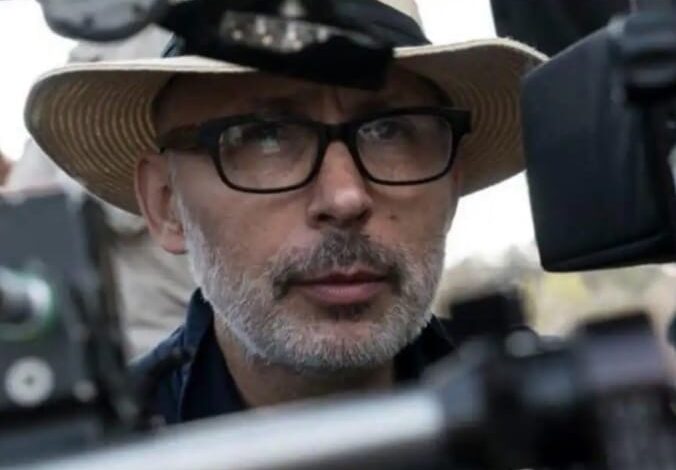
Deadpool & Wolverine cinematographer George Richmond survived a catastrophic cervical spine injury in a Himachal Pradesh paragliding crash. North Desk reports on the PGIMER surgery, the rescue, and the questions around Bir Billing’s cross-country routes.
North Desk Correspondent
Chandigarh, June 12
The Man Who Shot Deadpool Was Trying to Fly Across the Himalayas. Then Everything Went Wrong.
George Richmond has spent three decades building one of the most impressive careers in Hollywood cinematography — the eyes behind Kingsman, Rocketman, Free Guy, and most recently Deadpool & Wolverine, the $1.3 billion Marvel blockbuster that became the highest-grossing R-rated film in history. On June 8, the 54-year-old British cinematographer was attempting something altogether different: a cross-country paragliding expedition through some of the most unforgiving mountain terrain in the world, from Bir Billing in Kangra district to the remote Deo Tibba region of Kullu.
He did not make it.
George Richmond: How the crash took place
George Richmond was part of a five-member group of experienced pilots when he crashed into rough mountain terrain. The accident left him with injuries so severe that his survival — let alone recovery — was not guaranteed. He suffered fractures at two separate points in his cervical spine, at C1 and at C5-C6, along with a fracture-dislocation at the lower level that caused quadriplegia. Such dual-level cervical injuries are among the most dangerous in trauma medicine: the spinal segments involved govern diaphragmatic function, meaning the margin between a paralysed patient and a patient who cannot breathe at all is razor-thin.
Fellow pilots alerted local authorities. A coordinated rescue operation was launched involving the Himachal Pradesh administration and the Indian Air Force. Richmond was evacuated from the crash site and airlifted by IAF helicopter to Kullu for initial stabilisation before being referred to the Advanced Trauma Centre at PGIMER Chandigarh, where he arrived in the early hours of June 9.
What happened was exceptional
What happened next at PGIMER was, by any clinical measure, exceptional.
Richmond was resuscitated under ATLS protocols and transferred to the High Dependency Unit while a multidisciplinary team — orthopaedic spine surgeons, neurosurgeons, anaesthesiologists, critical care specialists and rehabilitation experts — assessed the full extent of his injuries and planned a surgical approach. The critical decision came before a single incision was made.
In cases of C5-C6 fracture-dislocation, surgeons typically face a choice between a combined anterior-posterior procedure — operating on the spine from both the front and the back — which is more comprehensive but carries significantly higher morbidity, or attempting a closed reduction under fluoroscopic guidance, which if successful avoids the need for the combined approach entirely. It is technically demanding and not always possible. In Richmond’s case, the PGIMER team achieved it.
Major milestone, say docs
Prof. Vijay G. Goni, Head of Orthopaedics at PGIMER, said that the successful closed reduction was a major surgical milestone. Once alignment was restored, the team proceeded with anterior cervical decompression — removing the damaged disc and fractured elements compressing the spinal cord — and reconstruction using an interbody cage packed with bone graft material, secured with a cervical plate and screws. The procedure was led by Dr. Vishal Kumar, Additional Professor, Department of Orthopaedic Surgery. Surgery was performed on June 11, two days after Richmond’s admission.
He is now stable, conscious and communicating effectively. Early wheelchair mobilisation has been incorporated into his rehabilitation programme. PGIMER Director Prof. Vivek Lal said the case reflected the institute’s capacity to deliver international-standard complex trauma care regardless of the patient’s nationality or background.
Not first instance
George Richmond’s accident in the Bir Billing–Kullu corridor is the latest in a series of serious incidents involving experienced foreign pilots on cross-country routes in Himachal Pradesh. Unlike the tandem tourist flights that dominate the Bir Billing brand, cross-country XC flying involves extended solo expeditions across high-altitude terrain far from established landing zones — a discipline that demands elite skill and exposes pilots to rescue windows measured in hours, not minutes. A pattern of accidents on these routes has drawn repeated calls for tighter oversight, though regulatory gaps between tourism department jurisdiction and high-altitude mountainous terrain have persistently complicated enforcement.
George Richmond’s son follows a celebrated family tradition in cinematography — his father is Anthony B. Richmond BSC ASC, and he himself earned the Society of Camera Operators Historical Shot Award in 2012 for his work as camera operator on Alfonso Cuarón’s Children of Men, executing groundbreaking long-take sequences under extreme conditions. His transition to director of photography produced a body of work spanning Kingsman, Rocketman, Tomb Raider, Fantastic Beasts: The Secrets of Dumbledore, and Deadpool & Wolverine. He was also attached to Now You See Me: Now You Don’t before this accident. The road to recovery from a C1 fracture combined with C5-C6 quadriplegia is long and uncertain. But Richmond is alive, and at PGIMER, that outcome was far from inevitable when he arrived.
ALSO: Shimla Is Packed. So Why Is Chinese Off the Menu?
ALSO: Haryana Austerity Drive Quietly Puts the Squeeze on Media — and Much Else Besides
Follow North Desk on WhatsApp for the latest from Punjab, Haryana and Himachal Pradesh: https://whatsapp.com/channel/0029Vb7ccdxJENy2H87DBG3E