2 Deported from Malaysia: How a KZF Terror Cell Plotted to Blow Up India’s Strategic Rail Project
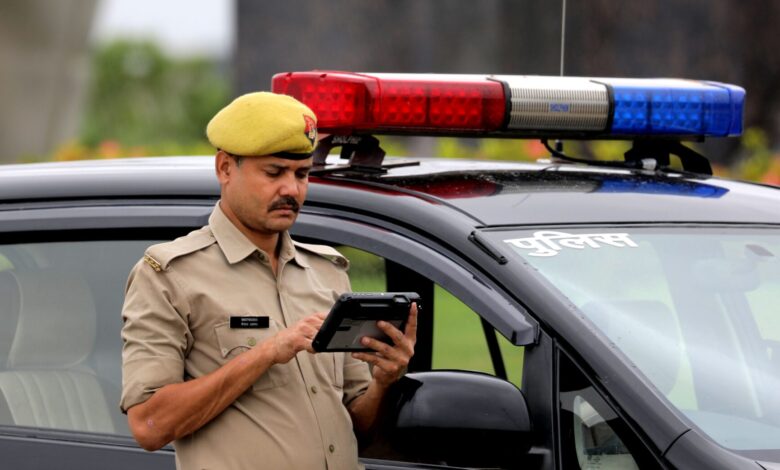
Deported from Malaysia: Punjab Police secured the deportation of Gurwinder Singh and Manjeet Singh, key financiers of a Khalistan Zindabad Force (KZF) module that executed two IED attacks on India’s newly-completed Dedicated Freight Corridor in 2026.
North Desk Correspondent
Chandigarh, June 19
Punjab Police have arrested two wanted operatives of the banned Khalistan Zindabad Force (KZF) following their deportation from Malaysia — closing a key overseas link in a transnational terror conspiracy that targeted one of India’s most strategic infrastructure projects: the Dedicated Freight Corridor (DFC).
The two accused, Gurwinder Singh of Ambala and Manjeet Singh of Patiala, were apprehended at Indira Gandhi International Airport, New Delhi as they landed, and have since been produced before a court in Patiala. They were remanded to police custody on June 18.
Deported from Malaysia: Who Are Gurwinder Singh and Manjeet Singh?
Deported from Malaysia: Both men were operating as Malaysia-based nodes of a KZF-backed terror network, according to Punjab Director General of Police (DGP) Gaurav Yadav.
Their primary role was financial — channelling terror funds through offshore accounts to KZF operatives inside Punjab to facilitate attacks and destabilise public order in the state.
The deportation was secured through coordinated effort between Punjab Police, central agencies, and the Royal Malaysia Police (RMP). DGP Yadav confirmed the operation in a post on X on Friday.
The DFC Terror Module: A Five-Month Trail of Attacks
Deported from Malaysia: The arrests are the latest development in an investigation Punjab Police say has been piecing together a sophisticated, ISI-linked terror module with a specific strategic target: India’s Dedicated Freight Corridor.
Two attacks on the DFC in Punjab have already been confirmed:
January 23, 2026: Sirhind, Fatehgarh Sahib:
An IED blast on the freight corridor line near Khanpur village injured railway employee Anil Sharma and damaged a freight engine and the track. The attack came just days before Republic Day.
April 27, 2026: Shambhu, Patiala:
A second attempted explosion on the same corridor, near Bothonia village on the Shambhu-Ambala freight track, was foiled — but at a cost. A suspected operative of the module died on the spot when the IED he was planting detonated prematurely.
Four operatives — Pardeep Singh Khalsa, Kulwinder Singh, Satnam Singh alias Satta, and Gurpreet Singh alias Gopi — were arrested in the Shambhu case. Investigators recovered an RPG launcher, RDX, an IED, hand grenades, and high-end pistols with ammunition.
Subsequent investigation traced the terror financing back to Malaysia. Gurwinder Singh and Manjeet Singh were identified as the money men enabling the operations.
Follow North Desk on WhatsApp for the latest from Punjab, Haryana and Himachal Pradesh: https://whatsapp.com/channel/0029Vb7ccdxJENy2H87DBG3E
Why Target the Dedicated Freight Corridor?
The choice of target was not random. India’s Eastern Dedicated Freight Corridor (EDFC) — a 1,337-km spine running from Ludhiana in Punjab all the way to Dankuni in West Bengal — is among the country’s most significant infrastructure investments in a generation. The Western DFC was completed as recently as March 31, 2026.
As one analyst noted: with 50-odd rail tracks in Punjab to choose from, the fact that two attacks in three months were aimed exclusively at the DFC signals a deliberate strategic intent — not opportunistic sabotage.
The corridor moves coal, containers, petroleum goods and bulk freight, and is designed to carry trains that would otherwise require 72 trucks each on national highways.
A successful derailment on the DFC would have caused massive economic disruption and, more importantly, a high-visibility propaganda strike for the Khalistan movement — a ₹1-lakh-crore prestige project of the Indian government in flames.
The Malaysia Connection: Not an Isolated Instance
The emergence of Malaysia as an operational and financial hub for KZF is a pattern, not an anomaly.
Police have previously identified a Malaysia-based entity using the name ‘Jujhar Singh’ as a key backer of the April module. The Pakistan-based chief of KZF, Ranjeet Singh Neeta — against whom the NIA holds non-bailable warrants — runs the broader network.
The India-side handler, Pardeep Singh Khalsa, allegedly recruited radicalised youth, sent them to Malaysia for indoctrination, and deployed them on return for terror tasks.
Malaysia’s large Punjabi diaspora, relatively more open financial system, and historical absence of an extradition treaty with India have made it a preferred logistics node for Khalistani outfits — a trend investigators say is growing.
Investigations Ongoing
DGP Yadav confirmed that investigations into the broader network are continuing, with police seeking to identify all individuals involved in the conspiracy including those still at large in Malaysia and Pakistan.
READ ALSO: NARESH GUJRAL CYBER FRAUD: How former PM’s Son Was Duped of ₹7.8 Crore in WhatsApp Fraud
READ: Chandigarh Police Encounter: 3rd Accused Held; 2 were Shot by Police in Sector 11 Murder Case
ALSO: Bhagwant Mann New Video: From Height to Looks, CM’s 6 Claims Why It’s Fake





One Comment