BJP Promises RANJIT SINGH’S Punjab. AAP Promised BHAGAT SINGH’S. Punjab Is Still Waiting.
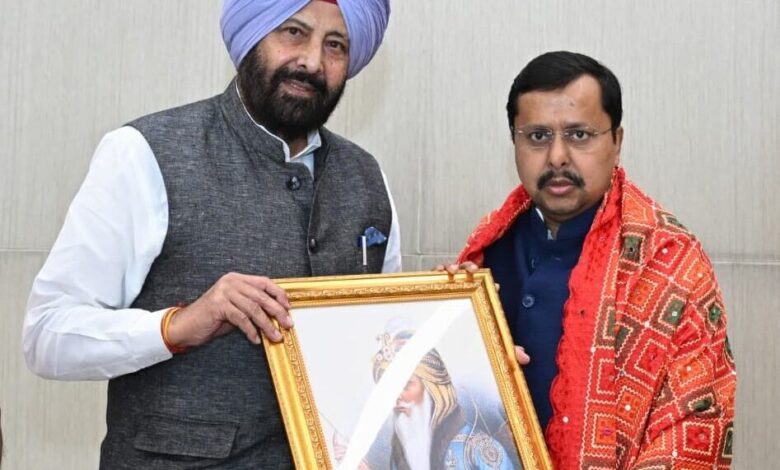
BJP Promises Ranjit Singh’s Punjab: BJP chief Nitin Nabin invokes Maharaja Ranjit Singh in his Punjab pitch. But every party has promised Punjab a golden age — and none has delivered. A North Desk analysis.
Arvind Chhabra
North Desk, June 22
Every party that wants to govern Punjab first asks its voters to close their eyes and imagine a golden age.
This week, it was the Bharatiya Janata Party’s turn. BJP national president Nitin Nabin arrived in Amritsar on June 20 for his maiden Punjab tour, bowed his head at Darbar Sahib, and told journalists: “Just as Maharaja Ranjit Singh gave a unique governance identity to Punjab, we all want to create the Punjab of his dreams.”
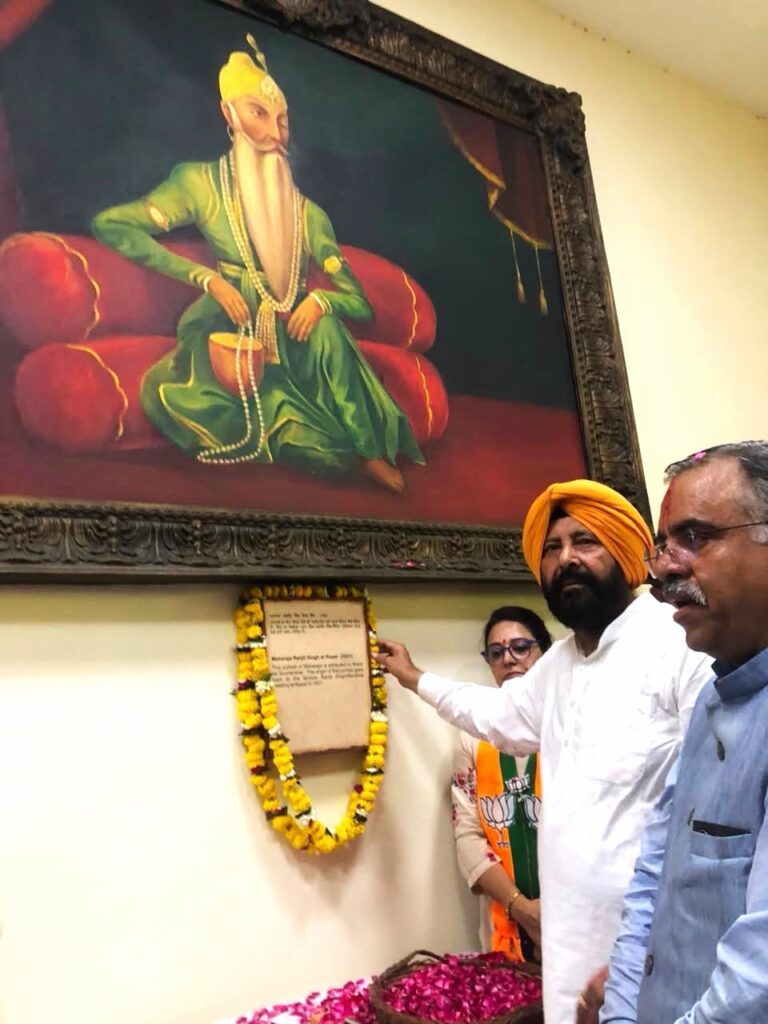
BJP Promises Ranjit Singh’s Punjab: It was not an off-the-cuff remark. Punjab BJP president Kewal Singh Dhillon has installed a portrait of Ranjit Singh in his office and uses near-identical language — a Punjab where every farmer is prosperous, every faith respected, no Punjabi living under fear. This is a coordinated, scripted political message, road-tested at the top and now being pushed down through the party machinery ahead of the 2027 assembly elections.
Bogus dreams: Congress
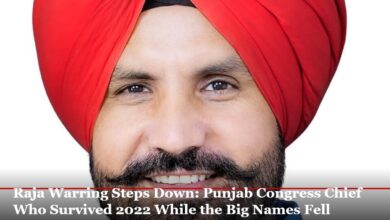
Punjab Congress president Amrinder Singh Raja Warring was quick to call it out as “bogus dreams,” arguing the promise is impossible both historically and geographically. He is not wrong — but the more interesting question is not whether BJP can deliver Ranjit Singh’s Punjab. It is why every major party reaching for power in Punjab instinctively reaches for a dead hero, and what that tells us about the state’s political imagination.
The Empire That No Longer Exists
Maharaja Ranjit Singh’s Sikh Empire at its peak was not the Punjab of today’s maps. It encompassed Lahore, Multan, Peshawar, Kashmir and vast stretches now part of Pakistan and Afghanistan. The Lion of Punjab ruled from the Khyber Pass to the Sutlej. That geography was partitioned out of existence in 1947. The Punjab that BJP seeks to govern — a landlocked state of 50,000 square kilometres, sharing borders with Pakistan it cannot cross, with a capital it shares with Haryana — bears little territorial resemblance to the empire whose dreams Nabin has pledged to fulfil.
That is not entirely the point, of course. Political invocations of historical figures are never meant as literal policy blueprints. What BJP is selling is an emotional architecture — pride, identity, glory, the memory of a time when Punjab was not a state but a power. Ranjit Singh is particularly useful for BJP because he is a unifying figure in a way few others are. His court was famously pluralist: Hindu, Muslim and Sikh generals served under him, his administration drew from every community, and his personal faith never became a political instrument. For a party that has struggled to shed its Hindu nationalist image in a majority-Sikh state, Ranjit Singh offers secular cover with royal grandeur.
AAP’s Bhagat Singh Moment
BJP Promises Ranjit Singh’s Punjab: The template, however, was not invented by BJP. In 2022, the Aam Aadmi Party swept Punjab with 92 of 117 seats on a wave of anti-incumbency and aspiration. The emotional pitch, never quite stated but always implied, was Bhagat Singh’s Punjab — revolutionary, fearless, incorruptible, willing to sacrifice everything for the people. Bhagat Singh, born in what is now Pakistan’s Punjab, was the young man who laughed at the gallows. AAP’s early identity — outsiders, activists, people who refused to play the old game — mapped neatly onto that image.
Four years later, the same government is navigating an Akal Takht edict that has declared Chief Minister Bhagwant Mann “Guru Dokhi” — one who has disrespected the Guru. The party that came to power promising to clean up Punjab politics is facing allegations of corruption, an unresolved drug crisis and a crisis of religious legitimacy that its founders could not have anticipated. The gap between the Bhagat Singh promise and the Bhagwant Mann reality is now the defining political fact of Punjab in 2026.
This is not unique to AAP. It is the recurring arc of Punjab politics: a golden age is promised, an election is won, governance proves harder than the dream, and the cycle begins again with a new party and a new icon.
Why It Works Anyway
BJP Promises Ranjit Singh’s Punjab: The cynical reading is that voters keep falling for the same trick. The more accurate reading is that Punjab’s political icons — Ranjit Singh, Bhagat Singh, the Gurus — represent genuine values that voters legitimately want their governments to embody: justice, fearlessness, pluralism, sacrifice. The problem is not the invocation. It is the distance between what those icons stood for and what their political inheritors actually do in office.
READ ALSO: Punjab Minister Mundian Accused of Extortion: ‘Give Me a Share or I’ll Get You Killed’
BJP’s Ranjit Singh pitch will be tested not at Darbar Sahib but in the 117 assembly constituencies of Punjab in 2027. The party currently has just two MLAs in the state. To form a government, it would need to multiply that tally many times over. The dream of Ranjit Singh’s Punjab will need to compete with farmers’ debt, unemployment, the drug trade and a religious controversy that has destabilised the ruling party but not yet delivered voters to BJP’s door.
BJP Promises Ranjit Singh’s Punjab: Warring’s dismissal notwithstanding, BJP’s gambit is not irrational. The Akal Takht row has created a political vacuum that every opposition party is trying to fill. Ranjit Singh — secular, glorious, safely historical — is a smarter choice of icon than most. But Punjab’s voters have heard the golden age pitch before. They gave AAP a supermajority to build it. They are still waiting.
Follow North Desk on WhatsApp for the latest from Punjab, Haryana and Himachal Pradesh: https://whatsapp.com/channel/0029Vb7ccdxJENy2H87DBG3E


One Comment