Punjab Opposes DA To Its Staff, Tells HC: The 2021 Promise Was Just An ‘Endeavour’
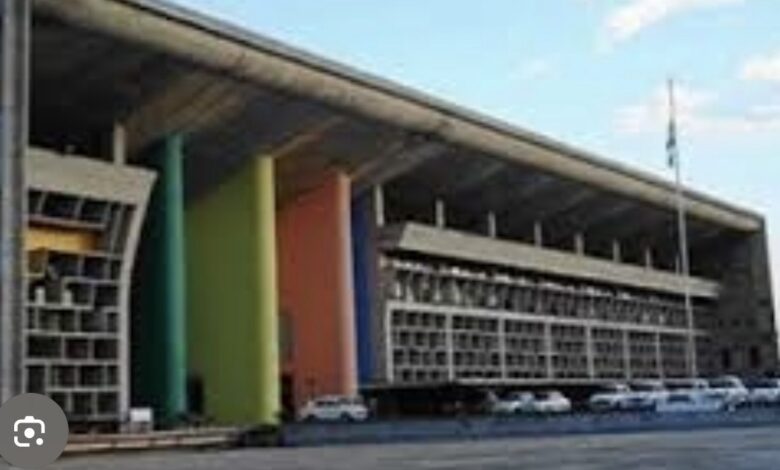
Punjab opposes DA: Punjab’s Finance Department has filed an LPA challenging the HC order on DA, arguing the Cabinet only “endeavoured” to pay and that employees have no enforceable right to parity with IAS officers.
Arvind Chhabra
Chandigarh, May 21
In June 2021, the Punjab Cabinet formally accepted the Sixth Pay Commission’s recommendations and resolved that the state would follow the Central Government pattern for Dearness Allowance — with no time lag. Employees and pensioners read that as a commitment. The Punjab and Haryana High Court, in its April 8 judgment, held it was a binding decision.
The Government of Punjab, in a Letters Patent Appeal filed just last week, told a Division Bench of the same court something different: that the Cabinet had only said it would endeavour to follow the Central pattern. That one word — endeavour — is now at the centre of a legal battle over ₹14,191 crore owed to Punjab’s employees and pensioners.
The LPA filed by the Additional Chief Secretary, Finance Department is the state government’s formal challenge to the April 8 judgment that directed full DA payment by June 30. North Desk has reviewed the complete paper book of the appeal.
The number the govt has put on paper
Punjab opposes DA: The most significant disclosure in the appeal documents is a figure the government has now placed on affidavit before the court: the total pending DA and pension arrear liability of the State of Punjab is approximately ₹14,191 crore.
The government says a structured, Cabinet-approved liquidation plan dated February 18, 2025 already exists to discharge this liability in a phased and time-bound manner. It is this plan — and the court’s interference with it — that forms the heart of the appeal.
The April 8 judgment struck down that plan as unconstitutional, holding that it created irrational age-based tiers among pensioners and made younger retirees wait until 2028 for arrears owed since 2016. The government says the court had no business doing so.
Punjab opposes DA: 4 arguments
Punjab opposes DA: The appeal in the High Court raises what it describes as substantial questions of law. Stripped of legal language, the state is making four core arguments.
- The first is about the nature of DA itself. The government contends that Dearness Allowance is not a vested legal right that can be enforced through a writ of mandamus. No statutory provision, it says, mandates automatic parity between Punjab state employees and Central Government employees or All India Service officers. Without such a statutory mandate, the court cannot direct payment as if it were a fundamental entitlement.
- The second argument is about what the Cabinet actually decided in 2021. The government says the Cabinet resolution used the word “endeavour” — a conditional expression of intent, not a binding guarantee. It cites a Supreme Court judgment for the proposition that even Pay Commission recommendations are not automatically binding and can be implemented in a phased or modified manner depending on the financial position of the state. The High Court, it argues, misread a conditional resolution as a categorical commitment.
- The third is a separation of powers argument. The government contends that pay structure, allowances and financial disbursement fall within the exclusive domain of the executive, dependent on financial capacity and policy considerations. The April 8 judgment, it says, “travels beyond the permissible limits of judicial review” by entering into the domain of fiscal and economic policy. It describes the directions as having “wide-ranging financial implications” that are “incapable of being implemented without causing disruption to existing financial commitments and public welfare obligations.”
- The fourth argument is about irreversibility. The government says that if it is compelled to disburse thousands of crores and the appeal later succeeds, the money cannot be recovered. The financial outflow, once made, would be irreversible and would have, in its own words, “cascading consequences on the State exchequer and governance framework.”
What the govt is asking for
Punjab opposes DA: The appeal asks the Division Bench to set aside the April 8 judgment and dismiss the original writ petitions. As an interim measure, it seeks a stay on the operation of the judgment pending the appeal’s outcome.
If the Division Bench grants a stay, the June 30 deadline for paying all pending DA instalments — from 46% to 58% — and clearing pension arrears would be suspended. Employees and pensioners who won in court on April 8 would have to wait for the outcome of a second, longer legal battle.
The broader picture
The LPA is one of two such appeals filed by the Punjab government against the April 8 judgment. Another LPA is the companion case. Together they represent the state’s attempt to undo, through a higher court, a ruling it lost before a Single Judge.
As North Desk has reported, PSPCL — Punjab’s state power utility — has separately filed its own appeal against the same judgment, arguing that as a corporate entity it is not bound by the same rules as government departments and that forced payment would raise power bills for consumers.
The pensioners’ association that issued a poll warning to AAP ahead of the May 26 urban local body elections cited both the government’s LPAs and PSPCL’s appeal as evidence that the state was fighting its own retirees in court rather than complying with a judgment that had already gone in their favour.
The June 30 deadline set by the Single Judge is now caught between a compliance affidavit due on July 2 and an appeal that, if admitted with a stay, could suspend both.
Related Readings: Punjab Pensioners Issue Poll Warning to AAP: Implement DA or Lose Our Vote on May 26
Punjab High Court Rejects its ‘No Money’ Plea, Orders Full DA Payment by June 30




5 Comments