Khalra Body Disposal: Cops Disposed Of Jaswant Singh Khalra’s Body. Then They Had Whisky, Dinner
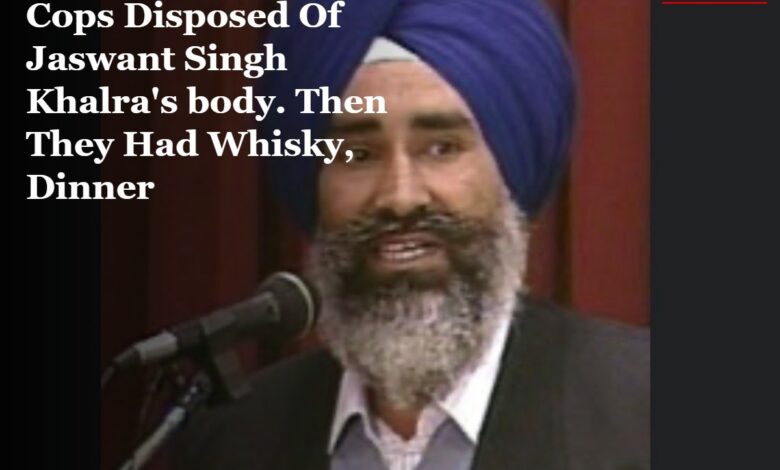
Khalra body disposal: CBI and Court records reveal what Punjab Police officers did after disposing of Jaswant Singh Khalra’s body at Harike: whisky, dinner, and the SSP present.
North Desk Correspondent
Chandigarh, July 7
They killed Jaswant Singh Khalra. Then they drove his body to a canal at Harike in Tarn Taran in Punjab, and threw it into the water. The men responsible for all this went back to a rest house. And had whisky and dinner.
This is not a scene from the movie ‘Satluj’ which has now been removed from ZEE5 after it could only stream for 48 hours. This detail is real and is straight from the documents. It’s recorded, in exact and unadorned language, in the case files and in the records of CBI and also of courts that adjudicated the case.
READ ALSO: Jaswant Singh Khalra Had Named His ‘Killer’ To An Ex-Judge Before Abduction
Khalra body disposal: The night, reconstructed from the record
According to the sworn testimony of Kuldip Singh, the special police officer (SPO) who witnessed the killing, Khalra was shot inside a room at Jhabal police station on the night in question.
His body was lifted by the arms and legs and thrown into the open boot of a Maruti car, blood still oozing from his chest. Three vehicles then drove in convoy to Harike, crossed the river, and continued toward the road leading to Village Makhu. There, the vehicle carrying the body stopped. Two officers (named in the judgment as Balwinder Singh Gora and Arvinder Singh) threw Khalra’s body into the canal.
Then the three vehicles turned back. Not toward the police station, but to the rest house at Harike.
What happened at the rest house
Khalra body disposal: The documents record that the officers arrived to find two police Gypsys already parked there, one belonging to SSP Ajit Singh Sandhu himself, who was present. Some of the accused went inside the rest house. Others, including Kuldip Singh, the witness, sat on chairs out on the lawn.
Two bottles of whisky were sent out to them. They drank. Then they ate their meals.
It was close to midnight when Kuldip Singh finally rode back to Jhabal police station with one of the accused officers, the night’s business apparently concluded.
Why this detail is the story
Khalra body disposal: There is a version of institutional violence that is frenzied, chaotic, panicked — men who kill and then scatter, afraid of what they’ve done. That is not what the record describes. What the judgment lays out is procedural, almost administrative: transport arranged, body disposed of at a chosen location, return to a familiar rest house, drinks sent out, dinner served, a late-night drive home. Nothing in the sequence suggests urgency or fear of consequence. It reads like men closing out a work assignment.
That, more than any single act of violence in the case, may be the most disturbing thing the documents preserve: not that Khalra was killed, but that the killing fit inside an evening that still had room in it for whisky and a meal, calmly enjoyed, with the SSP himself present at the rest house before everyone dispersed for the night.
The film’s echo, and the record’s difference
The movie ‘Satluj’ opens with a scene of officers disposing of a body after drinking. Viewers may assume this is the screenwriters’ invention: a device to establish tone quickly. It isn’t invention. It’s close to what the sworn record actually describes, except that in the real case, the drinking happened after the disposal, not before — men returning from throwing a human rights activist’s body into a canal to sit down, in the presence of their SSP, and unwind over whisky and dinner as though the day’s work were done.
It was.
Follow North Desk on WhatsApp for the latest from Punjab, Haryana and Himachal Pradesh: https://whatsapp.com/channel/0029Vb7ccdxJENy2H87DBG3E
READ ALSO: Jaswant Singh Khalra Had Named His ‘Killer’ To An Ex-Judge Before Abduction
READ ALSO: The Cop Who Fed Khalra His Last Meals…And Whose Words Convicted His Killers



10 Comments